




Endometrial polyps are growths that develop from the lining inside your womb. They can range from a few millimetres to several centimetres and are usually benign. However, they may cause heavy periods, bleeding between periods, postmenopausal bleeding or fertility difficulties.
You may have one polyp or several, and they can vary in size. Some polyps are found during an ultrasound scan by chance, while others are investigated because you have noticed changes in your bleeding pattern. Although finding a growth inside your womb can feel worrying, most endometrial polyps are not cancerous and can often be removed with a minimally invasive hysteroscopic procedure.
What Is an Endometrial Polyp?
Your endometrium is the lining inside your womb that thickens during your menstrual cycle to prepare for a possible pregnancy. An endometrial polyp develops when a small area of this lining grows more than the surrounding tissue and forms a projection inside the womb cavity.
You may have a polyp that is attached by a thin stalk or one with a wider base. Because polyps contain endometrial tissue, glands and small blood vessels, they can sometimes cause irregular bleeding. You may also hear them called uterine polyps or womb polyps, which generally refer to the same type of growth.
Where Do Endometrial Polyps Grow?

Endometrial polyps grow inside the cavity of your womb, arising from the lining rather than the muscular wall where fibroids usually develop. They can appear on different areas of the womb lining, including the front, back or side walls, and may sometimes grow near the fallopian tube openings or cervix.
The position of your polyp can affect symptoms such as bleeding and may influence fertility or treatment decisions. During a hysteroscopy, your gynaecologist can directly see where the polyp is located and decide the most suitable way to remove it.
Endometrial Polyp Characteristics and Clinical Implications
| Polyp Feature | Typical Location | Common Symptoms | Fertility / Pregnancy Considerations |
| Small pedunculated | Attached by a thin stalk anywhere in the uterine cavity | Often asymptomatic; may cause spotting or irregular bleeding | Usually minimal impact; may occasionally interfere with implantation |
| Large pedunculated | Anywhere in the cavity; sometimes near fallopian tube openings | Heavier bleeding, cramping, pressure | May interfere with implantation or the normal uterine environment depending on location |
| Sessile / broad-based | Wider base, adherent to endometrium | Irregular or heavy periods, postmenopausal bleeding | Can affect endometrial receptivity; removal often recommended before fertility treatment |
| Multiple polyps | Various sites throughout endometrium | Increased likelihood of abnormal bleeding | Higher potential to affect fertility; monitoring and removal may be advised |
| Postmenopausal polyps | Any uterine location | Usually detected via bleeding after menopause | Malignancy risk is higher than in premenopausal patients; tissue assessment is often recommended, particularly when bleeding is present |
What Symptoms Can Endometrial Polyps Cause?
Many endometrial polyps do not cause any symptoms, and you may only discover one during an ultrasound scan, fertility assessment or another investigation. When symptoms occur, changes in your bleeding pattern are usually the most common sign.
You may notice heavier periods, bleeding between periods, irregular spotting, bleeding after menopause or difficulties when trying to conceive. Some polyps may be associated with fertility difficulties. The relationship between endometrial polyps and recurrent miscarriage is less certain, and pregnancy loss can have many other causes that require appropriate assessment.
How Can Polyps Affect Your Periods?

If you have an endometrial polyp, you may notice changes in your usual bleeding pattern because polyps contain small blood vessels that can bleed unpredictably. You may experience spotting before or after your period, bleeding between periods or periods that become heavier and last longer.
Heavy bleeding can affect your daily life and may contribute to iron-deficiency anaemia over time. If you notice symptoms such as tiredness, weakness, breathlessness or heart palpitations or a noticeably faster heartbeat, your doctor may recommend blood tests to check your iron levels and overall health.
Can Endometrial Polyps Cause Bleeding After Menopause?
Yes, endometrial polyps can cause bleeding after menopause, although they are only one possible explanation. If you notice any bleeding more than 12 months after your last period, you should arrange a medical assessment, even if it happens only once or appears as light spotting.
Most people with postmenopausal bleeding do not have cancer, but it is important to investigate the cause. Your doctor may recommend tests such as a transvaginal ultrasound, hysteroscopy or biopsy, and if a polyp is found, it is often removed so the tissue can be examined.
Can Endometrial Polyps Cause Pelvic Pain?
Pain is not usually the main symptom of an endometrial polyp. Most small polyps are more likely to cause changes in your bleeding pattern rather than significant pelvic discomfort.
A larger polyp may sometimes cause cramping or pressure, especially when your womb contracts around it. If you have ongoing or severe pelvic pain, your gynaecologist will also consider other possible causes, such as endometriosis, adenomyosis, fibroids or ovarian cysts.
When Should You See a Gynaecologist?
You should arrange a medical assessment if you notice persistent bleeding between periods, heavier-than-usual periods or a change in your normal bleeding pattern. If an ultrasound has shown a possible endometrial polyp, your gynaecologist can help you understand whether monitoring, further investigation or removal is the right option for you.
Bleeding after menopause should always be checked, even if it happens only once or appears as light spotting. When seeking advice about endometrial polyps treatment in London, bring any previous scan reports and information about your symptoms to help your specialist plan the most suitable care.
What Causes Endometrial Polyps?
The exact reason why you develop an endometrial polyp is not always clear. However, polyps appear to be influenced by hormones, especially oestrogen, because your womb lining naturally responds to hormonal changes throughout your menstrual cycle.
You may be more likely to develop polyps as you get older, particularly around the years approaching menopause, although they can occur at any stage after your periods begin. Factors such as obesity, irregular ovulation, PCOS and tamoxifen use may be associated with a higher chance of developing womb lining changes, but many people develop polyps without any known risk factor.
How Are Polyps Different from Fibroids and Hyperplasia?
Endometrial polyps, fibroids and endometrial hyperplasia can all affect your womb, but they develop from different tissues. A polyp grows from your womb lining, while fibroids develop from the muscle layer of your womb and hyperplasia involves an overgrowth of the lining itself.
These conditions can sometimes appear similar on an ultrasound scan, but a hysteroscopy allows your doctor to examine the inside of your womb more closely. If a polyp is removed, laboratory testing helps confirm its nature and check for any abnormal cells.
Endometrial Polyps, Fibroids and Hyperplasia
| Condition | Where it develops | Typical features | How it is assessed |
| Endometrial polyp | From the lining inside your womb | Irregular bleeding, bleeding between periods, postmenopausal bleeding or fertility concerns | Ultrasound, hysteroscopy and laboratory examination after removal |
| Fibroid | From the muscular wall of your womb | Heavy periods, pressure, pain or an enlarged womb | Ultrasound, examination and sometimes MRI |
| Endometrial hyperplasia | Widespread thickening or overgrowth of the womb lining | Abnormal or postmenopausal bleeding | Hysteroscopy and endometrial biopsy |
| Blood clot | Blood within the womb cavity rather than a tissue growth | May occur during or after bleeding | Repeat imaging or hysteroscopy if the diagnosis remains unclear |
Can Endometrial Polyps Affect Fertility?
A polyp may alter the conditions needed for fertilisation or embryo implantation, although the exact effect varies between patients. Research suggests that removing polyps may improve pregnancy rates in some situations, particularly before intrauterine insemination, but evidence for improved IVF and live-birth outcomes is less certain.
The impact may depend on the size, number and location of the polyp. Removing a polyp may improve pregnancy chances in some situations, but it does not guarantee conception, so your gynaecologist should consider your overall fertility history before recommending treatment.
What Happens During Your First Appointment?
During your first appointment, your gynaecologist will ask about your bleeding pattern, when symptoms started and whether the bleeding is linked to your periods, sex or menopause. You may also discuss your fertility plans, previous pregnancies, HRT, contraception and any medicines you take.
You should explain how your symptoms affect your daily life, including whether bleeding disrupts activities or causes tiredness. Depending on your situation, your doctor may recommend an examination, pregnancy test, blood tests or other investigations to understand the cause of your symptoms.
Can an Ultrasound Diagnose an Endometrial Polyp?
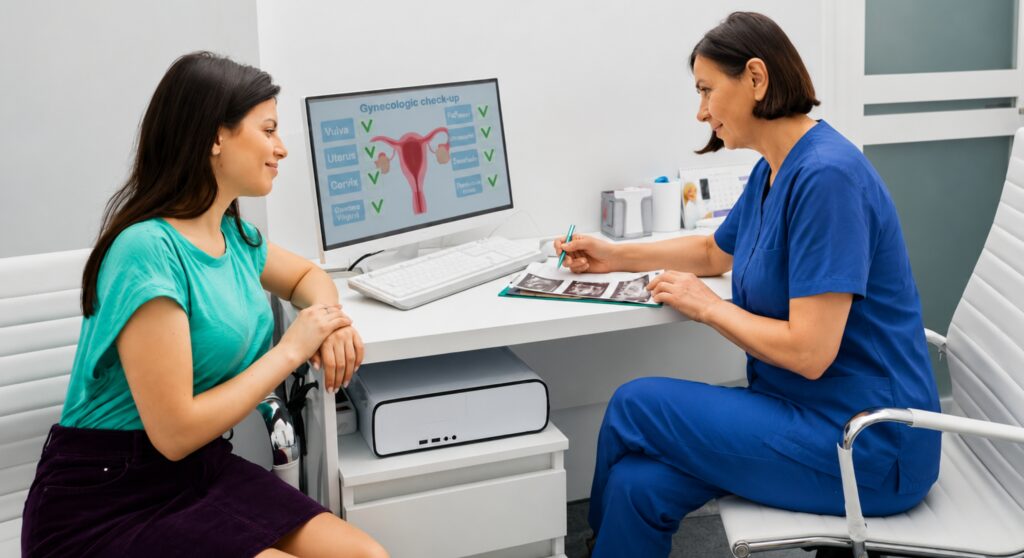
A transvaginal ultrasound can help your doctor examine your womb and identify possible endometrial polyps. The scan may show a small growth or area of thickening inside your womb cavity, but small polyps can sometimes be difficult to distinguish from other changes, such as blood clots or fibroids.
An ultrasound can suggest that you have a polyp, but it may not confirm the diagnosis completely. If further assessment is needed, a hysteroscopy allows your gynaecologist to look directly inside your womb and remove or test the tissue.
What Is a Hysteroscopy?
A hysteroscopy is a procedure that allows your doctor to look directly inside your womb using a thin camera called a hysteroscope. The instrument passes through your vagina and cervix, so no abdominal incision is needed.
During the procedure, fluid is used to gently open your womb cavity so your doctor can examine the lining and identify any polyps. Depending on your symptoms and findings, you may have a diagnostic hysteroscopy to investigate the cause or a see-and-treat procedure where a polyp is removed during the same appointment.
Is Outpatient Hysteroscopy Painful?
Your experience of an outpatient hysteroscopy can vary, and while some people experience mild period-like cramps, others may experience moderate or severe pain. Your doctor should explain what to expect, discuss pain relief options and ensure you understand that you can ask for the procedure to stop at any time.
If you have previously found internal examinations painful, have experienced trauma or feel anxious about the procedure, tell your clinic before your appointment. You can discuss whether an outpatient hysteroscopy is suitable for you or whether another approach, such as sedation or a general anaesthetic, may be more appropriate.
How Are Endometrial Polyps Removed?
If you need treatment, an endometrial polyp is usually removed through a procedure called a hysteroscopic polypectomy. Your gynaecologist uses a hysteroscope to see the polyp directly inside your womb and removes it from the lining.
Small polyps may be removed using tiny instruments passed through the hysteroscope, while larger polyps may require specialised removal devices. The aim is to remove the visible polyp and its attachment area where possible, although recurrence can still occur. Many procedures can be completed without abdominal surgery, often as an outpatient or day-case treatment.
Why Is the Polyp Sent to a Laboratory?
After an endometrial polyp is removed, it should be sent to a pathology laboratory for examination under a microscope. This is because the appearance of a polyp during hysteroscopy cannot confirm with complete certainty that all cells are normal.
Most polyps are benign, but laboratory testing helps identify any abnormal changes, such as endometrial hyperplasia, atypical cells or, rarely, cancer. Your individual risk depends on factors such as your age, whether you have bleeding after menopause and your medical history, so your gynaecologist will explain what your result means for you.
Evidence Note: How Often Are Endometrial Polyps Associated With Cancer?
A systematic review involving more than 35,000 patients who underwent polyp removal found malignant cells in approximately 2.7% of polyps overall. The reported rate was lower before menopause and higher after menopause, particularly in people who had bleeding symptoms.
These figures came from patients selected for hysteroscopic removal, so they should not be interpreted as the risk for every small polyp found incidentally. Your individual risk depends on factors such as menopausal status, abnormal bleeding, age and medical history.
Does Every Endometrial Polyp Need to Be Removed?
Not every endometrial polyp needs immediate removal. If you have a small polyp that was found by chance, no symptoms and no concerning risk factors, your gynaecologist may sometimes recommend monitoring it instead.
Removal is more commonly advised if you have abnormal bleeding, postmenopausal bleeding, fertility concerns, a persistent polyp or clinical factors that increase the likelihood of abnormal cells. Your treatment plan should be based on your age, symptoms, scan findings and pregnancy plans, rather than the presence of a polyp alone.
What Is Recovery Like After Polyp Removal?
After hysteroscopic polyp removal, you may notice mild period-like cramps, light bleeding, or watery blood-stained discharge for a few days. Most people can return to normal activities quickly after an uncomplicated outpatient procedure, although resting on the day of treatment is often preferred.
- Use Pads, Not Tampons: Stick to sanitary pads while your body is healing to reduce infection risk.
- Follow Activity Guidance: Your clinic will advise when it’s safe to resume sex, exercise, and other activities.
- Watch for Concerning Symptoms: Seek medical advice if you experience heavy bleeding, severe or worsening pain, fever, unpleasant-smelling discharge, dizziness, or feel generally unwell.
- Most Recover Quickly: Uncomplicated cases generally heal rapidly, allowing a return to normal routines within days.
Overall, recovery after polyp removal is usually straightforward, but following your clinic’s advice and monitoring for warning signs helps ensure a safe and smooth healing process.
Can Endometrial Polyps Return?

Yes, you can develop another endometrial polyp after a previous one has been removed. This does not mean your treatment failed, as new polyps can form due to ongoing changes in your womb lining and hormonal factors.
Endometrial polyps can recur after hysteroscopic removal, although reported rates vary between studies. Recurrence may be more likely if you previously had several polyps or have other factors affecting your womb lining. New bleeding symptoms should therefore be assessed rather than automatically assumed to be caused by another benign polyp.
Myth vs Fact
| Myth | Fact |
| Every endometrial polyp is cancerous. | Most are benign, although laboratory testing may be needed to rule out abnormal cells. |
| Every polyp must be removed immediately. | Some small, symptom-free polyps can be monitored when your clinical risk is low. |
| Outpatient hysteroscopy is painless for everyone. | Experiences vary, and some patients experience significant pain. You can ask for the procedure to stop. |
| Removing a polyp guarantees pregnancy. | Removal may help in selected fertility situations, but it cannot guarantee conception or a live birth. |
| A removed polyp can never return. | New polyps can develop, so recurrent symptoms should be assessed. |
Key Takeaways
- Endometrial polyps develop from the lining inside your womb and are usually benign.
- Abnormal bleeding is the most common symptom.
- Any bleeding after menopause requires prompt medical assessment.
- Ultrasound may suggest a polyp, but hysteroscopy allows direct examination and removal.
- Not every symptom-free polyp needs immediate treatment.
- Removed tissue is normally examined in a laboratory.
- Polypectomy may support fertility in selected situations, but it does not guarantee pregnancy.
- Polyps can recur, so new bleeding should not be ignored.
FAQs:
1. Are endometrial polyps cancerous?
Most endometrial polyps are benign. The chance of abnormal or cancerous cells is higher after menopause and when you have abnormal bleeding, although cancer remains uncommon overall. Removed polyps are therefore usually examined in a laboratory.
2. Can endometrial polyps go away on their own?
Some small endometrial polyps may shrink or disappear naturally, particularly in younger people before menopause. However, polyps causing symptoms such as abnormal bleeding or fertility problems often need assessment and possible removal.
3. How long does it take to recover after endometrial polyp removal?
Many people resume normal activities on the same day or within a few days after an uncomplicated outpatient polypectomy. Recovery may take longer if you have sedation, a general anaesthetic or a more extensive procedure. Light bleeding and cramping can continue for several days.
4. Can you get pregnant after having an endometrial polyp removed?
Yes, many people are able to conceive after an endometrial polyp is removed. Removing a polyp may improve pregnancy chances in some circumstances, but the benefit depends on your wider fertility history and the treatment you are having. Evidence is more supportive before intrauterine insemination than before IVF, where the benefits remain less certain.
5. When should you seek medical advice about an endometrial polyp?
You should speak to a gynaecologist if you experience persistent bleeding between periods, heavy periods, bleeding after menopause or changes in your usual menstrual pattern. Specialist assessment is also recommended if an ultrasound has identified a suspected polyp or you are experiencing fertility difficulties.
Final Thoughts: Understanding Your Options for Endometrial Polyps
Endometrial polyps are usually benign, but they can cause abnormal bleeding and may affect fertility in some circumstances. Your recommended care will depend on your symptoms, age, menopausal status, scan findings, medical history and pregnancy plans.
Hysteroscopy allows your gynaecologist to examine the womb cavity directly and, where appropriate, remove the polyp during the same procedure. The tissue can then be examined in a laboratory to confirm the diagnosis and rule out abnormal cells.
For specialist advice about endometrial polyps treatment in London, Gynaecology Clinic London can assess your symptoms and discuss whether monitoring, further investigation or hysteroscopic removal may be appropriate for you.
References:
- National Institute for Health and Care Excellence (NICE) (2018, updated 2026) Heavy menstrual bleeding: assessment and management. NICE guideline NG88. London: NICE. Available at: https://www.nice.org.uk/guidance/ng88
- National Institute for Health and Care Excellence (NICE) (2015, amended 2026) Suspected cancer: recognition and referral. NICE guideline NG12. London: NICE. Available at: https://www.nice.org.uk/guidance/ng12
- Royal College of Obstetricians and Gynaecologists (RCOG) (2025) Outpatient hysteroscopy. London: Royal College of Obstetricians and Gynaecologists. Available at: https://www.rcog.org.uk/outpatient-hysteroscopy
- Bougie, O. et al. (2024) ‘Guideline No. 447: Diagnosis and management of endometrial polyps’, Journal of Obstetrics and Gynaecology Canada, 46(3), article 102402. Available at: https://www.jogc.com/article/S1701-2163(24)00178-6/abstract
- Vitale, S.G. et al. (2021) ‘Endometrial polyps: An evidence-based diagnosis and management guide’, European Journal of Obstetrics & Gynecology and Reproductive Biology, 260, pp. 70–77. Available at: https://pubmed.ncbi.nlm.nih.gov/33756339/
- Uglietti, A. et al. (2019) ‘The risk of malignancy in uterine polyps: A systematic review and meta-analysis’, European Journal of Obstetrics & Gynecology and Reproductive Biology, 237, pp. 48–56. Available at: https://www.sciencedirect.com/science/article/abs/pii/S0301211519301642
- Sasaki, L.M.P. et al. (2018) ‘Factors associated with malignancy in hysteroscopically resected endometrial polyps: A systematic review and meta-analysis’, Journal of Minimally Invasive Gynecology, 25(5), pp. 777–785. Available at: https://pubmed.ncbi.nlm.nih.gov/29454147/
- Nijkang, N.P., Anderson, L., Markham, R. and Manconi, F. (2019) ‘Endometrial polyps: Pathogenesis, sequelae and treatment’, SAGE Open Medicine, 7, article 2050312119848247. Available at: https://pmc.ncbi.nlm.nih.gov/articles/PMC6501471/
- Bosteels, J. et al. (2010) ‘The effectiveness of hysteroscopy in improving pregnancy rates in subfertile women without other gynaecological symptoms: A systematic review’, Human Reproduction Update, 16(1), pp. 1–11. Available at: https://academic.oup.com/humupd/article-abstract/16/1/1/708485
- NHS (n.d.) Postmenopausal bleeding. Available at: https://www.nhs.uk/symptoms/post-menopausal-bleeding/