



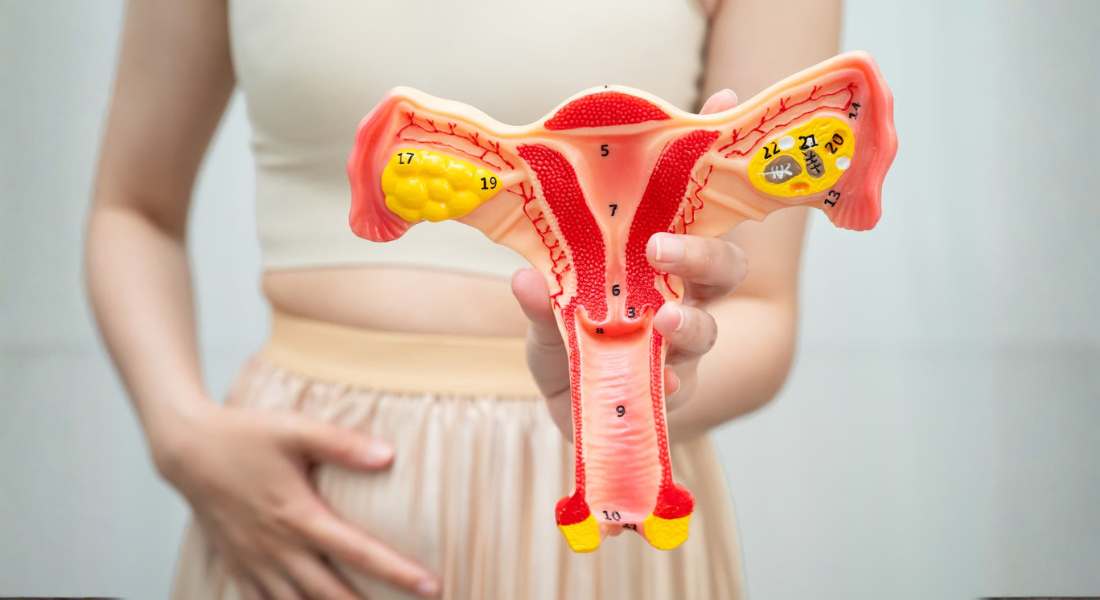
Fibroids and ovarian cysts are both common gynaecological conditions, but they affect different parts of your reproductive system. Fibroids develop in the muscle of your womb, while ovarian cysts form on or within your ovaries. Although they can cause similar symptoms, such as pelvic pain, bloating or pressure, they are different conditions and are treated differently.
Some fibroids and ovarian cysts cause no symptoms and are found during a routine scan. If you develop symptoms, your specialist will assess the size, location and type of the growth to recommend the most appropriate treatment for you.
What Is the Difference Between Fibroids and Ovarian Cysts?
Fibroids are non-cancerous growths that develop from the muscle of your womb, while ovarian cysts are fluid-filled sacs that form on or within your ovaries. Although both are usually benign, they affect different organs and can cause different symptoms.
Fibroids are more likely to cause heavy periods, pelvic pressure and an enlarged womb, whereas ovarian cysts more commonly cause pelvic pain, especially if they become large, rupture or twist. If you have symptoms, an ultrasound scan can help determine whether they are caused by fibroids, an ovarian cyst or another pelvic condition.
What Are Fibroids?
Fibroids are common, non-cancerous growths that develop in or around your womb. They vary in size, and while many cause no symptoms, others can lead to heavy periods, pelvic pressure or pain.
How a fibroid affects you depends largely on its size and location. Some fibroids can contribute to heavy bleeding or fertility problems, while others press on nearby organs, such as your bladder. Many fibroids do not need treatment, and your specialist will recommend management based on your symptoms, fertility plans and overall health.
What Are Ovarian Cysts?
An ovarian cyst is a fluid-filled sac that develops on or within your ovary. Many cysts are functional, meaning they form as part of the normal menstrual cycle and often disappear without treatment.
Some ovarian cysts are linked to conditions such as endometriosis, while others develop due to changes within ovarian tissue. The significance of an ovarian cyst depends on its appearance on ultrasound, your symptoms, age and whether you have reached menopause. Some cysts only require monitoring, while others may need further investigation or treatment, particularly after menopause.
Fibroids vs Ovarian Cysts: Key Differences
| Feature | Fibroids | Ovarian Cysts |
| Where they develop | In or around the womb | In or around the ovary |
| Type of growth | Solid benign growth made from muscle and fibrous tissue | Usually a fluid-filled sac |
| Hormonal influence | Often influenced by oestrogen and progesterone | Often related to normal ovarian function and hormonal changes |
| Common symptoms | Heavy periods, pressure, pelvic pain | Pelvic pain, bloating, ovarian discomfort |
| Effect on periods | Often causes heavier or longer bleeding | May alter cycle timing depending on cyst type |
| Fertility impact | Mainly depends on location and whether the womb cavity is affected | Depends on cyst type and effect on ovarian function |
| Common investigation | Ultrasound, sometimes MRI or hysteroscopy | Ultrasound and sometimes blood tests |
| Treatment approach | Monitoring, medicines, embolisation or surgery | Monitoring, medicines or surgery |
Although they are separate conditions, you can have both fibroids and ovarian cysts at the same time.
When both appear on a scan, the important question is not only what abnormalities are present, but which one is most likely causing your symptoms.
Clinical Tip
Finding a fibroid or ovarian cyst on a scan does not always mean it is the cause of your symptoms. Your specialist will consider the location, size, appearance and your symptoms together before recommending treatment.
Why Are Fibroids and Ovarian Cysts Sometimes Confused?

Fibroids and ovarian cysts can be confused because they both develop in the pelvic area and may cause similar symptoms, including pelvic pain, pressure, bloating or discomfort during sex. Larger growths can also press on nearby organs and cause symptoms such as frequent urination.
Your symptoms, scan findings and medical history help your specialist determine whether a fibroid or cyst is responsible for your symptoms and whether monitoring or treatment is needed. Not every fibroid or ovarian cyst requires intervention.
How Do Fibroid Symptoms Usually Differ From Ovarian Cyst Symptoms?
Fibroids are more often linked to changes in your periods, including heavy or prolonged bleeding, painful cramps and pressure symptoms from an enlarged womb. You may also experience pelvic heaviness, lower back discomfort, constipation or needing to urinate more often.
Ovarian cysts are more likely to cause symptoms related to the ovary, such as one-sided pelvic pain, bloating or discomfort during sex. However, symptoms can overlap, so an ultrasound scan and clinical assessment are usually needed to identify the cause.
Can Fibroids and Ovarian Cysts Affect Fertility?
Fibroids and ovarian cysts can affect your fertility in some situations, but the reasons are different. A fibroid is more likely to affect fertility when its size or location changes the womb cavity or affects the environment needed for implantation.
An ovarian cyst may affect fertility if it interferes with ovulation, affects healthy ovarian tissue or is linked to conditions such as endometriosis. However, having a fibroid or ovarian cyst does not mean you will need treatment, as many people conceive naturally. Your specialist will consider your overall fertility health and whether the finding is actually affecting your chances of pregnancy.
How Are Fibroids Diagnosed?
Fibroids are usually diagnosed with an ultrasound scan, which helps your doctor assess their size, number and location. A transvaginal ultrasound often provides clearer images of your womb and ovaries, while an MRI may be recommended when more detailed information is needed for diagnosis or treatment planning.
If a fibroid is suspected to affect the womb cavity, you may be offered a hysteroscopy to examine the inside of your womb. If you have heavy periods, blood tests may also be arranged to check for iron-deficiency anaemia. Your doctor will consider whether the fibroid is actually causing your symptoms and whether treatment is likely to help you.
How Are Ovarian Cysts Diagnosed?
Ovarian cysts are usually diagnosed through an ultrasound scan, which allows your doctor to assess the size and appearance of the cyst. They will check whether it looks like a simple fluid-filled cyst or has features that need closer assessment.
Some cysts disappear naturally and may only need monitoring with a repeat scan. The exact tests required depend on your individual risk factors and scan findings. Your doctor will consider your age, symptoms, scan results and medical history to decide the safest approach.
What Happens If You Have Both Fibroids and Ovarian Cysts?

It is possible to have fibroids and ovarian cysts at the same time, as both conditions are common. However, finding both on a scan does not always mean that both are causing your symptoms.
Your doctor will consider your symptoms and scan findings to identify what is most likely responsible. For example, fibroids may be linked to heavy periods, while an ovarian cyst may be more relevant if you have sudden one-sided pelvic pain. Treatment should focus on the problem that is affecting you rather than treating every finding automatically.
Do Fibroids Need Different Treatment From Ovarian Cysts?
Yes. Fibroids and ovarian cysts develop in different organs, so their treatment approaches are different. Fibroid treatment may involve medicines, procedures to shrink or remove fibroids, or surgery depending on your symptoms, fertility plans and overall health.
Ovarian cyst treatment depends on the type, size and appearance of the cyst. Many cysts disappear naturally and only need monitoring, while others may require medication or surgery. Your specialist will explain why a particular option is recommended and whether treatment is actually needed.
When Do Fibroids Usually Need Treatment?
Fibroids do not always need treatment, especially if they are small and not causing symptoms. Treatment is usually considered when fibroids begin affecting your daily life, health, fertility, or pregnancy.
- Heavy bleeding and anaemia: Fibroids that cause heavy or prolonged periods may lead to iron-deficiency anaemia, resulting in tiredness, dizziness, or breathlessness.
- Pain or pressure symptoms: Treatment may be considered if fibroids cause ongoing pelvic pain, abdominal enlargement, or pressure on the bladder or bowel.
- Fertility or pregnancy concerns: Fibroids that affect the womb cavity or interfere with conception or pregnancy may require treatment.
- Size and location matter: A fibroid’s position can be more important than its size. A smaller fibroid affecting the womb cavity may need treatment, while a larger fibroid causing no symptoms may only need monitoring.
Not every fibroid needs to be removed. Your specialist will consider the size, location, symptoms, fertility plans, and overall impact before recommending treatment. This personalised approach helps ensure you receive the most appropriate care for your situation.
When Do Ovarian Cysts Need Treatment?
Many ovarian cysts do not need treatment because they disappear naturally. Your doctor may recommend monitoring if the cyst is small, appears simple on a scan and is not causing significant symptoms.
Treatment may be considered if a cyst is persistent, increasing in size, causing ongoing symptoms, appears complex on imaging, affects fertility or carries a risk of complications such as ovarian torsion. If surgery is needed, your specialist will usually aim to remove the cyst while preserving healthy ovarian tissue, especially if you want to become pregnant in the future.
Can Fibroid Treatment Affect Fertility?

Some fibroid treatments can preserve your fertility, while others mean you will not be able to carry a future pregnancy. A myomectomy removes fibroids while keeping your womb and may be considered when a fibroid is affecting the womb cavity or fertility.
Hysteroscopic removal may be suitable for fibroids growing into the womb cavity, while uterine artery embolisation has more uncertainty around future fertility. A hysterectomy removes the womb, so it is not an option if you want to become pregnant. Your treatment choice should reflect your pregnancy plans and personal priorities.
Can Ovarian Cyst Treatment Affect Fertility?
Many ovarian cyst treatments aim to protect your fertility, but the effect depends on the type of cyst and the treatment required. When surgery is needed, your doctor will usually try to remove the cyst while preserving healthy ovarian tissue.
Some cysts, particularly endometriomas associated with endometriosis, may affect ovarian reserve, and surgery can sometimes reduce the number of healthy eggs in the ovary. Your specialist will consider your pregnancy plans and overall fertility before recommending treatment.
Can Fibroids Affect Pregnancy?
Many people with fibroids have healthy pregnancies, and having a fibroid does not mean you will definitely experience complications. However, some fibroids may increase the chance of problems depending on their size and location.
Fibroids may be linked with issues such as pelvic pain, changes in the baby’s position, placental problems, caesarean birth or heavier bleeding after delivery. Your maternity team will consider your fibroid location, the placenta, your baby’s position and your medical history when planning your care. Fibroids are not usually removed during pregnancy because surgery can cause significant bleeding.
Can Ovarian Cysts Affect Pregnancy?
Many ovarian cysts do not affect your pregnancy, especially when they are small and uncomplicated. Some are found during early pregnancy scans and only need monitoring because they may disappear naturally.
Larger or complex cysts may require closer observation because of possible complications such as rupture or ovarian torsion. If treatment is needed during pregnancy, your healthcare team will carefully consider the timing and risks. Having an ovarian cyst does not automatically mean your pregnancy is unsafe, and many people go on to have healthy pregnancies with appropriate monitoring.
What Are the Warning Signs That Need Medical Advice?
Most fibroids and ovarian cysts are not emergencies and can often be managed with planned assessment and monitoring. However, you should seek medical advice if you develop sudden severe pelvic pain, heavy bleeding with dizziness or weakness, fever with pelvic pain, persistent vomiting, difficulty passing urine or new symptoms after menopause.
Sudden severe pain with an ovarian cyst may indicate complications such as ovarian torsion or cyst rupture and needs urgent assessment. If you are pregnant, seek urgent advice for significant pain, bleeding, contractions, leaking fluid or reduced fetal movements. Do not assume new or worsening symptoms are caused only by a known fibroid or cyst, as other conditions may need different treatment.
How Can You Prepare for Your Gynaecology Appointment?
Preparing for your gynaecology appointment can help you have a more useful discussion with your specialist. Think about when your symptoms started, how they affect your daily life and whether they change during your menstrual cycle.
Bring any previous scan reports and details about your periods, pain, fertility plans, previous treatments and medicines. It may also help to write down questions, such as whether the fibroid or cyst is causing your symptoms, whether monitoring is safe, what treatment options are available and how each option may affect your future health goals.
Myth vs Fact
| Myth | Fact |
| Fibroids and ovarian cysts are the same condition. | Fibroids develop from womb muscle, while ovarian cysts form on or around the ovaries. They are different conditions requiring different assessments and treatments. |
| Every fibroid or ovarian cyst needs surgery. | Many fibroids and ovarian cysts do not require treatment if they are not causing symptoms or complications. Monitoring may be appropriate. |
| Having fibroids or ovarian cysts means you cannot become pregnant. | Many people with fibroids or ovarian cysts conceive naturally. Fertility effects depend on the type, size, location and individual circumstances. |
| A large growth is always dangerous. | Size alone does not determine risk. Your specialist will consider appearance, symptoms, location and other factors. |
| Ovarian cysts always become cancerous. | Most ovarian cysts are benign, but some cysts require further assessment depending on their appearance and your individual risk factors. |
Key Takeaways
- Fibroids and ovarian cysts develop in different parts of the reproductive system and require different approaches to diagnosis and treatment.
- Fibroids commonly cause heavy periods, pelvic pressure and changes related to the womb.
- Ovarian cysts are often monitored because many disappear naturally, but some require further assessment or treatment.
- Having a fibroid or ovarian cyst does not automatically mean you need surgery.
- Fertility effects depend on the type, location and impact of the condition rather than the diagnosis alone.
- A specialist assessment helps determine whether monitoring, medication or a procedure is the most suitable option.
Frequently Asked Questions
1. How can the difference between a fibroid and an ovarian cyst be identified?
A pelvic ultrasound is usually the first test used to distinguish between fibroids and ovarian cysts. Fibroids are solid growths that develop in or around the womb, whereas ovarian cysts are fluid-filled sacs that form in or on the ovaries. Additional investigations, such as MRI or blood tests, may be recommended depending on the findings.
2. Which is more likely to cause heavy periods: fibroids or ovarian cysts?
Fibroids are more commonly associated with heavy or prolonged menstrual bleeding because they can affect the structure of the womb. Ovarian cysts are less likely to cause heavy periods, although some types may lead to changes in the menstrual cycle.
3. Can fibroids and ovarian cysts occur at the same time?
Yes. It is possible to have both fibroids and ovarian cysts simultaneously. If both are found during imaging, further assessment is needed to determine which condition, if either, is responsible for the symptoms before deciding on treatment.
4. Do fibroids and ovarian cysts always require surgery?
No. Many fibroids and ovarian cysts can be safely monitored if they are not causing significant symptoms or complications. Treatment is usually considered only when symptoms affect quality of life, fertility, or there is concern about the appearance or behaviour of the growth.
5. When should urgent medical advice be sought?
Urgent medical assessment is recommended for sudden severe pelvic pain, heavy vaginal bleeding with dizziness or fainting, fever with pelvic pain, persistent vomiting, difficulty passing urine, or new pelvic symptoms after menopause. These symptoms may indicate complications such as ovarian torsion, cyst rupture or another condition requiring prompt treatment.
Final Thoughts: Understanding the Difference Between Fibroids and Ovarian Cysts
Although fibroids and ovarian cysts can cause similar symptoms, they are different conditions that develop in different parts of the reproductive system and often require different approaches to diagnosis and treatment. The most appropriate management depends on your symptoms, scan findings, age, fertility plans and the type, size and location of the fibroid or cyst. Many people with either condition do not need treatment, while others may benefit from monitoring, medication or a procedure to relieve symptoms or protect fertility.
If you are looking for expert fibroids treatment in London, our specialist team can provide a comprehensive assessment, explain whether your symptoms are more likely to be caused by fibroids, ovarian cysts or another gynaecological condition, and recommend the most appropriate investigations or treatment options. At Gynaecology Clinic London, we tailor every treatment plan to your symptoms, reproductive goals and overall health, helping you make informed decisions with confidence while aiming to achieve the best possible long-term gynaecological wellbeing.
References:
- National Institute for Health and Care Excellence (NICE) (2021) Heavy menstrual bleeding: assessment and management (NG88). Available at: https://www.nice.org.uk/guidance/ng88
- NHS (2024) Fibroids. Available at: https://www.nhs.uk/conditions/fibroids/
- NHS (2024) Ovarian cyst. Available at: https://www.nhs.uk/conditions/ovarian-cyst/
- National Institute for Health and Care Excellence (NICE) (2024) Endometriosis: diagnosis and management (NG73). Available at: https://www.nice.org.uk/guidance/ng73
- Royal College of Obstetricians and Gynaecologists (RCOG) (2021) Fibroids. Available at: https://www.rcog.org.uk/for-the-public/browse-our-patient-information/fibroids/
- Royal College of Obstetricians and Gynaecologists (RCOG) (n.d.) Ovarian cysts before the menopause. Available at: https://www.rcog.org.uk/for-the-public/browse-our-patient-information/ovarian-cysts-before-the-menopause/