



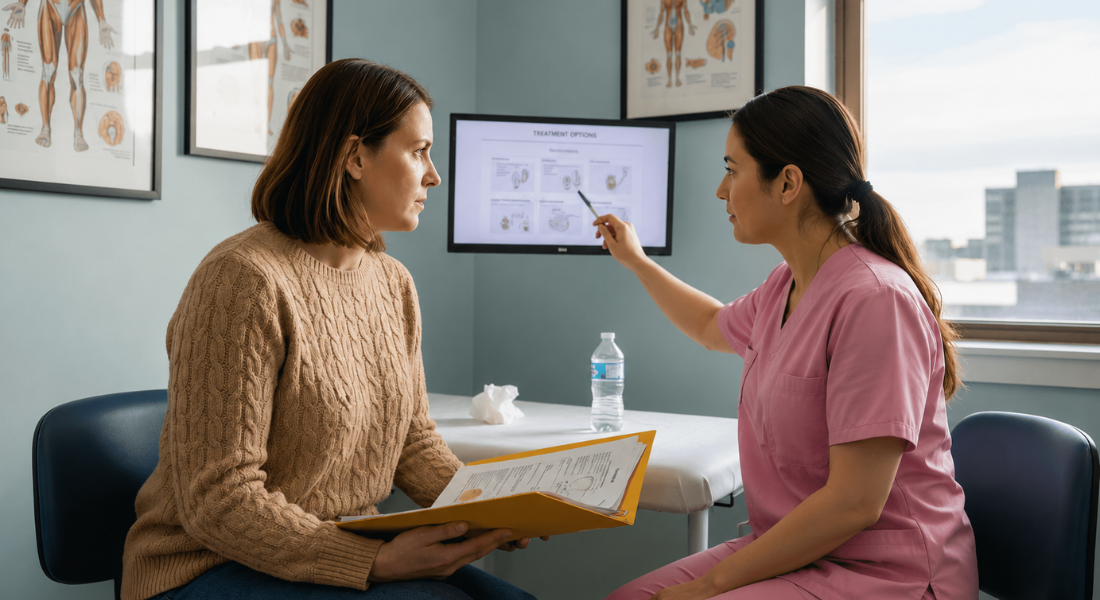
Newer does not always mean more effective. The most appropriate treatment depends on your symptoms, fibroid characteristics and personal goals. Alongside established treatments such as medicines, myomectomy and hysterectomy, you may now be offered newer oral medicines and minimally invasive procedures that can reduce symptoms while helping you avoid major surgery.
The most suitable treatment for you depends on your symptoms, the size and location of your fibroids, your general health and whether you hope to become pregnant in the future. Your specialist will explain which options are suitable for your situation and discuss the benefits, risks and expected outcomes of each approach.
What Does “Latest Fibroid Treatment” Mean?
The latest fibroid treatments include newer medicines and minimally invasive procedures introduced or more widely evaluated in recent years. NICE recommends relugolix–estradiol–norethisterone acetate for moderate to severe fibroid symptoms in adults of reproductive age. NICE also recommends linzagolix for this group, but only when longer-term treatment is intended, normally for more than six months, and specified dosing regimens are used. Some newer procedures are available only in specialist centres or under special clinical-governance arrangements.
A newer treatment is not always the most suitable choice for you. Ask your specialist whether the treatment is established routine care, available only in selected centres or still being evaluated, and how it compares with standard treatments for your symptoms and future pregnancy plans.
UK Guidance Note
Treatment decisions for fibroids should be based on your symptoms, fibroid characteristics, fertility plans and personal preferences. NICE recommends discussing the benefits and risks of different options rather than choosing treatment based only on the size of the fibroid.
Does Every Fibroid Need Treatment?

No. Many fibroids do not cause symptoms and can be safely monitored without treatment. If your fibroids are not causing heavy bleeding, pain, pressure or fertility problems, your specialist may recommend regular review rather than an immediate procedure. This is especially common if you are approaching menopause, when fibroids often become less active.
Treatment is usually considered when fibroids affect your quality of life or future pregnancy plans. Your specialist should explain what symptoms to watch for and when you should return for reassessment, as monitoring is an active management plan rather than simply leaving the fibroids untreated.
How Is the Right Treatment Selected?
Fibroid size matters, but its location can be even more important. A small submucosal fibroid projecting into the womb cavity may cause substantial bleeding, while a larger subserosal fibroid on the outer womb surface may mainly create pressure.
- Your main symptoms: Heavy bleeding may require a different approach from bladder pressure or abdominal enlargement.
- Fibroid location: Submucosal, intramural and subserosal growths respond to different procedures.
- Fibroid number and size: Several large fibroids may not be suitable for a treatment designed for one or two accessible growths.
- The womb cavity: Distortion may influence bleeding, fertility and whether hysteroscopic treatment is possible.
- Pregnancy plans: Some treatments preserve the womb but have limited evidence for future pregnancy.
- Previous treatment: Recurrence or failure of medicine may make an intervention more appropriate.
- Anaesthetic and surgical risk: Your health and previous operations can influence which route is safest.
- Your preferences: Recovery time, contraception, retaining your womb and avoiding repeat procedures may matter to you.
Treatment should therefore be selected through shared decision-making based on symptoms, fibroid characteristics, coexisting conditions and your short- and long-term goals based on symptoms, fibroid characteristics, coexisting conditions and short- and long-term goals rather than using one standard pathway for everyone.
Which Established Non-Hormonal Medicines Still Help?
Tranexamic acid remains an effective treatment if your main symptom is heavy menstrual bleeding. It is taken during your period to reduce blood loss but does not shrink or remove fibroids. Anti-inflammatory medicines, such as ibuprofen, can also help relieve period pain and may reduce bleeding for some people, although they are not suitable for everyone.
If heavy bleeding has caused iron-deficiency anaemia, iron treatment is also important to restore your iron levels and improve your overall health. While these medicines do not treat the fibroids themselves, they can provide effective symptom control and may help you delay or avoid more invasive treatment.
What Role Do Hormonal Treatments Have?
Hormonal treatments can help reduce heavy periods and improve pain caused by fibroids. Depending on your symptoms and medical history, your specialist may recommend combined hormonal contraception, progestogen-only medicines or a hormonal coil. These treatments control symptoms rather than permanently removing fibroids.
The most suitable option depends on your health and the position of your fibroids. For example, a hormonal coil may not be appropriate if a fibroid significantly changes the shape of your womb cavity. Your specialist will discuss the benefits, possible side effects and whether hormonal treatment is suitable for your needs.
Are GnRH Agonist Injections Still Used?
Yes. GnRH agonist injections, such as leuprorelin and goserelin, are still used to treat fibroids. They temporarily lower hormone levels, which can stop periods, reduce heavy bleeding and shrink fibroids. They are often prescribed before surgery or to provide short-term symptom relief while you wait for further treatment.
Because these medicines create a temporary low-oestrogen state, they can cause side effects such as hot flushes, vaginal dryness and reduced bone density. They are usually given for a limited period, and your specialist may recommend add-back hormone therapy to reduce side effects and help protect your bone health.
What Is Relugolix Combination Therapy?
Relugolix combination therapy is a once-daily tablet used to treat moderate to severe fibroid symptoms. It combines a GnRH antagonist with low-dose hormones to reduce heavy menstrual bleeding while helping to minimise the side effects associated with low oestrogen levels. It may also improve some fibroid-related symptoms, including heavy bleeding, which can contribute to iron-deficiency anaemia.
This treatment does not remove fibroids permanently, and symptoms may return after it is stopped. Before prescribing it, your specialist will review your pregnancy plans, bone health, blood-clot risk and other medical conditions to ensure it is a safe and appropriate option for you.
Evidence Note
Clinical studies have shown that GnRH antagonist treatments can significantly reduce heavy menstrual bleeding caused by fibroids in selected patients. However, these medicines control symptoms rather than remove fibroids, and your specialist will consider factors such as bone health, pregnancy plans and other medical conditions before recommending them.
What Is Linzagolix?

Linzagolix is a once-daily oral GnRH antagonist used to treat moderate to severe fibroid symptoms. It helps reduce heavy menstrual bleeding and may improve iron-deficiency anaemia caused by fibroids. Depending on your individual circumstances, it may be prescribed with or without hormonal add-back therapy to help manage side effects.
Before starting linzagolix, your specialist will assess your pregnancy plans, bone health and general medical history. Linzagolix does not provide contraception. If pregnancy is not desired during treatment, your specialist will discuss suitable contraceptive options. While it can control fibroid symptoms, it does not permanently remove fibroids.
How Do the Main Medical Options Compare?
Medical treatment is most useful when bleeding or pain is the main concern and there is no urgent pressure, fertility or diagnostic reason for surgery.
| Treatment | Main purpose | Does it shrink fibroids? | Important considerations |
| Tranexamic acid | Reduces heavy menstrual bleeding | No | Taken during bleeding days; clotting history may affect suitability |
| Anti-inflammatory pain relief | Reduces cramps and pain | No | Stomach, kidney, asthma and cardiovascular risks need consideration |
| Hormonal coil | Reduces bleeding and may suppress periods | Usually not significantly | The womb cavity must allow safe placement |
| Combined hormonal contraception | Regulates or suppresses bleeding | Usually not significantly | Not suitable with some clotting, migraine or cardiovascular risks |
| Progestogen treatment | Reduces or suppresses bleeding | Usually not significantly | Irregular bleeding and other side effects may occur |
| GnRH agonist injection | Temporary symptom suppression and fibroid shrinkage | Yes, temporarily | Usually used for a limited course, often before surgery |
| Relugolix combination therapy | Longer-term oral control of moderate to severe symptoms | May reduce uterine volume, but the main benefit is symptom control rather than permanent fibroid removal | Contains hormonal add-back therapy and requires medical-risk assessment |
| Linzagolix | Longer-term oral control with or without separate add-back therapy | May reduce volume, depending on regimen | NICE recommends specific longer-term regimens; bone-density monitoring and effective non-hormonal contraception may be required |
Recent UK approvals and clinical guidance have expanded the treatment options available for people with moderate to severe fibroid symptoms. Relugolix combination therapy and linzagolix may help reduce heavy menstrual bleeding and pain in selected patients, but your specialist will consider the potential benefits and risks based on your individual circumstances.
Medication can be reviewed or stopped more easily than surgery, but symptoms may recur. A large fibroid causing significant bladder, bowel or abdominal pressure may not respond sufficiently even if menstrual bleeding improves.
What Is Uterine Artery Embolisation?
Uterine artery embolisation (UAE) is a minimally invasive procedure that shrinks fibroids by blocking their blood supply. It may treat multiple fibroids without removing your womb and may improve heavy bleeding, pain and pressure.
UAE is an established treatment that preserves the womb, but its effects on fertility and future pregnancy remain uncertain. If pregnancy is an important future goal, myomectomy is often considered first, although the most appropriate option depends on your fibroids, surgical risks and individual circumstances.
What Is MRI-Guided Focused Ultrasound?
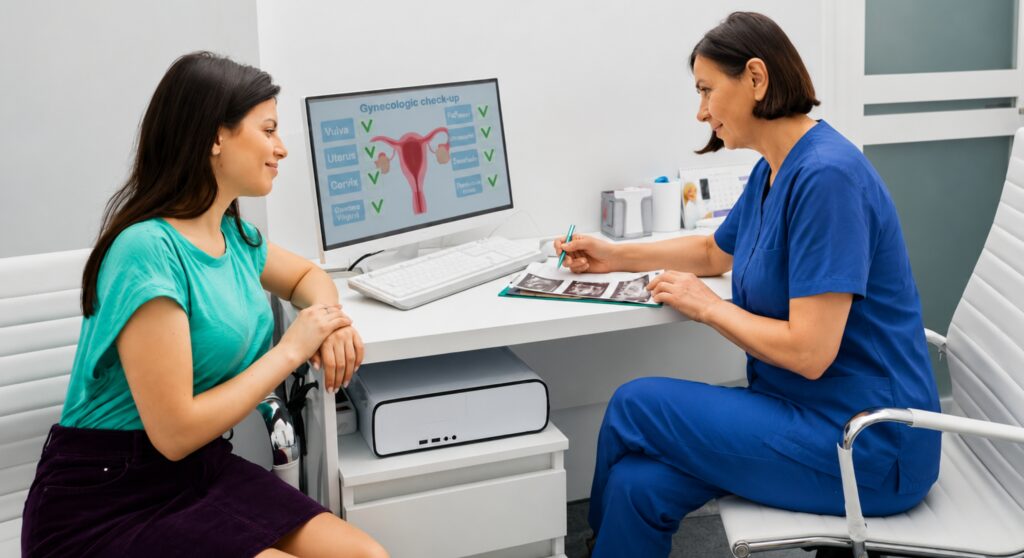
MRI-guided focused ultrasound is a non-invasive treatment that uses focused ultrasound waves to heat and destroy fibroid tissue without surgery. Your womb remains in place, and the treated fibroid gradually shrinks over time.
Availability may vary depending on specialist centres and local services, as eligibility depends on the size, number and location of your fibroids. It is not suitable for everyone, and your specialist will explain whether it is an appropriate option for your situation.
How Does Ultrasound-Guided HIFU Differ?
Ultrasound-guided high-intensity focused ultrasound (HIFU) uses ultrasound, rather than MRI, to guide treatment and destroy fibroid tissue without surgery. It avoids abdominal incisions, but it is only suitable for selected fibroids and is available in specialist centres.
NICE recommends that ultrasound-guided HIFU should only be used with special arrangements for clinical governance, consent and audit or research because evidence on effectiveness remains limited in quality. Your specialist will explain whether it is an appropriate option based on the size, location and number of your fibroids.
What Is Transcervical Radiofrequency Ablation?
Transcervical radiofrequency ablation is a minimally invasive procedure that treats fibroids by passing a device through the vagina and cervix to apply heat directly to the fibroid. The fibroid is not removed but gradually shrinks over the following months, and no abdominal incision is needed.
NICE recommends that transcervical ultrasound-guided radiofrequency ablation should only be used with special arrangements for clinical governance, consent and audit or research because evidence on effectiveness remains limited in quality. Its long-term effectiveness and fertility outcomes are still being studied, so your specialist will discuss whether it is an appropriate option for you.
How Has Hysteroscopic Fibroid Removal Changed?
If you have a fibroid growing into your womb cavity, you may be offered hysteroscopic fibroid removal. This procedure is performed through your vagina and cervix, so you do not need any abdominal cuts. NICE recommends that hysteroscopic mechanical tissue removal should only be used with special arrangements for clinical governance, consent and audit or research because evidence on effectiveness remains limited and rare but serious complications can occur.
This approach is not suitable for every fibroid, and you may need more than one procedure if the fibroid is large or extends deeply into the womb muscle. Your specialist will explain whether you are a suitable candidate and discuss the expected benefits, possible risks and likelihood of complete removal.
What Is the Latest Approach to Minimally Invasive Myomectomy?
If you need a myomectomy, you may be offered minimally invasive surgery using keyhole (laparoscopic) or robotic-assisted techniques. In suitable patients, minimally invasive approaches may reduce recovery time and postoperative discomfort compared with open surgery.
However, minimally invasive surgery is not suitable for everyone. If you have very large or multiple fibroids, open surgery may be the safer option. Your surgeon will explain which approach is most appropriate for you, along with the benefits, possible risks and how the fibroids will be safely removed.
When Is Open Myomectomy Still the Better Treatment?
If you have very large, multiple or deeply embedded fibroids, an open myomectomy may be the most appropriate option. Although it involves a larger incision and a longer recovery than keyhole surgery, it can allow your surgeon to remove complex fibroids and reconstruct the womb when minimally invasive surgery is unsuitable.
Before surgery, your specialist will explain why an open procedure is recommended, the expected recovery and the possible risks. If you hope to become pregnant in the future, you should also discuss how the operation may affect your pregnancy and birth planning.
Which Treatments Are Most Suitable When Fertility Matters?

If a fibroid is thought to be affecting fertility, myomectomy is often considered because it removes the fibroid while preserving the womb. However, the decision depends on the location of the fibroid, fertility history and individual circumstances. Medicines are used to control fibroid symptoms rather than as fertility treatment. Some hormonal treatments are contraceptive, while other medicines, including linzagolix, do not provide contraception and require separate pregnancy prevention. If you are trying to conceive, discuss the timing and suitability of any medicine with your specialist.
Your specialist will recommend the treatment that best matches your fibroids and pregnancy plans, and explain how it may affect your chances of conceiving and having a healthy pregnancy.
Myth vs Fact
| Myth | Fact |
| The newest fibroid treatment is always the best option. | Newer treatments may be suitable for some people, but the right choice depends on symptoms, fibroid characteristics, fertility plans and overall health. |
| New medicines can permanently remove fibroids. | Medicines such as relugolix combination therapy and linzagolix may control symptoms, but they do not permanently remove fibroids. |
| Minimally invasive treatments are suitable for everyone. | Procedures such as UAE, focused ultrasound and radiofrequency ablation are only suitable for selected fibroid patterns. |
| Surgery is always needed if fibroids cause symptoms. | Some people may manage symptoms with medicines or minimally invasive treatments, depending on their circumstances. |
| Keeping the womb always means fertility is preserved. | Some womb-preserving treatments have limited evidence regarding future pregnancy outcomes, so fertility plans should be discussed before treatment. |
Key Takeaways
- Newer fibroid treatments may provide additional options, but the latest treatment is not always the most suitable treatment.
- Your symptoms, fibroid size, location, number and fertility plans help determine which treatment may be appropriate.
- Medicines such as relugolix combination therapy and linzagolix may reduce symptoms but do not remove fibroids.
- Minimally invasive treatments such as UAE, focused ultrasound and radiofrequency ablation may help selected patients avoid major surgery.
- Myomectomy remains an important option when retaining the womb and planning a future pregnancy are priorities.
- A specialist assessment helps balance treatment benefits, possible risks and your personal goals.
Frequently Asked Questions
1. What is the newest treatment available for fibroids?
Recent advances in fibroid treatment include the oral medicines relugolix combination therapy and linzagolix, as well as minimally invasive procedures such as MRI-guided focused ultrasound and transcervical radiofrequency ablation. The most appropriate option depends on symptoms, fibroid characteristics, future pregnancy plans and overall health rather than how new the treatment is.
2. Can the latest fibroid treatments help avoid surgery?
In some cases, yes. Newer oral medicines, uterine artery embolisation and selected image-guided procedures may control symptoms or reduce fibroid size sufficiently to delay or avoid surgery. However, surgery may still be recommended when fibroids cause significant pressure symptoms, fertility problems or persistent symptoms that do not respond to other treatments.
3. Which fibroid treatments preserve the womb?
Several treatments preserve the womb, including myomectomy, uterine artery embolisation, MRI-guided focused ultrasound, radiofrequency ablation and medical therapies. However, preserving the womb does not necessarily mean that future fertility outcomes are well established, so pregnancy plans should always be discussed before treatment.
4. Are minimally invasive fibroid treatments suitable for everyone?
No. Suitability depends on factors such as the size, number and location of the fibroids, the severity of symptoms, previous treatments and individual health considerations. Some people may benefit more from conventional surgery if minimally invasive techniques are unlikely to provide effective or lasting symptom relief.
5. How is the most suitable fibroid treatment chosen?
The most appropriate treatment is based on a combination of factors, including heavy bleeding, pain, pressure symptoms, fibroid size and position, age, general health and future fertility plans. A specialist assessment helps balance the expected benefits, possible risks and long-term outcomes of each treatment option.
Final Thoughts: Choosing the Latest Fibroid Treatment for You
Fibroid treatment continues to evolve, with newer medicines and procedures expanding the range of options available to suitable patients. Alongside established treatments such as medicines, myomectomy and hysterectomy, newer oral therapies and minimally invasive procedures may provide symptom relief with less invasive approaches and potentially shorter recovery times in selected patients.
If you are looking for expert fibroids treatment in London, our specialist team can provide a comprehensive assessment, explain the latest treatment options and recommend the most appropriate investigations or therapies for your individual circumstances. At Gynaecology Clinic London, we tailor treatment discussions around your symptoms, reproductive goals and overall health, helping you understand your options and make informed decisions about your care.
References:
- National Institute for Health and Care Excellence (NICE) (2018) ‘Heavy menstrual bleeding: assessment and management (NICE guideline NG88)’. Published 14 March 2018, last updated 24 May 2021 and last reviewed 19 December 2024. Available at: https://www.nice.org.uk/guidance/ng88
- National Institute for Health and Care Excellence (NICE) (2022) ‘Relugolix–estradiol–norethisterone acetate for treating moderate to severe symptoms of uterine fibroids (Technology Appraisal Guidance TA832)’. Published 19 October 2022. Available at: https://www.nice.org.uk/guidance/ta832
- National Institute for Health and Care Excellence (NICE) (2024) ‘Linzagolix for treating moderate to severe symptoms of uterine fibroids (Technology Appraisal Guidance TA996)’. Published 14 August 2024. Available at: https://www.nice.org.uk/guidance/ta996
- NHS (2026) ‘Fibroids’. Page last reviewed 17 March 2026. Available at: https://www.nhs.uk/conditions/fibroids/
- National Institute for Health and Care Excellence (NICE) (2010) ‘Uterine artery embolisation for fibroids (HealthTech guidance HTG240)’. Published 24 November 2010. Available at: https://www.nice.org.uk/guidance/htg240
- National Institute for Health and Care Excellence (NICE) (2011) ‘Magnetic resonance image-guided transcutaneous focused ultrasound for uterine fibroids (HealthTech guidance HTG277)’. Published 23 November 2011. Available at: https://www.nice.org.uk/guidance/htg277
- National Institute for Health and Care Excellence (NICE) (2019) ‘Ultrasound-guided high-intensity transcutaneous focused ultrasound for symptomatic uterine fibroids (HealthTech guidance HTG523)’. Published 24 July 2019. Available at: https://www.nice.org.uk/guidance/htg523
- National Institute for Health and Care Excellence (NICE) (2021a) ‘Transcervical ultrasound-guided radiofrequency ablation for symptomatic uterine fibroids (HealthTech guidance HTG572)’. Published 31 March 2021 and last reviewed 27 April 2026. Available at: https://www.nice.org.uk/guidance/htg572
- National Institute for Health and Care Excellence (NICE) (2021b) ‘Hysteroscopic mechanical tissue removal (hysteroscopic morcellation) for uterine fibroids (HealthTech guidance HTG590)’. Published 25 August 2021. Available at: https://www.nice.org.uk/guidance/htg590
- Gupta, J.K., Sinha, A., Lumsden, M.A. and Hickey, M. (2014) ‘Uterine artery embolization for symptomatic uterine fibroids’, Cochrane Database of Systematic Reviews, 2014(12), article CD005073. Available at: https://pubmed.ncbi.nlm.nih.gov/25541260/
- Manyonda, I. et al. (2020) ‘Uterine-artery embolization or myomectomy for uterine fibroids’, The New England Journal of Medicine, 383(5), pp. 440–451. Available at: https://pubmed.ncbi.nlm.nih.gov/32726530/
- Daniels, J. et al. (2022) ‘Uterine artery embolisation versus myomectomy for premenopausal women with uterine fibroids wishing to avoid hysterectomy: the FEMME RCT’, Health Technology Assessment, 26(22), pp. 1–74. Available at: https://pubmed.ncbi.nlm.nih.gov/35435818/