



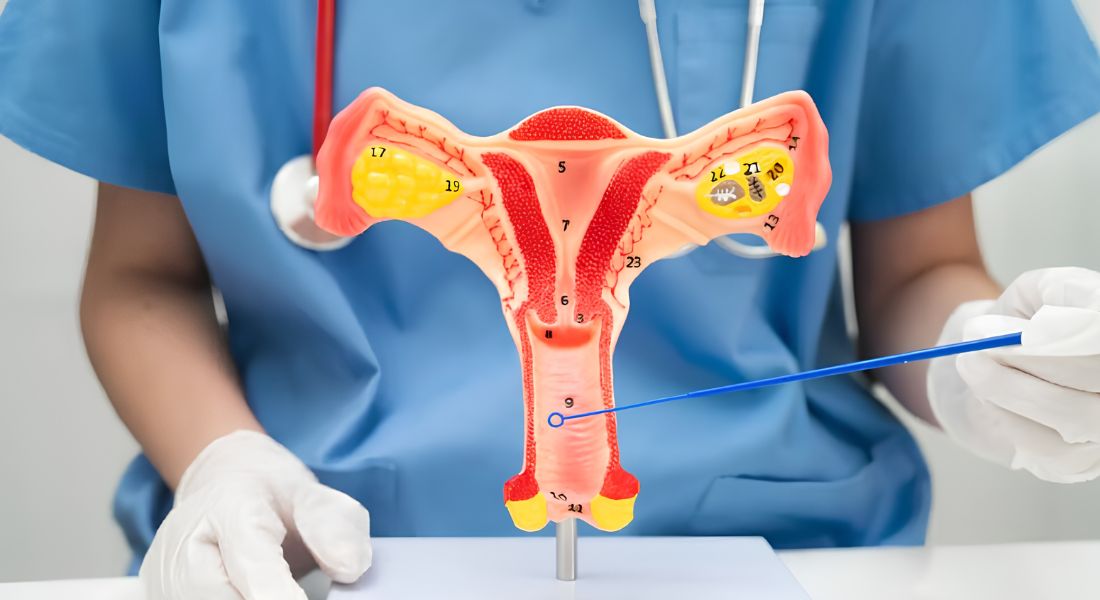
Finding an endometrial polyp while you are trying to conceive can leave you wondering whether it is affecting implantation, delaying pregnancy or interfering with IVF treatment. Polyps can affect fertility in some cases, but their impact is not always predictable, and smaller polyps may have little measurable effect.
Evidence more clearly supports removing a confirmed polyp before intrauterine insemination in selected patients, while the benefit before IVF is less certain. Your decision should take into account the polyp’s size and location, your symptoms, previous treatment and how soon you plan to continue fertility care.
What Is an Endometrial Polyp?
An endometrial polyp is an overgrowth of tissue arising from the lining inside your womb. It may be attached by a thin stalk or have a broader base, and you may have one polyp or several of different sizes.
Most endometrial polyps are benign, but any polyp that is removed is usually sent to a laboratory for testing. Because the womb cavity is where an embryo implants, a polyp projecting into this space may sometimes be relevant to fertility even when it is not causing pain or bleeding.
Why Is the Womb Lining Important for Pregnancy?
For pregnancy to begin, a fertilised egg must reach your womb, attach to the endometrium and start forming the early placenta. Your womb lining changes throughout your menstrual cycle and becomes more receptive to an embryo for a limited time after ovulation.
A polyp or another structural change inside the womb cavity may sometimes affect implantation, but it is rarely the only factor involved. Your fertility assessment should also consider your age, ovulation, fallopian tubes, ovarian reserve, embryo quality and sperm health.
How Might an Endometrial Polyp Interfere with Fertility?
An endometrial polyp may affect your fertility if it changes the area where an embryo needs to attach inside your womb. If a polyp develops near the opening of a fallopian tube, it may interfere with sperm movement or the transport of a fertilised egg.
A polyp may also influence how receptive your womb lining is by causing local inflammation or changes in the signals involved in implantation. However, these effects cannot predict how a specific polyp will affect your chances of becoming pregnant. Many people with endometrial polyps conceive naturally, while others may continue to experience fertility difficulties even after removal.
Evidence Note: How Polyps May Affect Implantation
Proposed mechanisms include local inflammation and changes in proteins involved in preparing the womb lining for embryo implantation. However, the clinical importance of these changes remains uncertain, particularly when a polyp is small.
Can Endometrial Polyps Affect Natural Conception?
Endometrial polyps can sometimes affect your chances of conceiving naturally, especially if no other cause of infertility has been identified. Some studies suggest that pregnancies may occur after hysteroscopic polypectomy, indicating that removing a polyp could help certain people.
- Size, number, and location: The impact of a polyp on fertility can depend on how large it is, how many are present, and where it sits inside your womb.
- Not a Guaranteed Solution: Removal of a polyp is not a definitive fertility treatment, as other factors may also influence conception.
- Part of a Broader Assessment: Polyp removal may be considered as one option within a comprehensive fertility evaluation for both partners.
- Individual Considerations: Your specialist can help decide whether polyp removal is appropriate based on your overall fertility profile and goals.
Overall, endometrial polyps can sometimes contribute to fertility challenges, and removing them may help in specific cases. A personalised approach supports appropriate assessment and treatment planning for your fertility journey.
Do the Size, Number and Location of Polyps Matter?
The size, number and location of an endometrial polyp may influence how likely it is to affect your fertility, but there is no single measurement that can predict whether removal will improve your chances of pregnancy. Smaller polyps, particularly those under 10 mm, may sometimes reduce in size naturally, so monitoring may be considered if you have no symptoms and are not starting fertility treatment soon.
Having multiple polyps may affect more of the womb cavity, although the evidence about their impact is still limited. The location of a polyp may also be important, especially if it is near a fallopian tube opening or an area where an embryo may implant, but research has not consistently identified one location that always affects fertility.
What Symptoms Might Suggest a Polyp?
Many endometrial polyps do not cause any symptoms, and you may only discover one during a transvaginal ultrasound, saline-infusion scan or hysteroscopy carried out as part of fertility testing. When symptoms do occur, bleeding changes are more common than pain.
You may notice spotting between periods, irregular bleeding, unusually heavy periods or bleeding after sex. If bleeding is heavy or ongoing, it can sometimes contribute to iron deficiency anaemia, which may leave you feeling tired, weak, short of breath or aware of your heartbeat. It is important to mention any changes in your bleeding pattern to your fertility specialist so they can decide whether further assessment is needed.
How Are Endometrial Polyps Diagnosed During Fertility Assessment?
A transvaginal ultrasound is commonly used to assess your womb and ovaries during fertility investigations. A polyp may appear as a localised growth or an area of thickening inside your womb cavity, although smaller polyps may sometimes be difficult to identify.
Further tests may be recommended if more detail is needed. Saline-infusion sonography uses sterile fluid to open the womb cavity during an ultrasound, making some polyps easier to see. Hysteroscopy provides a direct view of the inside of your womb using a small camera and can often confirm a polyp and allow removal during the same procedure.
What Does the Fertility Evidence Show?
The effect of endometrial polyps depends partly on how you are trying to conceive. Evidence supporting removal before IUI is more persuasive than evidence supporting routine removal before every IVF cycle.
| Fertility situation | What current evidence suggests | Important limitation |
| Trying naturally | Some observational studies report improved pregnancy after removal | High-quality randomised evidence is limited |
| Unexplained infertility | Removing a confirmed cavity polyp may be reasonable | Other fertility factors must still be assessed |
| Preparing for IUI | One influential randomised trial found a higher cumulative pregnancy rate after polypectomy | The evidence relies heavily on a small number of studies |
| Preparing for first IVF cycle | Routine removal of every small asymptomatic polyp is not clearly supported | Studies use different polyp sizes and IVF protocols |
| Previous failed embryo transfer | Some observational research reports improved outcomes after removal | Age and embryo quality may explain part of the difference |
| Small polyp found during stimulation | Proceeding with treatment may not reduce pregnancy rates in selected cases | Some studies suggest a possible increase in pregnancy loss |
| Routine hysteroscopy with normal imaging | NICE does not recommend it solely to improve IVF outcomes | This does not apply when a polyp or other cavity abnormality is suspected |
The evidence should guide a conversation rather than provide an automatic rule. Your age, embryo availability, bleeding symptoms and previous fertility history may be more important than a small difference reported in one study.
Does Polyp Removal Improve Natural Pregnancy Rates?
Some studies have reported spontaneous pregnancies after endometrial polyp removal in people with unexplained infertility. This suggests that removing a confirmed polyp may help when it is the only clear abnormality found inside your womb, although the evidence is not strong enough to predict the outcome for everyone.
Your age, egg quality and other fertility factors still play an important role, as removing a polyp cannot reverse age-related changes affecting conception. Your specialist may recommend removal if your polyp is large, multiple, causing symptoms or affecting the womb cavity, while monitoring may be considered for smaller polyps when you have time to continue trying naturally.
Can Removing a Polyp Improve IUI Success?
Removing an endometrial polyp before intrauterine insemination (IUI) may improve your chances of pregnancy in some situations. A randomised trial found a higher cumulative pregnancy rate among people who had hysteroscopic polypectomy before IUI compared with those who did not have the polyp removed, although this does not mean success is guaranteed.
These findings support considering polyp removal before IUI when a confirmed polyp is present. Your chances of success will still depend on factors such as your age, duration of infertility, ovulation, whether your fallopian tubes are open and sperm health. Your fertility specialist can help you decide whether removal is the most suitable step for you.
Research Insight:
In the randomised trial, women assigned to hysteroscopic polypectomy had a higher probability of becoming pregnant than those whose polyps were not removed, with a relative risk of 2.1. This supports considering polyp removal before IUI in selected patients, but it does not guarantee pregnancy.
Do Endometrial Polyps Reduce IVF Success?
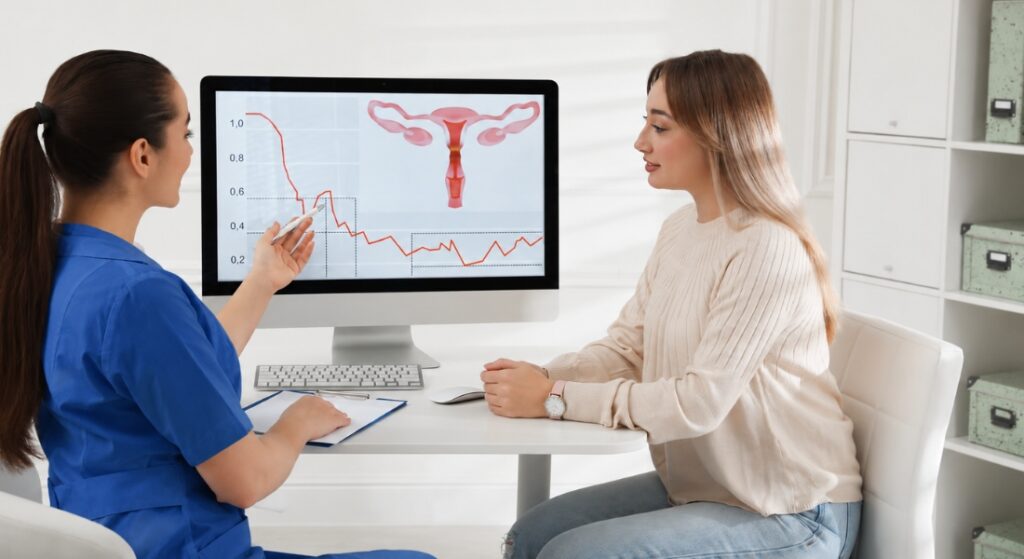
The effect of endometrial polyps on IVF success is less clear than their effect on IUI outcomes. Some research suggests that polyps may affect embryo implantation, while other studies have found similar pregnancy or live birth outcomes when small, symptom-free polyps are left in place.
IVF allows fertilisation to happen in a laboratory, but the embryo still needs to implant successfully inside your womb. Current evidence does not support automatically removing every small polyp before IVF, so your specialist will consider factors such as the size and location of the polyp, your symptoms, previous treatment and your individual fertility situation before recommending the next step.
Should a Small Polyp Be Removed Before IVF?
There is no single polyp size at which removal becomes necessary before IVF. Many specialists may consider monitoring a small, symptom-free polyp, particularly when delaying treatment could affect your fertility plans due to factors such as age or reduced ovarian reserve.
Removal may be more strongly considered if the polyp is larger, causes bleeding, affects the shape of your womb cavity, is one of several polyps or follows previous unsuccessful embryo transfers. Choosing to monitor a small polyp does not mean it is being ignored. Your clinic may repeat imaging after your next period, as some small polyps can disappear or may have been temporary changes rather than true polyps.
Clinical Tip:
If you are approaching your late thirties or have reduced ovarian reserve, your fertility specialist may recommend avoiding unnecessary delays to IVF while balancing the possible benefit of removing a small polyp.
What If a Polyp Is Found During IVF Stimulation?
A polyp may sometimes only become visible after fertility medication has caused your womb lining to thicken. Discovering one after you have started IVF injections can feel frustrating, especially after investing time, money and emotional energy into the treatment cycle.
One option may be to continue with egg collection, freeze suitable embryos and remove the polyp before a later frozen embryo transfer. In some situations, your specialist may discuss proceeding with a fresh transfer if the polyp is small, but the decision should consider factors such as your age, polyp size, symptoms and your individual IVF plan.
What If You Have Had Failed Embryo Transfers?
If you have experienced one or more unsuccessful embryo transfers, your specialist may consider reassessing your womb cavity for possible issues such as an endometrial polyp. Small polyps can sometimes be missed on routine ultrasound, particularly when the womb lining is thicker or the cavity is difficult to assess.
Some studies suggest that removing a suspected polyp may improve outcomes for selected patients, but this does not prove that polyp removal alone is responsible for success. Your IVF outcome can also be influenced by factors such as your age, ovarian response and embryo quality, so your treatment plan should be personalised to your situation.
How Is an Endometrial Polyp Removed?
The standard treatment for removing an endometrial polyp is hysteroscopic polypectomy. During this procedure, a thin camera is passed through your vagina and cervix, allowing your doctor to visualise and remove the polyp during the same procedure.
Small polyps may be removed using fine instruments, while larger growths may require specialised tools such as an electrosurgical loop or tissue-removal system. Hysteroscopic removal allows targeted treatment while preserving the surrounding womb lining and may be performed as an outpatient procedure or with sedation or anaesthesia, depending on your individual circumstances.
Can Polyp Removal Damage Fertility?
Hysteroscopic polypectomy is generally considered a fertility-preserving procedure because it removes the polyp from inside your womb without requiring abdominal surgery or removal of the womb itself. When performed appropriately, the risk of significant scarring inside the womb is considered low.
As with any procedure, there are possible risks, including infection, heavy bleeding, cervical injury or a small risk of womb perforation. Your clinician should discuss these risks and how they apply to your individual circumstances before treatment.
How Soon Can You Try to Conceive After Removal?
Your womb lining usually heals quickly after an uncomplicated hysteroscopic polypectomy. Many people can start trying to conceive once bleeding and discharge have settled, although you should follow the advice provided by your own fertility team.
Fertility treatment may continue during the next menstrual cycle or after one recovery cycle, as there is no strong evidence that waiting several months improves outcomes. Your timeline may depend on factors such as the extent of the procedure, healing, pathology results, your age, ovarian reserve and your planned fertility treatment.
Can Polyps Return After Fertility Treatment?
A new endometrial polyp can develop after you have had a previous polyp removed. This does not necessarily mean the original procedure was incomplete or that anything was done incorrectly. Factors such as multiple polyps, hormonal influences and certain changes in the womb lining may affect the chance of another polyp developing.
Routine repeat hysteroscopy may not be needed after a benign polyp has been completely removed. However, your doctor may recommend further assessment if symptoms return, fertility treatment is delayed or embryo transfers continue to be unsuccessful. Any removed polyp should be sent for laboratory testing, as the results help guide your next steps.
How Should You Decide Whether to Have the Polyp Removed?

Your decision about removing an endometrial polyp should consider more than its size on an ultrasound report. You and your specialist should discuss factors such as your age, symptoms, fertility diagnosis, previous pregnancy history and the type of treatment you are planning.
Removal may be considered when the polyp causes abnormal bleeding, affects the womb cavity or is found before IUI. Monitoring may also be reasonable for a small, symptom-free polyp when delaying treatment could affect your fertility plans. If you are seeking advice about endometrial polyps treatment in London before fertility treatment, take your scan reports, fertility results and details of previous IUI or IVF cycles to help guide the discussion.
Myth vs Fact
| Myth | Fact |
| Every endometrial polyp causes infertility. | Many people with endometrial polyps conceive naturally, and not every polyp affects implantation. |
| Every polyp should be removed before IVF. | Current evidence does not support routine removal of every small, symptom-free polyp before IVF. |
| Removing a polyp guarantees pregnancy. | Polypectomy may improve fertility in selected situations, particularly before IUI, but pregnancy also depends on age, egg quality, sperm health and other fertility factors. |
| A polyp always causes symptoms. | Many endometrial polyps are discovered incidentally during fertility investigations because they cause no symptoms. |
Key Takeaways
- Endometrial polyps do not always reduce fertility, and many people still conceive naturally.
- The size, number and location of a polyp may influence whether treatment is recommended.
- Evidence supporting polyp removal is strongest before IUI, while the benefits before IVF remain less certain.
- Small, symptom-free polyps may sometimes be monitored instead of removed.
- Decisions about treatment should be based on your individual fertility history, symptoms and reproductive plans.
FAQs:
1. Can an endometrial polyp stop you from getting pregnant?
An endometrial polyp can sometimes make it more difficult for you to conceive by affecting embryo implantation, but many people with polyps still become pregnant naturally. Your overall fertility also depends on factors such as your age, ovulation, fallopian tubes, egg quality and sperm health.
2. Should you remove an endometrial polyp before IVF?
You may not need to remove every small, symptom-free polyp before IVF, as current evidence does not support routine removal in all cases. Your fertility specialist will recommend the most appropriate approach based on the polyp’s size, location, your symptoms and your treatment plan.
3. Can removing an endometrial polyp improve fertility?
Removing an endometrial polyp may improve your chances of pregnancy in some situations, particularly before intrauterine insemination (IUI) or when the polyp is thought to affect the womb cavity. However, polyp removal is not a guaranteed fertility treatment, and your overall fertility profile remains important.
4. How is an endometrial polyp removed?
An endometrial polyp is usually removed during a hysteroscopic polypectomy, where your doctor passes a small camera through the cervix to remove the polyp from inside your womb. The procedure is designed to preserve the womb lining and is often performed as a day-case treatment.
5. Can an endometrial polyp come back after treatment?
Yes, a new endometrial polyp can develop after removal, although this does not mean your previous treatment was unsuccessful. You should speak to your specialist if your symptoms return or if you continue to experience fertility difficulties after treatment.
Final Thoughts: Finding the Right Approach for Your Fertility Journey
Discovering that you have an endometrial polyp can be worrying when you’re trying to conceive, but it does not necessarily mean it is preventing pregnancy. While some polyps may affect implantation or fertility, many have little impact, and the decision to remove one should always be based on your individual circumstances rather than a single scan finding. Factors such as the size and location of the polyp, your symptoms, fertility history, and whether you are planning natural conception, IUI or IVF all help guide the most appropriate approach.
A personalised assessment can help ensure that any treatment fits with your overall fertility goals and avoids unnecessary procedures where possible. If you would like specialist support, our team providing endometrial polyps treatment in London can assess your symptoms, discuss your concerns and recommend the most appropriate investigations or treatment options based on your individual needs and circumstances.
References:
- Pérez-Medina, T., Bajo-Arenas, J.M., Salazar, F. et al. (2005) ‘Endometrial polyps and their implication in the pregnancy rates of patients undergoing intrauterine insemination: a prospective, randomized study’, Human Reproduction, 20(6), pp. 1632–1635. Available at: https://pubmed.ncbi.nlm.nih.gov/15760959/
- Jee, B.C. and Jeong, H.G. (2021) ‘Management of endometrial polyps in infertile women: A mini-review’, Clinical and Experimental Reproductive Medicine, 48(3), pp. 198–202. Available at: https://pmc.ncbi.nlm.nih.gov/articles/PMC8421660/
- Al Chami, A. and Saridogan, E. (2017) ‘Endometrial polyps and subfertility’, The Journal of Obstetrics and Gynaecology of India, 67(1), pp. 9–14. Available at: https://pmc.ncbi.nlm.nih.gov/articles/PMC5306103/
- National Institute for Health and Care Excellence (NICE) (2026) Fertility problems: assessment and treatment. NICE guideline NG257. London: NICE. Available at: https://www.nice.org.uk/guidance/ng257
- AAGL Advancing Minimally Invasive Gynecology Worldwide (2012) ‘AAGL practice report: practice guidelines for the diagnosis and management of endometrial polyps’, Journal of Minimally Invasive Gynecology, 19(1), pp. 3–10. Available at: https://www.sciencedirect.com/science/article/abs/pii/S1553465011011873