



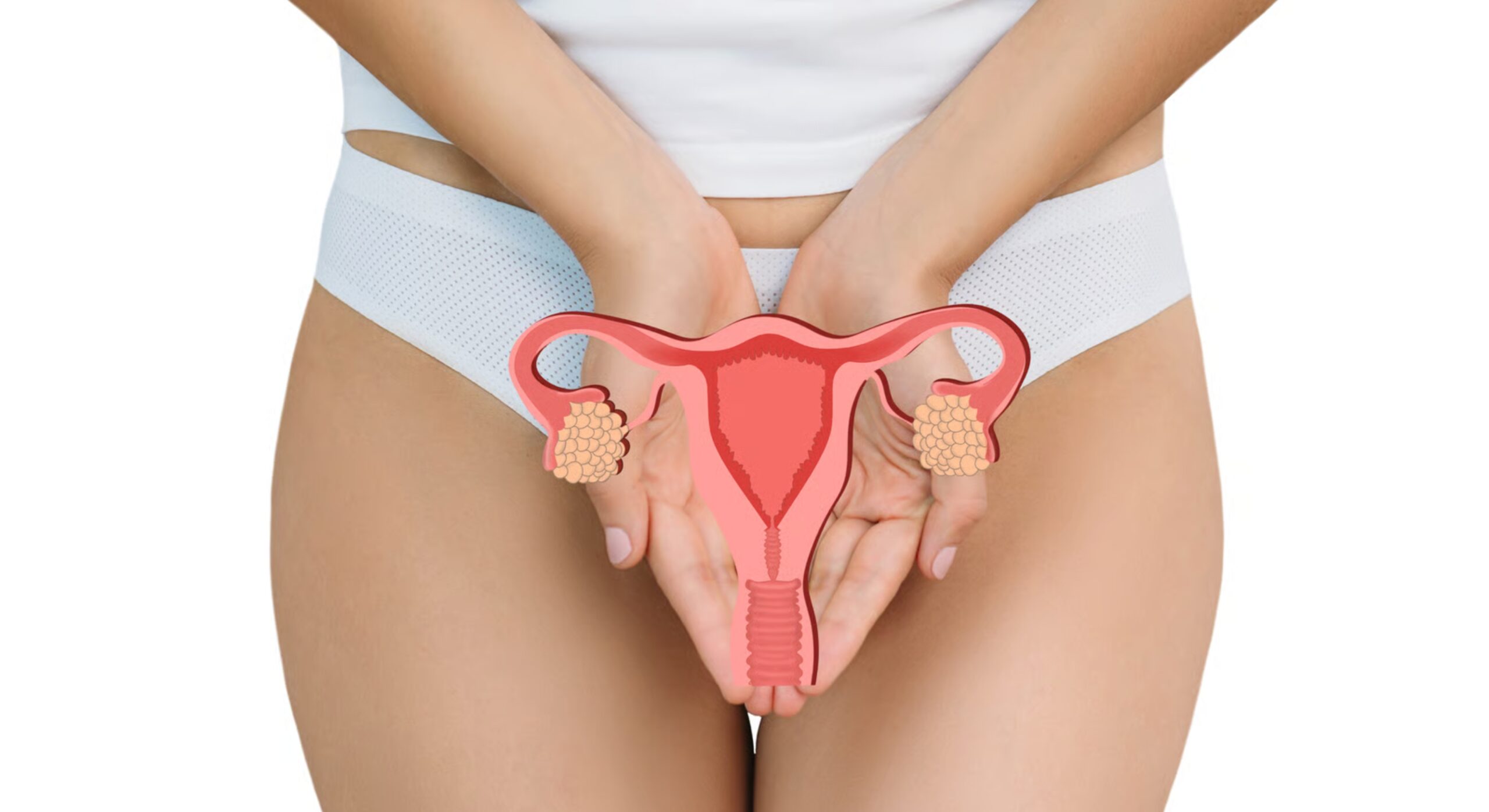
Adenomyosis and endometriosis are separate gynaecological conditions, but they can cause similar symptoms such as painful periods, pelvic pain and heavy bleeding. The main difference is where the tissue similar to the womb lining is found: adenomyosis affects the muscular wall of your womb, whereas endometriosis occurs when similar tissue develops outside the womb.
You can have either condition on its own or both at the same time, which is why symptoms can sometimes be difficult to identify. Neither condition is cancer, and having adenomyosis or endometriosis does not mean you have cancer.
What Is the Main Difference?
Adenomyosis occurs when tissue similar to the lining of your womb grows within the muscular wall of the womb itself. This can cause the womb muscle to become thicker, tender or enlarged, which may contribute to symptoms such as heavy periods, painful periods and pelvic pressure.
Endometriosis occurs when similar tissue grows outside your womb, often affecting areas such as the pelvic lining, ovaries, fallopian tubes, bowel or bladder. While both conditions are influenced by hormonal changes during the menstrual cycle and can cause symptoms around your period, their different locations can affect how they are diagnosed and treated.
What Is Adenomyosis?
Your womb has an inner lining called the endometrium and a thick muscular layer called the myometrium. With adenomyosis, tissue similar to the endometrium is found within the muscular wall of your womb, where it continues to respond to hormonal changes during your menstrual cycle. This can contribute to inflammation, tenderness and thickening of the womb muscle, leading to symptoms such as heavy periods, painful periods and pelvic discomfort.
Adenomyosis may be diffuse, affecting a wider area of the womb muscle, or focal, affecting a more localised area. A focal, well-defined mass may sometimes be described as an adenomyoma. While some people have no noticeable symptoms, others experience pain and bleeding that affects everyday activities such as working, exercising, sleeping or travelling.
What Is Endometriosis?
Endometriosis is a long-term condition where tissue similar to the lining of your womb grows outside your womb. It can affect areas such as the pelvic lining, ovaries, fallopian tubes, bowel, bladder and other structures within your pelvis, where it may contribute to inflammation and scarring.
You may experience symptoms including painful periods, ongoing pelvic pain, pain during sex or discomfort when opening your bowels or passing urine. The extent of endometriosis seen during investigations does not always match how severe your symptoms feel, as some people experience significant pain with limited visible disease.
Adenomyosis and Endometriosis at a Glance
Adenomyosis and endometriosis can share similar symptoms, but they are not the same condition. Understanding the differences can help you have a clearer discussion with your doctor about your symptoms, possible investigations and treatment options.
| Feature | Adenomyosis | Endometriosis |
| Main location | Within the muscular wall of the womb | Outside the womb, usually within the pelvis |
| Bleeding symptoms | Heavy or prolonged periods are common | Bleeding changes can occur, but pelvic pain is often a more prominent feature |
| Common pain pattern | Severe cramps, tender womb and pelvic pressure | Period pain, persistent pelvic pain and pain during sex |
| Bowel or bladder symptoms | Less characteristic, although pelvic pressure may affect nearby organs | Can occur when disease affects or irritates the bowel or bladder |
| First-line imaging | Transvaginal ultrasound is generally preferred when adenomyosis is suspected | NICE recommends transvaginal ultrasound when endometriosis is suspected, even if the examination is normal |
| Role of MRI | May clarify uncertain or complex scan findings | May be used to assess deep endometriosis or help map its extent before treatment |
| Definitive surgical treatment | Hysterectomy can cure uterine adenomyosis | No operation guarantees a permanent cure |
| Fertility | Possible association, but the individual effect is difficult to predict | Can affect fertility in some people |
| Can both occur together? | Yes | Yes |
The comparison below provides a general overview, but it cannot confirm which condition you have. Your symptoms, medical history and scan findings need to be considered together, as you may have adenomyosis, endometriosis, both conditions or another explanation for your symptoms.
Which Symptoms Do They Share?
Adenomyosis and endometriosis can cause similar symptoms, including painful periods, pelvic pain and discomfort during or after sex. Heavy or prolonged bleeding can also occur, although it is more commonly associated with adenomyosis. If your symptoms repeatedly affect your sleep, energy levels or daily routine, it is worth seeking medical advice.
The impact can extend beyond physical symptoms, as you may find yourself planning work, exercise, social activities or travel around your menstrual cycle. Because symptoms overlap with other conditions such as fibroids, ovarian cysts, pelvic infections and bowel or bladder problems, a proper assessment is needed to understand the possible cause.
How Do Their Bleeding Patterns Differ?
Adenomyosis commonly causes heavy, prolonged or increasingly painful periods. You may notice that you need to change period products more often, use more than one product at a time or wake during the night because of heavy bleeding. Passing large clots or experiencing flooding can also affect your confidence and daily routine.
Endometriosis can also occur alongside heavy periods, but pain is often the main symptom rather than changes in bleeding. You should not assume that bleeding between periods or after sex is caused by either condition, as these symptoms can have other causes and may need medical assessment.
How Does the Pain Feel?
Adenomyosis pain is often felt within the womb area and may include strong cramping, lower abdominal pressure, tenderness or a feeling of heaviness. You may notice that the discomfort becomes worse around your period, and some people also experience bloating or an ongoing aching sensation between periods.
Endometriosis pain can affect a wider area of your pelvis and may include painful periods, pain between periods, deep pain during sex or discomfort with bowel movements or urination. The pattern and location of your pain alone cannot confirm which condition you have, especially as you can have both adenomyosis and endometriosis at the same time.
Bowel, Bladder and Sexual Symptoms
Bowel and bladder symptoms are more commonly associated with endometriosis, especially when the condition affects areas close to these organs. You may experience painful bowel movements, discomfort when passing urine or symptoms that become more noticeable around your period. However, these symptoms do not always mean that endometriosis has directly affected the bowel or bladder, as other factors such as inflammation or pelvic-floor problems can also contribute.
Pain during or after penetrative sex can occur with both adenomyosis and endometriosis. You may experience deep pelvic pain with endometriosis or discomfort caused by a tender, enlarged womb with adenomyosis. It is important to discuss painful sex with your doctor, including where the pain occurs, how long it lasts and whether it changes during your cycle.
Can Either Condition Cause Symptoms Outside Your Period?
Yes, both adenomyosis and endometriosis can cause symptoms that continue outside your period. While symptoms often become worse around menstruation, you may still experience pelvic discomfort, pain or other changes at different times during your cycle.
Adenomyosis may cause ongoing pelvic aching, heaviness or pressure between periods, while endometriosis can affect pelvic, bowel, bladder or sexual symptoms throughout the month. Keeping a symptom diary can help you and your doctor identify patterns by recording your bleeding, pain, medication use and how symptoms affect your daily life.
Clinical Tip: Keep a Symptom Diary
A symptom diary can make your consultation much more useful. Try to record when pain happens, how severe it is, whether it is linked to your period, sex, bowel movements or urination, and how much bleeding you experience. NICE recommends considering a symptom diary for suspected endometriosis because it can support clearer discussions with your doctor.
Can Adenomyosis and Endometriosis Occur Together?
Yes, you can have both adenomyosis and endometriosis at the same time. Having both conditions may explain why you experience a combination of symptoms, such as heavy bleeding and womb tenderness alongside pelvic pain, bowel symptoms or pain during sex.
When both conditions are present, treating one may not always relieve every symptom. This is why your assessment should look at your overall pattern of symptoms rather than focusing only on one diagnosis seen on a scan. Your doctor can consider whether further investigation or a different treatment approach may be needed to address all your symptoms.
Do the Conditions Have the Same Cause?
The exact causes of adenomyosis and endometriosis are not fully understood. Researchers believe that factors such as hormones, inflammation, immune responses, genetics and changes in how certain tissues behave may contribute, but no single cause explains every case.
You have not developed either condition because of your diet, exercise habits, sexual activity, hygiene or any personal failing. Adenomyosis affects people with a womb, while endometriosis can affect people who have or have had a womb.
How Can the Conditions Affect Fertility?
Endometriosis can make it more difficult to become pregnant for some people because inflammation, ovarian endometriomas and scarring around the fallopian tubes may affect fertility. Adenomyosis may also influence fertility in certain cases, although the link is less clear.
- Not Always Infertile: Having either condition does not automatically mean you cannot conceive; many people become pregnant naturally.
- Other Influencing Factors: Age, ovulation, ovarian reserve, fallopian tube health, your partner’s fertility, and overall health all affect your chances of pregnancy.
- Planning a Pregnancy: Discuss your plans with a gynaecologist, as some treatments may not be suitable when trying to conceive.
- Individualised Advice: Your doctor can provide guidance based on your specific circumstances to optimise fertility outcomes.
If you are planning a pregnancy or experiencing difficulty conceiving, ask for advice that considers the diagnosis alongside your age, reproductive health and individual fertility factors.
What Happens During Your Assessment?
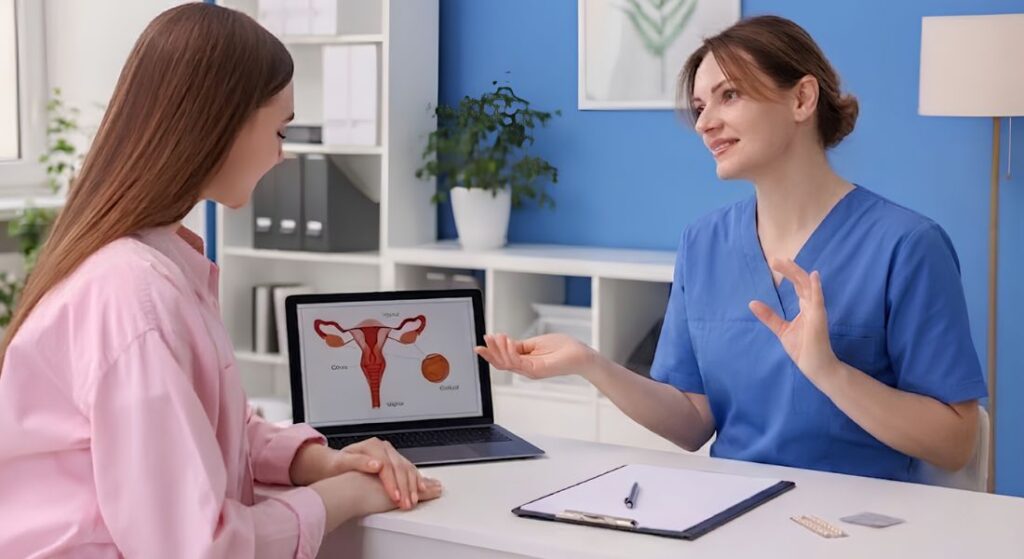
Your gynaecologist will usually begin by discussing your periods, pain and any bowel, bladder or sexual symptoms you are experiencing. They may also ask about your medical history, previous pregnancies, contraception, fertility plans and treatments you have already tried. Explaining how symptoms affect your daily life can help your doctor understand their severity.
You may be offered an abdominal or internal pelvic examination to assess areas such as tenderness, swelling, womb size or pelvic movement. Your doctor should explain why an examination is recommended and ask for your consent beforehand. You can ask questions, request a chaperone and ask for the examination to stop at any time.
How Is Adenomyosis Diagnosed?
A transvaginal ultrasound is usually the first imaging test used when adenomyosis is suspected. If you have heavy periods alongside significant period pain or a bulky, tender womb, this scan can help your doctor assess changes in your womb and ovaries without using radiation.
During the scan, a slim ultrasound probe is gently inserted into your vagina to create detailed images using sound waves. Your doctor may look for features such as thickening of the womb muscle, small cystic areas or a bulky appearance of the womb, although the accuracy can depend on the quality of the scan and the clinician’s experience. An MRI may be considered if the ultrasound does not provide a clear answer or if further detail is needed.
Evidence Note
NICE guidance on heavy menstrual bleeding recommends transvaginal ultrasound when adenomyosis is suspected, particularly if heavy bleeding is accompanied by significant period pain or a bulky, tender womb on examination. NICE also advises that MRI should not usually be used as the first-line test for heavy menstrual bleeding, although it may be helpful when ultrasound is unclear or when more detailed treatment planning is needed. For you, this means ultrasound is often the first useful imaging test, but your scan results should always be interpreted alongside your symptoms and examination findings.
How Is Endometriosis Diagnosed?
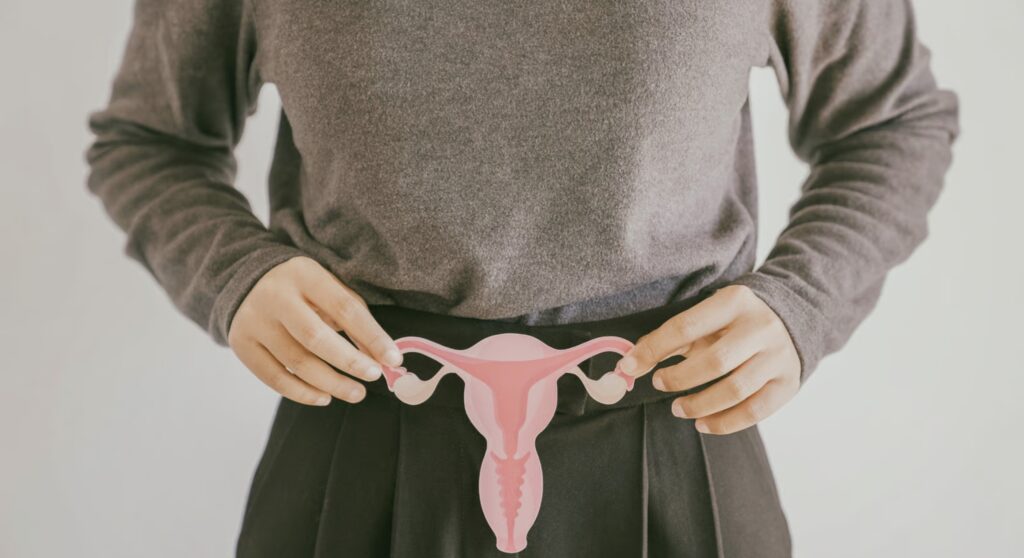
If endometriosis is suspected, your doctor may recommend a transvaginal ultrasound, even when your pelvic examination appears normal. The scan can help identify some signs of endometriosis, such as ovarian endometriomas, deep endometriosis or other possible causes of your symptoms.
A normal ultrasound does not completely rule out endometriosis, as some areas of disease can be difficult to detect. An MRI may be used when deep endometriosis is suspected or when your doctor needs more detail before planning treatment. In some cases, laparoscopy, which is keyhole surgery that allows direct examination of the pelvis, may be considered if symptoms continue despite normal imaging results.
UK Guidance Note:
NICE recommends offering transvaginal ultrasound to people with suspected endometriosis, even when pelvic or abdominal examination is normal. The scan can help identify ovarian endometriomas, deep endometriosis and other possible causes of symptoms. However, NICE also states that endometriosis should not be excluded if examination and ultrasound are normal, and referral may still be needed when symptoms persist.
Can One Scan Diagnose Both Conditions?
A carefully performed transvaginal ultrasound can assess your womb for signs of adenomyosis while also looking for features of endometriosis. This can be helpful because you can have both conditions at the same time, and the scan may also identify other causes of symptoms such as fibroids or ovarian cysts.
However, an ultrasound cannot detect every type of endometriosis, and a normal scan does not always explain ongoing symptoms. If you continue to experience cyclical pain, painful sex or bowel symptoms, your doctor should consider your full symptom pattern rather than relying on scan results alone.
Which Treatments Do the Conditions Share?
Pain-relieving medicines can be used to help manage symptoms of both adenomyosis and endometriosis. Options may include paracetamol or non-steroidal anti-inflammatory drugs (NSAIDs), although NSAIDs are not suitable for everyone and should be discussed with a healthcare professional if you have any concerns.
Hormonal treatments, such as the combined contraceptive pill, progestogen-only treatments or a hormonal coil, may also help reduce pain and bleeding in both conditions. These treatments aim to control symptoms rather than remove the underlying condition, and your fertility plans, medical history and treatment preferences should be considered when choosing the most suitable option.
How Does Treatment for Adenomyosis Differ?
Treatment for adenomyosis often focuses on reducing heavy bleeding as well as managing pain. Options may include anti-inflammatory painkillers, tranexamic acid, hormonal contraception or a hormonal intrauterine system, depending on your symptoms and individual circumstances.
Uterine artery embolisation may be considered for selected people with adenomyosis, particularly when medicines have not helped and future pregnancy is not planned. Its effect on fertility and pregnancy must be discussed carefully, so specialist counselling is important before treatment. A hysterectomy removes the womb and is the definitive treatment for adenomyosis within it. However, it is major surgery, ends the possibility of carrying a pregnancy and may not resolve symptoms caused by coexisting endometriosis or another source of pelvic pain.
How Does Treatment for Endometriosis Differ?
Treatment for endometriosis may include pain relief, hormonal medication or surgery, depending on your symptoms, the location of the disease and your fertility plans. Keyhole surgery can be used to remove or treat visible areas of endometriosis and release scar tissue, although more complex cases may require input from a specialist team.
Unlike adenomyosis, endometriosis cannot always be cured by removing the womb because the affected tissue may be present elsewhere in your pelvis. Surgery can improve symptoms, but the condition may persist or return, so your treatment plan should be based on your individual needs and circumstances.
When Should You Seek Urgent Medical Advice?

You should seek urgent advice if pelvic pain becomes severe, sudden or worse than usual, especially if painkillers do not help. You should also seek prompt help if pelvic pain occurs with fever, vomiting, fainting, dizziness, shoulder-tip pain, difficulty passing urine, possible pregnancy or very heavy bleeding.
Any vaginal bleeding after menopause should be checked by a GP, even if it has happened only once or involves a small amount of spotting. Bleeding between periods or after sex should also be discussed with a doctor, especially if it is new, persistent or keeps returning.
Heavy bleeding can also lead to iron-deficiency anaemia. If you feel unusually tired, breathless, dizzy, faint or notice palpitations, you should speak to your GP or gynaecologist about whether blood tests are needed.
Myth vs Fact:
| Myth | Fact |
| Adenomyosis and endometriosis are the same condition. | They are different. Adenomyosis affects the womb muscle, while endometriosis occurs outside the womb. |
| You cannot have both conditions together. | You can have adenomyosis and endometriosis at the same time. |
| A normal ultrasound rules out endometriosis. | Endometriosis can still be present even if ultrasound is normal. |
| Heavy periods always mean adenomyosis. | Heavy bleeding can also be linked to fibroids, polyps, hormonal causes or other conditions. |
| Hysterectomy cures all endometriosis symptoms. | Endometriosis may remain outside the womb, so symptoms can persist or recur. |
| Pain severity always matches scan findings. | Symptoms do not always match what is seen on imaging or laparoscopy. |
| If your scan is normal, your symptoms are not caused by gynaecological disease. | Some conditions, including endometriosis, may not be visible on routine imaging. Your symptoms still deserve assessment. |
Key Takeaways:
- Adenomyosis affects the muscular wall of the womb.
- Endometriosis involves tissue similar to the womb lining growing outside the womb.
- Both conditions can cause painful periods, pelvic pain, pain during sex and fertility concerns.
- Heavy or prolonged bleeding is more commonly linked with adenomyosis, although it can occur with endometriosis too.
- Bowel and bladder symptoms are more commonly linked with endometriosis, especially when symptoms are cyclical.
- You can have adenomyosis and endometriosis at the same time.
- A normal scan does not always rule out endometriosis.
- Treatment should be based on your symptoms, fertility plans, scan findings, medical history and personal priorities.
- Diagnosis can be challenging because symptoms overlap with other conditions, and imaging findings do not always reflect symptom severity.
FAQs:
1. Can you have adenomyosis and endometriosis at the same time?
Yes, it is possible to have both adenomyosis and endometriosis together. Because the symptoms can overlap, such as painful periods, pelvic pain and fertility concerns, a detailed assessment is needed to understand whether one or both conditions are contributing to your symptoms.
2. Is adenomyosis worse than endometriosis?
Neither condition is always worse than the other, as severity depends on your symptoms, the location of the disease and how it affects your daily life. Some people experience significant pain from mild disease, while others with more extensive findings may have fewer symptoms.
3. Can adenomyosis or endometriosis affect fertility?
Both conditions may affect fertility in some people, but having either diagnosis does not mean you cannot become pregnant. Your chances depend on several factors, including your age, ovarian function, fallopian tube health, male-factor fertility where applicable, and the severity of the condition.
4. How are adenomyosis and endometriosis diagnosed?
Diagnosis usually involves discussing your symptoms, medical history and examination findings alongside imaging tests. A specialist transvaginal ultrasound can help identify adenomyosis and some forms of endometriosis, while MRI or laparoscopy may be considered in certain situations.
5. Can adenomyosis and endometriosis be cured?
Hysterectomy removes the womb and therefore definitively treats adenomyosis within it. However, it is major surgery and may not resolve pelvic pain caused by coexisting endometriosis or another condition. There is currently no treatment that guarantees a permanent cure for endometriosis, although medical and surgical treatments can help manage symptoms.
Final Thoughts: Understanding the Differences Between Adenomyosis and Endometriosis
Adenomyosis and endometriosis can cause similar symptoms, including painful periods, pelvic pain, discomfort during sex and fertility concerns, but they are different conditions affecting different areas of the body. Understanding these differences can help you have a clearer discussion with your doctor about your symptoms, investigations and treatment options.
You can also have both conditions at the same time, which is why diagnosis often requires looking at your complete symptom pattern rather than focusing on one scan result alone. Treatment should be personalised around your symptoms, fertility plans, overall health and what matters most to you. If you are considering assessment or treatment for adenomyosis, endometriosis or ongoing pelvic pain in London, you can contact Gynaecology Clinic London to discuss your symptoms, investigations and treatment options.
References:
- National Institute for Health and Care Excellence (NICE) (2018, updated 2026) Heavy menstrual bleeding: assessment and management. NICE guideline NG88. Available at: https://www.nice.org.uk/guidance/ng88/chapter/recommendations
- National Institute for Health and Care Excellence (NICE) (2017, amended 2024) Endometriosis: diagnosis and management. NICE guideline NG73. Available at: https://www.nice.org.uk/guidance/ng73/chapter/Recommendations
- NHS (n.d.) Adenomyosis. Available at: https://www.nhs.uk/conditions/adenomyosis/
- Becker, C.M., Bokor, A., Heikinheimo, O. et al. (2022) ‘ESHRE guideline: endometriosis’, Human Reproduction Open, 2022(2), hoac009. Available at: https://academic.oup.com/hropen/article/2022/2/hoac009/6549153
- Dason, E.S. et al. (2023) Guideline No. 437: Diagnosis and Management of Adenomyosis, Journal of Obstetrics and Gynaecology Canada, 45(6), pp.417–429.e1. Available at: https://www.sciencedirect.com/science/article/abs/pii/S1701216323003079
- General Medical Council (GMC) (2024) Intimate examinations and chaperones. Available at: https://www.gmc-uk.org/professional-standards/the-professional-standards/intimate-examinations-and-chaperones
- NHS (no date) Ectopic pregnancy: symptoms. Available at: https://www.nhs.uk/conditions/ectopic-pregnancy/symptoms/
- National Institute for Health and Care Excellence (NICE) (2015, last updated 2026) Suspected cancer: recognition and referral. NICE guideline NG12. Available at: https://www.nice.org.uk/guidance/ng12