




Endometrial polyps and fibroids are both growths that can develop in your womb, but they come from different tissues. A polyp grows from the inner lining of your womb, while a fibroid develops from the muscular wall, which means their symptoms and treatment options can differ.
Most of these growths are benign, but your doctor may recommend different tests or treatments depending on their size, location and symptoms. Polyps are often removed through hysteroscopy, while fibroid treatment depends on where the fibroid is growing and how it affects you.
What Is the Main Difference?
An endometrial polyp is a growth that develops from the lining inside your womb, known as the endometrium. It usually projects into the womb cavity and may be attached by a thin stalk or a broader base.
A fibroid is a non-cancerous growth that develops from the muscle and fibrous tissue of your womb. Although both conditions can cause bleeding problems, fibroids can grow much larger and may cause symptoms such as pelvic heaviness, frequent urination or constipation.
What Is an Endometrial Polyp?
Your endometrium is the lining inside your womb that changes throughout your menstrual cycle in response to hormones. An endometrial polyp develops when a small area of this lining grows more than the surrounding tissue, creating a growth made up of glands, blood vessels and supporting tissue.
You may have a polyp without noticing any symptoms, as some are only found during an ultrasound, fertility assessment or hysteroscopy. When symptoms occur, you may experience irregular bleeding, heavier periods, bleeding between periods or bleeding after menopause.
What Is a Uterine Fibroid?
A uterine fibroid, also known as a leiomyoma, is a benign growth that develops from the muscle and fibrous tissue of your womb. Fibroids can vary greatly in size and location, which means the symptoms you experience can be very different from someone else.
A small fibroid may not cause any problems, while one that grows into your womb cavity can contribute to heavy bleeding. You may not need treatment if your fibroids are not causing symptoms, but your specialist can discuss options if they affect your daily life or health.
Polyps and Fibroids at a Glance
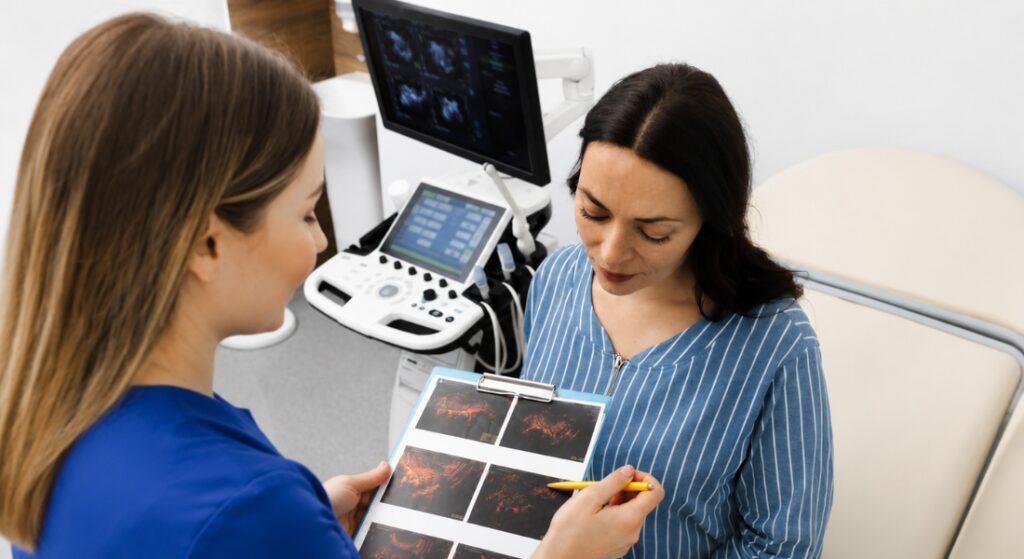
Endometrial polyps and fibroids can sometimes appear similar on scans, particularly when a fibroid grows into your womb cavity. Your specialist will consider your symptoms and investigation results together to determine the most likely diagnosis.
| Feature | Endometrial polyp | Uterine fibroid |
| Tissue of origin | Develops from the lining of your womb (endometrium) | Develops from the muscle and fibrous tissue of your womb |
| Typical location | Usually grows into the womb cavity | Can develop inside the cavity, within the womb muscle or on the outer surface |
| Usual texture | Softer endometrial tissue | Firmer muscular growth |
| Common bleeding pattern | Spotting, irregular bleeding or bleeding after menopause | Heavy, prolonged or painful periods |
| Pressure symptoms | Less common | More likely with larger or multiple fibroids |
| Common investigations | Ultrasound and hysteroscopy | Ultrasound, with MRI or hysteroscopy in selected cases |
| Common procedures | Hysteroscopic polypectomy | Myomectomy, hysteroscopic removal, embolisation or hysterectomy depending on your needs |
| Laboratory examination | Removed tissue is usually sent for histology | Removed fibroid tissue may also be examined |
| Effect on fertility | May affect implantation in some cases | Depends on whether the fibroid changes the shape of your womb cavity |
| Can it recur? | New polyps can develop after removal in some people | Fibroids can grow or new fibroids can appear |
Hysteroscopy can help your gynaecologist distinguish between a polyp and a fibroid that projects into the womb cavity because it allows direct examination. However, fibroids within the womb muscle or on the outer surface are usually assessed more effectively with ultrasound or MRI.
Evidence Note: Why location matters
Research and clinical guidance indicate that the effect of endometrial polyps and fibroids depends largely on whether they alter the shape of the uterine cavity. Cavity-distorting growths, including some endometrial polyps and submucosal fibroids, may have a greater effect on implantation compared with growths that do not change the cavity shape. This is why your specialist considers the exact position of a growth, not only its size, when discussing fertility and treatment options.
Which Symptoms Do Polyps and Fibroids Share?
Both endometrial polyps and fibroids can cause heavy or irregular bleeding, which may affect your daily activities, sleep and overall quality of life. You may notice longer periods, more frequent bleeding or changes in your usual menstrual pattern.
Both conditions can also contribute to iron-deficiency anaemia if bleeding is ongoing, causing symptoms such as tiredness or weakness. If you are having fertility concerns, your specialist may consider either condition during assessment, although other factors such as ovulation, age and reproductive health also need to be considered.
How Do Their Bleeding Patterns Differ?
If you have an endometrial polyp, you may notice bleeding outside your normal period, such as spotting between periods, bleeding after sex or irregular bleeding that does not follow your usual cycle. Polyps can also cause bleeding after menopause, which should always be assessed by a healthcare professional.
Fibroids are more commonly linked with heavy or prolonged periods, especially when they affect the shape of your womb cavity. However, bleeding patterns can overlap, so your gynaecologist will need to consider your symptoms alongside scans and other investigations to identify the cause.
Which Condition Is More Likely to Cause Pain or Pressure?
If you have a small endometrial polyp, you are unlikely to experience significant pelvic pressure because polyps usually develop inside your womb cavity and are often small. A larger polyp may occasionally cause cramping, but ongoing or severe pain may suggest another cause.
Fibroids are more likely to cause pressure symptoms, particularly when they are large or multiple. You may notice pelvic heaviness, lower abdominal discomfort, back pain, constipation or needing to pass urine more often, although other conditions can cause similar symptoms.
Are Polyps or Fibroids Cancerous?
Most endometrial polyps and fibroids are benign, meaning they are not cancerous. However, a small number of polyps may contain abnormal or precancerous changes, especially when you have bleeding after menopause, which is why removed polyp tissue is usually examined in a laboratory.
Fibroids are also usually non-cancerous and do not generally increase your risk of womb cancer. If you notice new, rapidly changing or unusual symptoms, your doctor can assess the cause and recommend the most appropriate tests or treatment for you.
Why Do Polyps and Fibroids Develop?
Your endometrial polyp may develop because of localised overgrowth of hormone-responsive tissue within the lining of your womb. Factors such as age, oestrogen exposure, obesity and certain medicines may increase your likelihood, but they do not mean you will definitely develop a polyp.
Fibroids are also influenced by hormones, genetics and changes within your womb muscle cells. You cannot develop either condition because of poor hygiene or something you did wrong, and although healthy lifestyle choices support your overall wellbeing, no diet or supplement can reliably remove a polyp or fibroid.
What Happens During Your Initial Assessment?
During your assessment, your clinician will ask about your bleeding pattern, symptoms and how they affect your daily life. You may also discuss pelvic pain, pressure symptoms, fertility plans, contraception and whether you have reached menopause.
Keeping a record of your bleeding can help you explain your symptoms more clearly. Your clinician may arrange blood tests, such as a full blood count, and may recommend an examination to assess your womb and rule out other possible causes of bleeding.
UK Guidance Note:
Your clinician will consider factors such as your age, symptoms, medical history and risk factors when deciding which investigations are appropriate for abnormal uterine bleeding. Your clinician may recommend investigations such as ultrasound or hysteroscopy based on your individual circumstances.
How Does Ultrasound Help?
A transvaginal ultrasound helps your clinician examine your womb and ovaries in detail. It can identify possible endometrial polyps, assess the thickness and appearance of your womb lining, and show the size, number, and location of fibroids. This makes it an important first step when investigating symptoms such as abnormal bleeding or pelvic discomfort.
However, ultrasound cannot always clearly distinguish between a polyp and a fibroid that grows into the womb cavity. If the findings are unclear or more detail is needed, your specialist may recommend further tests such as hysteroscopy or, in selected cases, an MRI scan. These additional investigations can help confirm the diagnosis and guide the most suitable treatment approach.
When Is Hysteroscopy Recommended?
A hysteroscopy allows your gynaecologist to examine the inside of your womb using a thin camera passed through the vagina and cervix. It is often recommended when your symptoms suggest a polyp, a fibroid growing into the womb cavity or another problem affecting the womb lining.
During an operative hysteroscopy, your specialist may be able to remove a polyp or treat some fibroids within the womb cavity during the same procedure. However, it cannot fully assess fibroids within the womb wall or on the outside, so you may need ultrasound or MRI for a more complete picture.
Clinical Tip: What to Expect During Hysteroscopy
A hysteroscopy is usually performed as an outpatient procedure. Depending on your circumstances, it may be carried out without anaesthesia, with local anaesthetic, sedation or general anaesthetic. Your clinician will discuss the most suitable option based on your comfort, medical history and the planned procedure.
How Can Endometrial Polyps Affect Fertility?
Endometrial polyps that grow into the womb cavity may sometimes affect fertility by changing the environment where an embryo needs to implant. The impact depends on factors such as the polyp’s size, number and location.
- Changes to implantation: A polyp inside the womb cavity may affect the area where an embryo attaches to the womb lining.
- Altered womb environment: Polyps may interfere with the conditions needed for successful embryo implantation.
- Possible fertility improvement after removal: Removing a polyp that affects the womb cavity may improve fertility outcomes for some people.
- Individual assessment matters: Your specialist will consider the polyp’s size, number and position alongside your overall fertility health.
- No guaranteed outcome: Treatment may improve the chances of conception, but it does not guarantee pregnancy success.
If an endometrial polyp is suspected to be affecting fertility, your specialist can discuss whether removal may be appropriate for you. The decision will depend on your individual circumstances and wider fertility factors.
How Can Fibroids Affect Fertility and Pregnancy?
If you have fibroids, their effect on your fertility depends mainly on where they are located. Fibroids that grow into and change the shape of your womb cavity are more likely to affect implantation, while fibroids on the outer surface are less likely to interfere directly.
Having fibroids does not mean you cannot have a healthy pregnancy, as many people conceive and give birth without complications. If you are planning a pregnancy, your specialist will consider the size, number and position of your fibroids when discussing whether treatment may be appropriate.
Which Condition Requires Treatment?
If you have an endometrial polyp or fibroid, you may not always need treatment. Your specialist will consider your symptoms, age, fertility plans, scan findings and any concerns about abnormal tissue before recommending the next step.
A small fibroid that is not causing problems may only need monitoring, while an endometrial polyp may be treated depending on your symptoms and individual risk factors. Your gynaecologist should explain the benefits and risks of treatment rather than recommending a procedure based on a scan finding alone.
Can Medicines Treat Polyps or Fibroids?
If you have an endometrial polyp, medicines may help manage bleeding but they do not usually remove the polyp itself. When a polyp causes ongoing symptoms, hysteroscopic removal may help relieve symptoms and allows the tissue to be examined.
Medicines can be more useful for managing fibroid symptoms, such as heavy bleeding or pain. Your treatment options will depend on the size and location of your fibroids, your symptoms, your health and whether you need a long-term solution.
How Are Fibroids Treated?
If you have fibroids, your treatment will depend on their size, number, location, symptoms and whether you hope to become pregnant in the future. Not all fibroids need treatment, but options are available when they affect your health or quality of life.
A fibroid that grows into the womb cavity (known as a submucosal fibroid) may sometimes be removed through hysteroscopy, while other fibroids may require procedures such as myomectomy, embolisation or other specialist treatments. If your symptoms are severe and you do not wish to have future pregnancies, your specialist may discuss hysterectomy as a definitive option.
Treatment Options and Recurrence Considerations
| Feature | Endometrial Polyp | Uterine Fibroid |
| First-Line Treatment | Hysteroscopic polypectomy | Observation if asymptomatic; medical therapy if symptomatic |
| Surgical Options | Hysteroscopic removal, sometimes guided by ultrasound | Myomectomy, hysteroscopic removal (submucosal), embolisation, hysterectomy |
| Medications | Hormonal therapy may reduce bleeding but does not remove polyp | Hormonal treatments such as GnRH analogues may temporarily reduce fibroid size in selected situations, often before surgery or during specific treatment plans |
| Recurrence Risk | New polyps can develop over time | Fibroids may regrow or new fibroids can appear; depends on number, size, hormonal influence |
| Fertility Considerations | Removal can improve implantation chances | Removal of submucosal fibroids can improve fertility; intramural/ subserosal may not affect fertility |
| Long-Term Monitoring | Follow-up if symptomatic or fertility-related | Periodic imaging if fibroids remain; monitor growth or symptoms |
How Is the Right Treatment Chosen?
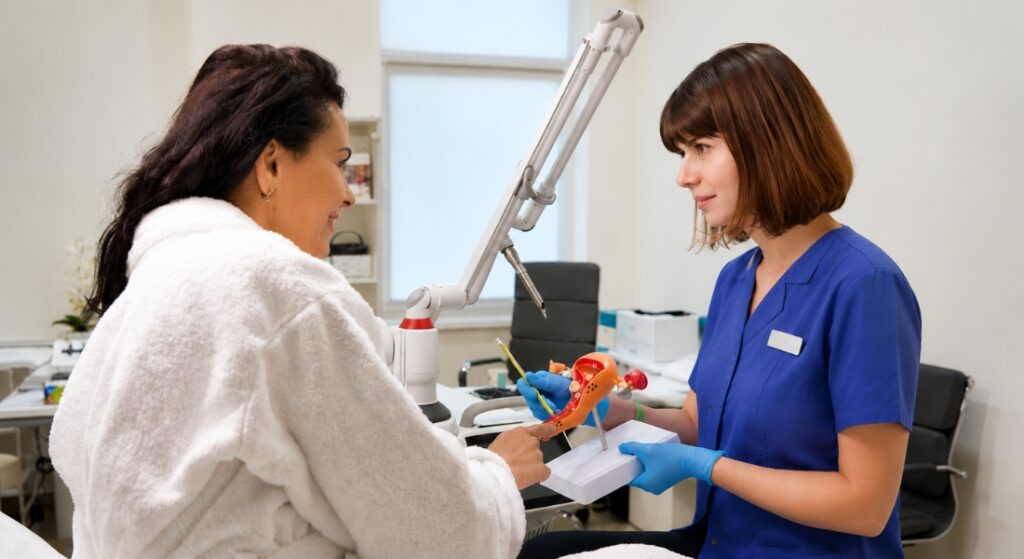
Choosing the right treatment depends on what matters most to you, whether that is controlling heavy bleeding, improving fertility, reducing pressure symptoms or investigating an unexpected finding. Your gynaecologist will consider the location of the growth, as a polyp or fibroid inside the womb cavity may affect you differently from one within the womb wall or on the outer surface.
You should ask about the benefits, risks and alternatives of each option, including whether treatment will preserve your fertility and provide tissue for testing. Bringing your previous scan and pathology reports can help your specialist decide whether the growth is a polyp, fibroid or another type of womb abnormality.
Myth vs Fact
| Myth | Fact |
| All womb growths are cancerous | Most endometrial polyps and fibroids are benign, although abnormal bleeding should always be assessed. |
| A fibroid always needs treatment | Many fibroids do not cause symptoms and may only require monitoring. |
| An endometrial polyp diagnosis means infertility | An endometrial polyp does not automatically prevent pregnancy. Some cavity-distorting polyps may affect implantation, but many people conceive naturally or after appropriate treatment. |
Key Takeaways
- Polyps develop from womb lining.
- Fibroids develop from womb muscle.
- Symptoms overlap but pressure symptoms are more common with fibroids.
- Fertility effects depend mainly on location.
- Treatment depends on symptoms and personal circumstances.
FAQs:
1. Can an ultrasound always tell the difference between an endometrial polyp and a fibroid?
Not always. Although a transvaginal ultrasound can often detect an abnormal growth inside your womb, a submucosal fibroid can sometimes look similar to an endometrial polyp. If the diagnosis remains uncertain, your gynaecologist may recommend hysteroscopy or, in some cases, MRI to better assess the location and characteristics of the abnormal tissue and plan the most appropriate treatment.
2. Can you have both endometrial polyps and fibroids at the same time?
Yes. You can develop both conditions simultaneously because they arise from different tissues within your womb. Having both may increase the likelihood of symptoms such as heavy or irregular bleeding, so your specialist will assess each growth individually before recommending treatment.
3. Are endometrial polyps or fibroids more likely to affect fertility?
Both can affect fertility, but their impact depends mainly on their location rather than simply their size. Polyps and submucosal fibroids that project into the womb cavity are more likely to interfere with embryo implantation, while fibroids that do not distort the cavity often have little or no effect on fertility. Your fertility specialist will assess your overall reproductive health rather than attributing infertility to a single finding.
4. Will polyps or fibroids come back after treatment?
Both conditions can recur, although recurrence does not necessarily mean the previous treatment was unsuccessful. Endometrial polyps can recur because new polyps may develop from areas of the womb lining over time, while new fibroids can form or existing small fibroids may continue to grow over time. Your follow-up care will depend on your symptoms, age, and future pregnancy plans.
5. When should you seek medical advice for abnormal bleeding?
You should arrange a medical assessment if you experience persistent heavy periods, bleeding between periods, bleeding after sex, or any bleeding after menopause. These symptoms can have several causes, including endometrial polyps, fibroids, or other gynaecological conditions, and should be investigated promptly to establish the correct diagnosis and appropriate treatment.
Final Thoughts: Endometrial Polyps vs Fibroids: What’s the Difference?
Understanding the difference between endometrial polyps and fibroids can help you make sense of symptoms such as heavy periods, irregular bleeding or fertility concerns. Although both conditions involve growths affecting the womb, they develop from different tissues and may require different approaches to diagnosis and treatment.
If you are looking for expert endometrial polyps treatment in London, our specialist team can provide a thorough assessment, discuss your symptoms and explain the most suitable investigation and treatment options available. At Gynaecology Clinic London, we tailor your care based on your individual circumstances, fertility goals and overall health, helping you make informed decisions while supporting your long-term gynaecological wellbeing.
References:
- Nijkang, N.P., Anderson, L., Markham, R. and Manconi, F. (2019) ‘Endometrial polyps: pathogenesis, sequelae and treatment’, SAGE Open Medicine, 7, article 2050312119848247. Available at: https://pmc.ncbi.nlm.nih.gov/articles/PMC6501471/
- Raz, N., Feinmesser, L., Moore, O. and Haimovich, S. (2021) ‘Endometrial polyps: diagnosis and treatment options: a review of literature’, Minimally Invasive Therapy & Allied Technologies, 30(5), pp.278–287. Available at: https://pubmed.ncbi.nlm.nih.gov/34355659/
- Pereira, N. et al. (2017) ‘Endometrial polyps and subfertility’, Journal of Assisted Reproduction and Genetics, 34(5), pp.625–630. Available at: https://pmc.ncbi.nlm.nih.gov/articles/PMC5306103/
- Bortoletto, P. et al. (2021) ‘Fibroids and natural fertility: a systematic review and meta-analysis’, Reproductive BioMedicine Online, 43(1), pp.100–110. Available at: https://pubmed.ncbi.nlm.nih.gov/33903032/
- NHS (no date) Fibroids. Available at: https://www.nhs.uk/conditions/fibroids/
- NHS (no date) Postmenopausal bleeding. Available at: https://www.nhs.uk/symptoms/post-menopausal-bleeding/
- National Institute for Health and Care Excellence (NICE) (2018, last updated 2021) Heavy menstrual bleeding: assessment and management. NICE guideline NG88. Available at: https://www.nice.org.uk/guidance/ng88
- National Institute for Health and Care Excellence (NICE) (2015, last updated 2026) Suspected cancer: recognition and referral. NICE guideline NG12. Available at: https://www.nice.org.uk/guidance/ng12