




The term “high-risk gynaecologist” is sometimes used informally to describe a gynaecologist who manages complex conditions, difficult diagnoses or cases requiring more specialised investigation or treatment. It is not usually an official medical job title in the UK, so you may see it used differently between services.
You may benefit from specialist care when your condition is complicated, previous treatment has not worked or surgery involves additional challenges. Being referred to a specialist does not necessarily mean your condition is dangerous; you may simply need a gynaecologist with more specific expertise for your particular situation.
Is “High-Risk Gynaecologist” an Official Medical Title?
In the UK, “high-risk gynaecologist” is not a recognised RCOG subspecialty title. Depending on the condition, you may instead be referred to a consultant with expertise in areas such as urogynaecology, gynaecological oncology, reproductive medicine, endometriosis or menopause care. You are more likely to see terms such as consultant gynaecologist, gynaecological oncologist, urogynaecologist or reproductive medicine specialist.
You can ask which area your specialist focuses on and whether they regularly treat conditions like yours. Their specific expertise and experience are more important than the broad term “high-risk gynaecologist”.
Evidence Note
The Royal College of Obstetricians and Gynaecologists currently recognises four formal subspecialty training programmes: Gynaecological Oncology, Urogynaecology, Reproductive Medicine and Maternal and Fetal Medicine. Gynaecological Oncology, Urogynaecology and Reproductive Medicine relate principally to gynaecological or reproductive care, while Maternal and Fetal Medicine is an obstetric subspecialty focused on complex pregnancy care.
This does not mean these are the only areas in which a consultant may develop advanced expertise. For example, specialist endometriosis services include gynaecologists experienced in complex endometriosis working alongside other relevant specialists.
What Does a General Gynaecologist Treat?
A general gynaecologist can assess and treat common problems such as heavy or painful periods, irregular bleeding, fibroids, ovarian cysts, pelvic pain, vaginal symptoms and menopause-related concerns. You can also see a general gynaecologist for contraception or other reproductive health concerns.
Your gynaecologist can arrange tests such as an ultrasound, blood tests or hysteroscopy and recommend suitable treatment. Specialist referral may be appropriate when a diagnosis remains uncertain, symptoms persist despite treatment, a recognised specialist pathway applies or treatment requires expertise beyond general gynaecology.
How Does Specialist Gynaecology Differ?
A specialist gynaecologist or consultant with a defined area of expertise has additional training and experience in a particular aspect of gynaecological or reproductive care. You may be referred to one when your condition is complex, uncommon, recurrent or difficult to manage with standard treatment.
For example, a urogynaecologist focuses on pelvic floor and bladder problems, while a gynaecological oncologist treats gynaecological cancers. Specialist care can also provide access to multidisciplinary teams when your condition requires input from different areas of expertise.
Which Type of Gynaecology Specialist Might You Need?
The right specialist depends on the problem being investigated rather than on the general label “high risk”.
| Type of care | Examples of problems managed | When more specialised input may help |
| General gynaecology | Heavy bleeding, fibroids, many ovarian cysts, pelvic pain, vaginal symptoms | When diagnosis is uncertain, treatment fails or surgery becomes complex |
| Urogynaecology | Pelvic organ prolapse, urinary incontinence and complex pelvic-floor problems | Recurrent prolapse, complex urinary symptoms or difficult/repeat surgery |
| Gynaecological oncology | Suspected or confirmed cancers of the female reproductive tract | When tests or imaging indicate possible malignancy or specialist cancer surgery is needed |
| Reproductive medicine | Fertility problems, ovulatory disorders and assisted conception | More complex fertility assessment, fertility preservation or assisted reproduction |
| Specialist endometriosis service | Endometrioma and deep endometriosis, including bowel, bladder or ureter involvement | NICE specifically recommends specialist-service referral for suspected or confirmed endometrioma or deep endometriosis |
| Menopause expertise | Complex menopause or premature ovarian insufficiency | When diagnosis or treatment is uncertain or complicated by other health conditions |
| Maternal and Fetal Medicine | Complex or higher-risk pregnancy | This is obstetric rather than general gynaecological care |
RCOG formally recognises Urogynaecology, Gynaecological Oncology, Reproductive Medicine and Maternal and Fetal Medicine as subspecialty training programmes, while NICE separately defines situations requiring specialist endometriosis or other specialist services.
What Makes a Gynaecological Case High Risk or Complex?

A gynaecological case may be considered complex because of the condition itself, the treatment needed or your wider medical history. Severe disease, previous operations, unusual anatomy or an uncertain diagnosis can all make treatment more challenging.
Your general health can also affect the level of risk, particularly if surgery is being considered. In some cases, “high risk” simply means that you need more detailed planning, specialist expertise or input from different healthcare professionals.
Complex Endometriosis and Specialist Care
Endometriosis can range from mild disease to deep endometriosis affecting areas such as the bowel, bladder or ureters. When other organs are involved, you may need more detailed assessment and specialist treatment planning.
Specialist endometriosis services can involve gynaecologists alongside colorectal surgeons, urologists, radiologists and other professionals. You may benefit from specialist review if your symptoms remain severe despite treatment, an endometrioma is present or surgery is being considered.
When Pelvic Organ Prolapse Needs Specialist Expertise
Many cases of pelvic organ prolapse can be managed with pelvic floor physiotherapy, a vaginal pessary or general gynaecological care. You may need specialist input when the prolapse is recurrent, affects several areas or occurs alongside significant bladder problems.
A urogynaecologist specialises in prolapse, pelvic floor conditions and female urinary problems. They can help you understand whether conservative treatment, further bladder investigations or surgery is most suitable for your symptoms.
What Is a Gynaecological Oncologist?
A gynaecological oncologist specialises in the assessment and treatment of gynaecological cancers and may also be involved in selected complex precancerous conditions, depending on the diagnosis and local pathway. Their training and expertise differ from those of a general gynaecologist, particularly when complex cancer surgery is required.
If cancer is suspected, you may undergo further imaging, biopsies and multidisciplinary team review. An urgent referral does not mean you have cancer, as many people referred with concerning symptoms are ultimately diagnosed with a benign condition.
When an Ovarian Mass May Need Specialist Assessment
Many ovarian cysts are benign and can be managed without cancer-specialist care, but the appropriate pathway depends on factors such as your age, menopausal status, symptoms, examination findings and the size and imaging appearance of the mass.
You may need further scans, repeat ultrasound or specialist assessment before treatment is planned. A complex cyst does not automatically mean cancer, but specialist input helps ensure that any concerning mass is investigated and treated appropriately.
Can Fibroids Require More Specialist Care?
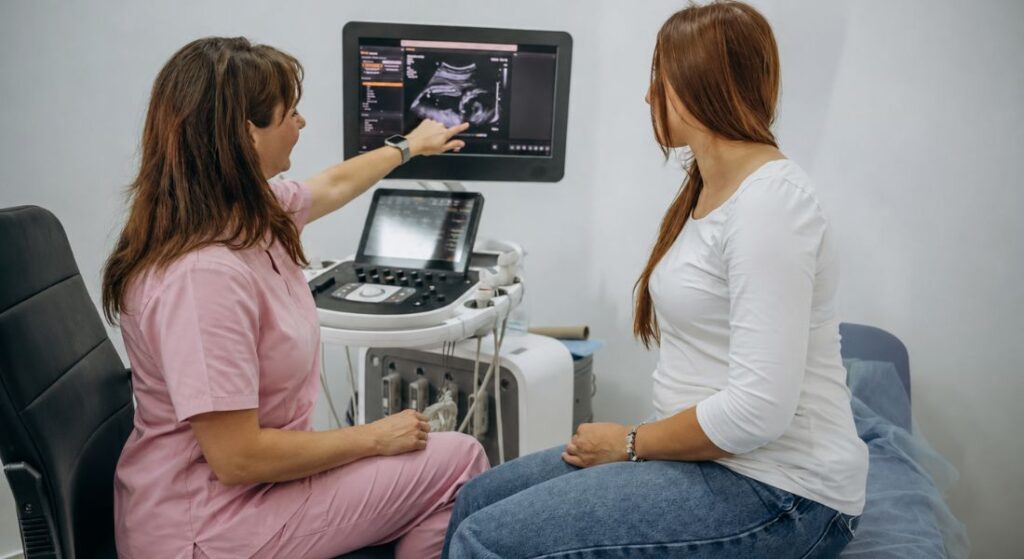
Many fibroids can be managed through general gynaecology, particularly when they cause mild or manageable symptoms. You may need specialist care when fibroids are very large, numerous, difficult to access or linked to previous complex surgery.
Your fertility plans can also influence which treatment is most suitable. If preserving your womb or future pregnancy is important to you, a specialist can help you consider options such as myomectomy while balancing symptom relief with your reproductive goals.
When Fertility Concerns Need Reproductive Medicine Expertise
Reproductive medicine focuses on fertility, ovulation and reproductive health. You may benefit from specialist care if you are having difficulty conceiving or have a condition that could affect your fertility, such as PCOS, endometriosis or tubal problems.
A fertility assessment may look at your ovulation, ovarian reserve, fallopian tubes and other factors that affect conception. Specialist care can include fertility preservation, ovulation treatment or discussions about assisted conception, depending on your individual circumstances.
Are Complex Menopause Problems Managed by Specialists?
Many menopause symptoms can be managed by your GP or a general gynaecologist. You may benefit from specialist advice when symptoms remain difficult to control or other health conditions make treatment decisions more complicated.
Specialist input may also be useful with premature ovarian insufficiency, complex bleeding or uncertainty about hormone treatment. Your care can then be tailored to your symptoms as well as your longer-term health needs.
What About Severe or Persistent Pelvic Pain?
Pelvic pain can have many causes, including endometriosis, adenomyosis, fibroids, pelvic floor problems, bladder or bowel conditions and pelvic infections. You may also have more than one cause contributing to your symptoms.
A general gynaecologist can investigate many causes, but you may benefit from specialist assessment if your pain is persistent or unexplained. In some cases, care may involve gynaecology, pelvic health physiotherapy, pain medicine, urology or gastroenterology to identify the causes and improve your symptoms.
When Previous Surgery Makes Treatment More Complex
Previous abdominal or pelvic surgery can sometimes make future gynaecological treatment more complicated because scar tissue or adhesions may change the normal anatomy. Your surgeon may therefore need additional information and careful planning before recommending another procedure.
- Previous Operations: Tell your specialist about earlier surgery involving your womb, ovaries, bowel, bladder or pelvic floor.
- Scar Tissue and Adhesions: Previous procedures can create adhesions that may make later surgery technically more challenging.
- Review of Records: Your surgeon may review previous operation notes, scans or other medical records before planning treatment.
- Specialist Surgical Experience: Complex or repeat surgery may benefit from a clinician who regularly manages similar procedures and complications.
Having previous surgery does not necessarily mean that another operation will be unsafe or impossible. A detailed assessment can help your specialist understand the potential challenges and choose the most appropriate treatment approach for you.
What If Previous Treatment Has Not Worked?

You may benefit from specialist review if your symptoms continue despite treatment or a condition keeps returning. This can be relevant after several hormonal treatments, previous prolapse surgery or repeated treatment for persistent symptoms.
A specialist can reassess whether the original diagnosis is correct or whether another problem may be contributing. A second opinion can also help you understand your options before considering major surgery or another treatment.
Does High-Risk Gynaecology Mean High-Risk Pregnancy Care?
Not necessarily. Gynaecology mainly deals with reproductive health outside pregnancy, while obstetrics focuses on pregnancy, childbirth and care after birth.
If you have a complicated pregnancy, you may need a consultant obstetrician or maternal and fetal medicine specialist. The right service depends on whether you need care for an ongoing pregnancy or a gynaecological condition.
Myth vs Fact
| Myth | Fact |
| “High-risk gynaecologist” is an official UK medical specialty. | It is an informal description. RCOG-recognised subspecialties include Gynaecological Oncology, Urogynaecology and Reproductive Medicine, alongside Maternal and Fetal Medicine in obstetric care. |
| Seeing a specialist means your condition must be dangerous. | Specialist referral may simply mean your diagnosis, surgery or treatment requires more focused expertise. |
| Every ovarian cyst needs a gynaecological oncologist. | Many ovarian cysts can be managed within general or benign gynaecology; referral depends on the appearance, risk assessment and clinical circumstances. |
| All endometriosis can be managed in the same service. | NICE recommends specialist endometriosis services for endometrioma and deep endometriosis. |
| Pelvic organ prolapse always needs specialist surgery. | Many people can be managed conservatively with pelvic-floor treatment or a pessary; specialist input becomes more relevant in complex or recurrent cases. |
| A fertility specialist only treats people having IVF. | Reproductive medicine also covers fertility assessment, ovulatory problems and other reproductive disorders. |
| A high-risk pregnancy should be managed by a “high-risk gynaecologist”. | Complex pregnancy is principally obstetric care and may involve a Maternal and Fetal Medicine specialist. |
What Happens During a Specialist Gynaecology Assessment?
Your specialist will usually review your symptoms, medical history and previous treatments in detail. You can bring relevant reports, scans and information about previous operations or medicines to help your consultant understand your situation.
You may also have a pelvic examination or further tests depending on your symptoms. Your clinician should explain why an examination or investigation is needed, obtain your consent and discuss the next steps with you.
Why Are Multidisciplinary Teams Important?
Some complex gynaecological conditions can involve more than one organ or area of medicine. A multidisciplinary team allows specialists such as gynaecologists, radiologists, urologists, colorectal surgeons or fertility experts to work together on your care.
You may not need this level of input for a straightforward condition. It can be particularly helpful when several organs are involved, treatment is technically challenging or different options need to be carefully compared.
When Should You Ask for Specialist Referral?

You may want to discuss specialist referral if your symptoms remain severe despite treatment, your diagnosis is uncertain or a complex condition has been identified. It may also be useful when major or repeat surgery is being considered.
Specialist input can be relevant for deep endometriosis, recurrent prolapse, fertility concerns or an ovarian mass needing further assessment. You do not need to choose the specialist yourself, as your GP or gynaecologist can help identify the most appropriate service for your needs.
How Do You Choose the Right Gynaecologist?
Rather than focusing on the term “high-risk gynaecologist”, you should look for a consultant with relevant expertise in your specific condition. Pelvic floor problems, fertility concerns and suspected cancer all require different types of specialist experience.
You can ask how often the consultant treats your condition and whether complex cases are reviewed with other specialists. If surgery is being considered, you can also ask about alternative treatments, recovery and whether a second opinion may be useful.
Key Takeaways
- “High-risk gynaecologist” is an informal term rather than a formal UK gynaecology subspecialty.
- RCOG-recognised subspecialty areas include Gynaecological Oncology, Urogynaecology and Reproductive Medicine, with Maternal and Fetal Medicine covering complex pregnancy care.
- Needing a specialist does not necessarily mean that your condition is dangerous or life-threatening.
- Specialist input may be helpful when diagnosis is uncertain, symptoms remain difficult to control or major or repeat surgery is being considered.
- NICE recommends specialist endometriosis services for suspected or confirmed endometrioma or deep endometriosis.
- Recurrent or complex prolapse and urinary problems may benefit from urogynaecology and multidisciplinary assessment.
- Not every ovarian cyst or mass requires oncology care; the appropriate pathway depends on clinical and imaging risk features.
- Complex fertility problems may require reproductive-medicine expertise, while difficult menopause problems may benefit from a clinician with menopause expertise.
- High-risk pregnancy care belongs mainly to obstetrics and may involve Maternal and Fetal Medicine rather than a “high-risk gynaecologist”.
- When choosing a specialist, look for relevant experience, appropriate registration and expertise in your particular condition.
Frequently Asked Questions
1. What is a high-risk gynaecologist?
A high-risk gynaecologist is an informal term sometimes used for a gynaecologist who manages complex conditions or cases requiring specialist expertise. In the UK, specific specialist titles such as urogynaecologist, gynaecological oncologist or reproductive medicine specialist are more commonly used.
2. When might you need a specialist gynaecologist?
You may need specialist care when symptoms remain severe despite treatment, your diagnosis is uncertain or your condition requires complex surgery. You may also benefit from specialist assessment for conditions such as deep endometriosis, recurrent pelvic organ prolapse, significant fertility problems or complex ovarian masses.
3. Does seeing a high-risk gynaecologist mean you have a serious condition?
No, being referred to a specialist does not necessarily mean that you have a dangerous or life-threatening condition. You may simply need a doctor with more specific experience because your symptoms, previous treatment or planned procedure are particularly complex.
4. What is the difference between a general and specialist gynaecologist?
A general gynaecologist manages a broad range of common reproductive health conditions, while a specialist gynaecologist focuses on a particular area of expertise. You may be referred to a specialist when your condition requires more advanced investigations, treatment or multidisciplinary care.
5. Is a high-risk gynaecologist the same as a high-risk pregnancy specialist?
No, these terms refer to different areas of care. A high-risk pregnancy usually requires an obstetrician or maternal and fetal medicine specialist, while complex gynaecological conditions are managed by the relevant gynaecology subspecialist.
Final Thoughts: What Should You Know About High-Risk Gynaecology?
The term “high-risk gynaecologist” does not usually refer to a specific UK medical specialty, but you may need specialist care when your condition is complex, difficult to diagnose or has not improved with standard treatment. The right specialist depends on your individual needs and the type of expertise required, such as endometriosis, pelvic floor problems, fertility, gynaecological cancer or another area of women’s health.
If you are unsure which type of specialist is appropriate for your symptoms, you can discuss your options with our team at Gynaecology Clinic London. A specialist assessment can help you understand your diagnosis, treatment choices and whether you may benefit from more specialised or multidisciplinary care.
References:
- Royal College of Obstetricians and Gynaecologists (2024) ‘Subspecialty training: Curriculum 2024’. RCOG. Available at: https://www.rcog.org.uk/careers-and-training/training/curriculum/2024-og-curriculum/subspecialty-training/
- National Institute for Health and Care Excellence (2017, updated 2024) ‘Endometriosis: diagnosis and management’. NICE guideline NG73. Available at: https://www.nice.org.uk/guidance/ng73
- National Institute for Health and Care Excellence (2019) ‘Urinary incontinence and pelvic organ prolapse in women: management’. NICE guideline NG123. Available at: https://www.nice.org.uk/guidance/ng123
- National Institute for Health and Care Excellence (2015, updated 2026) ‘Suspected cancer: recognition and referral’. NICE guideline NG12. Available at: https://www.nice.org.uk/guidance/ng12
- National Institute for Health and Care Excellence (2026) ‘Fertility problems: assessment and treatment’. NICE guideline NG257. Available at: https://www.nice.org.uk/guidance/ng257
- National Institute for Health and Care Excellence (2015, updated 2026) ‘Menopause: identification and management’. NICE guideline NG23. Available at: https://www.nice.org.uk/guidance/ng23
- Royal College of Obstetricians and Gynaecologists (2016, updated 2025) ‘The Management of Ovarian Cysts in Postmenopausal Women’. Green-top Guideline No. 34. Available at: https://www.rcog.org.uk/guidance/browse-all-guidance/green-top-guidelines/ovarian-cysts-in-postmenopausal-women-green-top-guideline-no-34/
- General Medical Council (2020, updated 2024) ‘Decision making and consent’. GMC. Available at: https://www.gmc-uk.org/professional-standards/the-professional-standards/decision-making-and-consent