



A vulval biopsy involves removing a small sample of skin or tissue from an unusual or symptomatic area of your vulva. You may need one if you have persistent itching, soreness, pain, a lump, ulcer, rash or changes in skin colour or texture.
The sample is examined under a microscope to help identify the cause and, where necessary, check for precancerous or cancerous changes. You can usually have the procedure as an outpatient with local anaesthetic, although you may experience mild tenderness or bleeding while the area heals.
What Exactly Is a Vulval Biopsy?
Your vulva is the external genital area around the vaginal and urethral openings, including the labia and clitoral area. During a vulval biopsy, your clinician removes a small sample from an area that looks or feels unusual so you can have a clearer diagnosis.
Unlike a vaginal swab, which mainly checks for infection, a biopsy allows your tissue to be examined under a microscope. This can help your doctor identify inflammation, abnormal cell changes or other conditions that may not be visible during an examination.
Why Might Your Doctor Recommend a Vulval Biopsy?
You may be offered a vulval biopsy if your symptoms remain unexplained or do not improve with appropriate treatment. Persistent itching, burning, soreness or pain can be reasons for further investigation.
Your doctor may also recommend one if you have an ulcer, lump, rash, thickened skin or an unusual change in colour or texture. A biopsy can help you get a clearer diagnosis when examination alone cannot identify the cause.
Does Having a Vulval Biopsy Mean Cancer Is Suspected?
Not necessarily. A vulval biopsy is used to investigate many non-cancerous conditions, particularly when symptoms or skin changes cannot be diagnosed confidently through examination alone.
A biopsy can also help your doctor rule out precancerous changes or vulval cancer when you have a persistent ulcer, lump, bleeding or unusual skin change. Being offered a biopsy simply means your doctor needs more information and does not confirm that you have cancer.
Can a Biopsy Diagnose Lichen Sclerosus?
Yes, a vulval biopsy can help confirm lichen sclerosus when your symptoms or skin changes are not clear enough to diagnose through examination alone. You may have itching, soreness, fragile skin or pale patches, although some people can be diagnosed without a biopsy.
Lichen sclerosus is not cancer, but it is associated with a small increased risk of vulval cancer over time. You should therefore have any new lump, ulcer or changing area checked rather than assuming it is simply part of your existing condition.
Research Insight
A vulval biopsy is most informative when the clinician samples an area that represents the abnormal process clearly. Research in vulval dermatopathology shows that clinical findings and microscopic appearances can overlap between different conditions, particularly inflammatory disorders such as lichen sclerosus and lichen planus. Information about the biopsy site, clinical appearance and suspected diagnosis can therefore help the pathologist interpret the tissue findings in context.
This is one reason vulval biopsy is a targeted procedure rather than simply taking tissue from any part of the symptomatic area. Your clinician chooses the site that is most likely to provide useful diagnostic information while considering the size, location and type of lesion.
Can a Biopsy Diagnose Lichen Planus or Dermatitis?
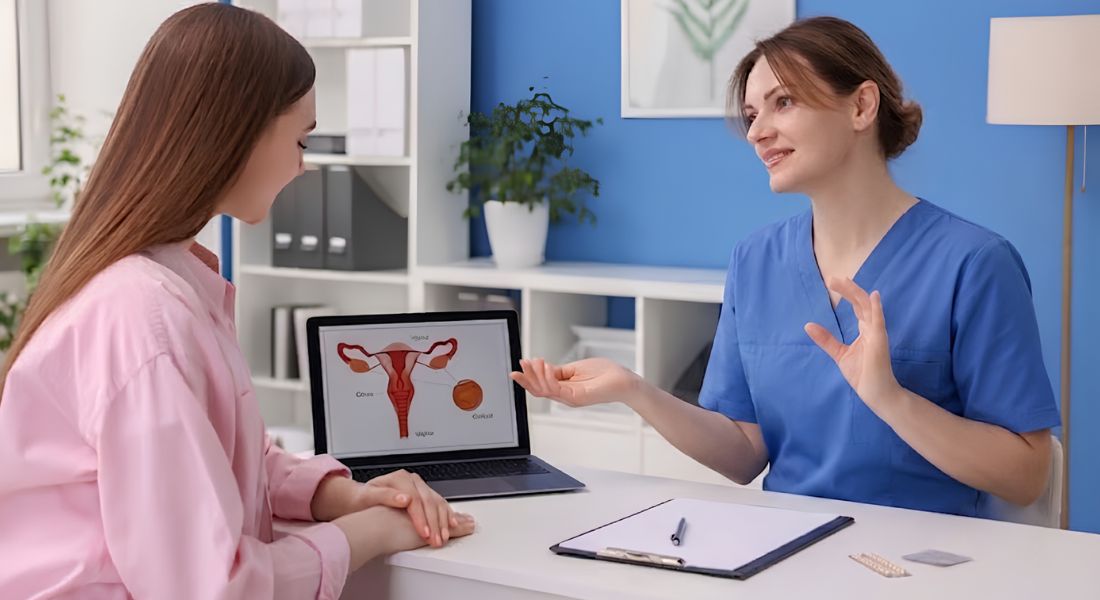
A biopsy may help when lichen planus or another vulval skin condition is suspected but the diagnosis remains uncertain. Dermatitis or eczema is often assessed from your symptoms, examination and possible irritant exposures, although biopsy may occasionally be useful when another condition needs to be excluded. You may experience burning, soreness, redness, itching, dryness or thickened skin with these conditions.
Your biopsy result is considered alongside your symptoms, medical history and examination findings. This helps your doctor choose the most appropriate treatment rather than relying on the laboratory result alone.
What Is VIN and Why Might It Need a Biopsy?
Vulval intraepithelial neoplasia (VIN) describes precancerous changes in cells of the vulval skin. It is not invasive vulval cancer, but some types can develop into cancer over time if they are not appropriately managed.
You may have itching, burning, soreness or unusual skin changes, although VIN can sometimes cause no symptoms. A biopsy allows your doctor to confirm the diagnosis and identify the type of cell change, helping guide the most appropriate treatment.
When Is a Biopsy Used to Check for Vulval Cancer?
You may need a vulval biopsy if you have a persistent lump, ulcer, unexplained bleeding, ongoing itching or an area of skin that has changed in appearance. These symptoms can have many causes, but a biopsy helps your doctor check whether cancer cells are present.
A small tissue sample is examined by a pathologist under a microscope. Your biopsy may also identify a non-cancerous condition, helping your doctor choose the right treatment based on a clearer diagnosis.
UK Guidance Note
NHS guidance advises medical assessment for persistent or unexplained vulval changes including a lump, sore or ulcer, bleeding unrelated to your period, persistent itching, red, white or dark patches, thickened or raised skin, or a mole that changes shape or colour. These symptoms have many possible causes and do not automatically mean cancer.
When a suspicious area cannot be diagnosed confidently by examination, a targeted biopsy allows the tissue to be examined microscopically and can distinguish benign inflammatory disease, precancerous abnormalities and cancer.
What Happens Before the Biopsy?
You can usually eat and drink normally before an outpatient vulval biopsy unless your clinic gives you different instructions. Most procedures require little special preparation, but you should follow any instructions provided by the clinic carrying out your biopsy.
Tell your clinician about all medicines you take, particularly any anticoagulant or antiplatelet medicines, as well as any allergies or previous reactions to local anaesthetic. Do not stop prescribed medicines unless your clinical team advises you to do so. Your doctor should explain the procedure, possible risks and why it is recommended, giving you time to ask questions before you consent.
What Happens During the Examination?
You will usually undress from the waist down and lie on an examination couch while your clinician examines the vulval area. Your legs may be bent, separated or supported to give your clinician a clear view of the skin.
Your doctor or specialist nurse will identify the most appropriate area for the biopsy, sometimes using magnification to examine subtle changes. You may not need an internal vaginal examination unless your symptoms or the condition being investigated make it necessary.
Will You Have Local Anaesthetic?
Yes, most vulval biopsies are performed using local anaesthetic to numb the area. You may feel a brief sting or burning when the injection is given, but the skin should become numb before the biopsy begins.
You may still feel some pressure or pulling during the procedure, but you should not feel sharp pain. Tell your clinician if you feel significant discomfort so more anaesthetic can be given if needed.
How Is the Tissue Sample Taken?
Your clinician may use a punch biopsy, where a small circular instrument removes a tiny piece of skin. The sample is small, although the exact size depends on the biopsy technique, the type of abnormality and the area that needs to be examined.
Your doctor will choose the most useful area while removing as little tissue as possible. The sample is then sent to a pathology laboratory, where a specialist examines it under a microscope and prepares a report.
Will You Need Stitches?
You may need one or more stitches after a vulval biopsy, depending on the size and location of the sample. Smaller biopsy sites can sometimes heal without stitches if bleeding is easily controlled.
If stitches are used, they may be dissolvable or may need to be removed later, depending on the type of suture used. Your clinician will explain how the biopsy site has been closed, what to expect while it heals and whether any follow-up is needed.
How Long Does a Vulval Biopsy Take?
A vulval biopsy is usually a short outpatient procedure, although your full appointment will take longer than the biopsy itself. Extra time is needed for examination, explanation, local anaesthetic and making sure any bleeding is controlled before you leave.
- Initial Examination: Your clinician will first examine the vulval area and identify the most suitable place to take the tissue sample.
- Local Anaesthetic: A small injection is used to numb the area before the biopsy is taken.
- Tissue Sampling: The biopsy itself usually takes only a few minutes once the skin is completely numb.
- Before Going Home: Your clinician will check the biopsy site, control any bleeding and provide aftercare instructions before you leave.
Most uncomplicated vulval biopsies do not require an overnight hospital stay, and you can usually return home the same day. Your total appointment time can vary depending on the biopsy site, whether stitches are needed and your individual circumstances.
Is a Vulval Biopsy Painful?
The local anaesthetic injection may sting briefly, but the biopsy itself should not normally cause sharp pain once the area is numb. You may still feel some pressure or movement during the procedure.
You may have some soreness or tenderness after the anaesthetic wears off, depending on the biopsy site and size. Simple pain relief such as paracetamol may be helpful if it is suitable for you and you have not been advised otherwise.
What Should You Expect After the Procedure?
You may notice a small amount of bleeding or spotting after your vulval biopsy, and the area can feel tender for several days. You may find walking, sitting or passing urine slightly uncomfortable while the site heals.
Wear loose clothing and comfortable underwear to reduce friction. You can also gently rinse the area with plain water after urinating if you notice stinging, and your clinic may advise avoiding strenuous exercise until you feel comfortable.
How Should You Care for the Biopsy Site?
Keep your biopsy site clean and follow the aftercare advice from your clinic. You can usually wash gently with plain water, pat the area dry and avoid rubbing or using fragranced products.
Your clinic may give you specific advice about baths, swimming, exercise and sex depending on how your wound is healing. You should wait until the area feels comfortable before doing activities that cause pressure or friction.
What Are the Possible Risks of a Vulval Biopsy?
A vulval biopsy is generally a minor procedure, but you may experience temporary soreness, light bleeding or a small scar. These effects usually settle as the biopsy site heals.
Infection or heavier bleeding is uncommon but can occur. You should contact your healthcare provider if you develop increasing pain, redness, swelling, pus, an unpleasant discharge or bleeding that does not settle.
What Is Normal After a Vulval Biopsy and When Should You Seek Help?
| After the biopsy | Usually expected | When to seek advice |
| Soreness | Mild tenderness for several days | Severe or increasing pain |
| Bleeding | Small amount of bleeding or spotting | Heavy bleeding or bleeding that does not settle |
| Stinging when urinating | Can occur while the wound is tender | Severe or worsening urinary pain |
| Wound appearance | Mild local tenderness | Increasing redness, heat or swelling |
| Discharge | Small wound-related discharge may occur depending on closure method | Pus or unpleasant-smelling discharge |
| Temperature | No significant fever expected | Fever or feeling generally unwell |
| Stitches | Dissolvable stitches may remain for around a week or longer | Wound opening or concerns about healing |
| Exercise/sex | Gradual return according to clinic instructions | Stop if the wound bleeds, becomes painful or appears to reopen |
What Can the Biopsy Results Show?
Your biopsy may identify conditions such as lichen sclerosus, lichen planus or other inflammatory skin changes. It can also detect precancerous changes such as VIN or cancer cells when these are being investigated.
Your doctor will consider the results alongside your symptoms and examination findings. Sometimes the result is not completely clear, and you may need further assessment or another biopsy.
Evidence Note
A biopsy result does not always provide a complete explanation on its own. Some inflammatory and precancerous vulval conditions can have overlapping or subtle microscopic appearances, so your clinician considers the pathology report alongside the exact biopsy site, your symptoms and what the skin looked like during examination.
If the result does not adequately explain a persistent, changing or clinically concerning area, further review may be needed. In selected cases this can include another biopsy from a different or more representative site.
When Will You Receive the Results?

Your biopsy results usually take several weeks because the sample needs to be processed and examined by a pathologist. The exact waiting time can vary between hospitals and laboratories.
You should not assume that a longer wait means the result is serious. Your clinic will let you know how and when you will receive the results.
Myth vs Fact
| Myth | Fact |
| Being offered a vulval biopsy means cancer is probably present. | Biopsies are also commonly used to diagnose benign inflammatory and skin conditions. |
| Lichen sclerosus always needs a biopsy. | Typical cases can often be diagnosed clinically; biopsy is particularly useful when the diagnosis is uncertain or an area looks suspicious. |
| A swab and a biopsy test for the same thing. | A swab mainly looks for infection, while biopsy allows tissue architecture and cells to be examined microscopically. |
| You will feel the biopsy being cut out. | Local anaesthetic should numb the area; pressure or pulling may still be felt. |
| Every biopsy needs stitches. | Some need dissolving or removable stitches, while small wounds may sometimes be managed without them. |
| A biopsy always leaves a large scar. | A small scar can remain, but the size depends on the biopsy and wound healing. |
| You can resume every activity immediately if you feel comfortable. | The wound can remain fragile even when pain is mild, so follow your clinic’s instructions about exercise, swimming and sex. |
| A longer wait for the result means something serious was found. | Laboratory turnaround time does not predict whether the result will be benign or abnormal. |
| One biopsy result always gives the entire answer. | Clinical findings and pathology need to be interpreted together, and occasionally further assessment is needed. |
Key Takeaways
- A vulval biopsy removes a small sample of vulval skin or tissue for microscopic examination.
- It may be recommended when persistent symptoms or skin changes cannot be confidently diagnosed by examination alone.
- Having a biopsy does not mean that cancer is necessarily present or suspected.
- Biopsy can help identify inflammatory vulval disorders, VIN and vulval cancer.
- Lichen sclerosus can often be diagnosed clinically, but biopsy may be helpful when the diagnosis is uncertain or an area becomes suspicious.
- Most outpatient vulval biopsies are performed under local anaesthetic.
- Mild soreness and a small amount of bleeding can occur during healing.
- Increasing pain, persistent or heavy bleeding, swelling, fever or unpleasant discharge should be medically assessed.
- Your pathology result is interpreted alongside your symptoms and examination findings, and occasionally further assessment is needed.
Frequently Asked Questions
1. What is a vulval biopsy used to diagnose?
A vulval biopsy examines a small sample of vulval skin under a microscope to identify the cause of an unusual or persistent change. It can help diagnose conditions such as lichen sclerosus, lichen planus, dermatitis and VIN, as well as rule out vulval cancer when necessary.
2. Does having a vulval biopsy mean you have cancer?
No. A vulval biopsy does not automatically mean that cancer is suspected or present. It is often recommended to clarify the cause of persistent itching, soreness, skin changes, lumps or ulcers when an examination alone cannot provide a definite diagnosis.
3. Is a vulval biopsy painful?
Most vulval biopsies are performed under local anaesthetic, so you should not normally feel sharp pain while the tissue is being removed. The anaesthetic injection may briefly sting, and the area can feel sore or tender for several days afterwards. Simple pain relief may be enough for many people.
4. How long does it take to recover from a vulval biopsy?
The biopsy itself is usually a short procedure, but the biopsy site may remain tender while it heals. You may have light bleeding or discomfort for several days, and your clinic will advise you when it is safe to resume exercise, swimming or sexual activity. Keeping the area clean and avoiding unnecessary friction can support healing.
5. When will you receive your vulval biopsy results?
Your biopsy sample needs to be processed and examined by a specialist pathologist, so the results are not usually available immediately. Many NHS services advise that results can take several weeks, although the exact timeframe varies between clinics. The length of time you wait does not indicate whether the result is serious or reassuring.
Final Thoughts: Understanding What a Vulval Biopsy Can Tell You
Being advised to have a vulval biopsy can understandably make you feel concerned, but the procedure does not mean that you have cancer. It is a useful way to investigate persistent symptoms or unusual changes when an examination alone cannot provide a clear diagnosis, helping you understand what is happening and whether you need treatment.
If you’re considering a vulval biopsy in London, you can contact our team at Gynaecology Clinic London to arrange a consultation with one of our consultant gynaecologists.
References:
- Kesić, V., Vieira-Baptista, P. and Stockdale, C.K. (2022) ‘Early diagnostics of vulvar intraepithelial neoplasia’, Cancers, 14(7), article 1822. Available at: https://www.mdpi.com/2072-6694/14/7/1822
- Royal Berkshire NHS Foundation Trust (2024) ‘Having a vulval biopsy’. Available at: https://www.royalberkshire.nhs.uk/media/10wpyode/vulval-biopsy.pdf
- De Luca, D.A. et al. (2023) ‘Lichen sclerosus: The 2023 update’, Frontiers in Medicine, 10, article 1106318. Available at: https://pmc.ncbi.nlm.nih.gov/articles/PMC9978401/
- Heller, D.S. et al. (2021) ‘Diagnostic criteria for differentiated vulvar intraepithelial neoplasia and vulvar aberrant maturation’, Journal of Lower Genital Tract Disease, 25(1), pp. 57–70. Available at: https://pmc.ncbi.nlm.nih.gov/articles/PMC7748053/
- Day, T., Wilkinson, E., Rowan, D. and Scurry, J. (2020) ‘Clinicopathologic diagnostic criteria for vulvar lichen planus’, Journal of Lower Genital Tract Disease, 24(3), pp. 317–329. Available at: https://pubmed.ncbi.nlm.nih.gov/32205763/
- Bartels, A.K. and Fadare, O. (2025) ‘Nonsclerotic lichen sclerosus of vulva: A clinicopathologic analysis’, International Journal of Gynecological Pathology, 44(3), pp. 210–216. Available at: https://pubmed.ncbi.nlm.nih.gov/39173138/
- Shalin, S.C., Racher, L.M. and Campbell, K.K. (2021) ‘Lichenoid dermatoses involving the vulva: A clinical-pathologic correlation’, Seminars in Diagnostic Pathology, 38(1), pp. 3–18. Available at: https://www.sciencedirect.com/science/article/abs/pii/S0740257020300800
- NHS (2025) ‘Symptoms of vulval cancer’. Available at: https://www.nhs.uk/conditions/vulval-cancer/symptoms/