



Fibroids are non-cancerous growths that develop from the muscle and fibrous tissue of your womb. You may have a single fibroid or several of different sizes, and they can grow within the womb wall, project into the womb cavity or develop on the outer surface of the womb.
Many fibroids cause no symptoms and are only discovered during a routine pelvic or pregnancy scan. However, they can also cause heavy periods, pelvic pressure, abdominal swelling, bladder or bowel symptoms, and sometimes fertility or pregnancy problems. Your treatment will depend on your symptoms, the size and location of the fibroids, your overall health and whether you plan to become pregnant in the future.
What Exactly Are Uterine Fibroids?
Uterine fibroids, also called leiomyomas or myomas, arise from smooth muscle cells and fibrous connective tissue within the womb. They are benign growths and are not infections, sexually transmitted conditions or a form of womb cancer.
Fibroids vary considerably in number, position and size. Some remain only a few millimetres across, while others become large enough to change the shape or size of the womb. Whether they cause symptoms often depends more on where they grow than on their size alone.
What Are the Different Types of Fibroids?

Fibroids are classified according to where they grow within or around your womb. Their location often has a greater effect on your symptoms than their size. For example, a small fibroid inside the womb cavity may cause heavy bleeding, while a larger fibroid on the outside of the womb may mainly cause pressure on your bladder or bowel.
| Type | Where it develops | Common symptoms |
| Intramural | Within the muscular wall of the womb | Heavy periods, pelvic pain and pressure |
| Submucosal | Projects into the womb cavity | Heavy or irregular bleeding and fertility problems |
| Subserosal | Grows on the outer surface of the womb | Pelvic pressure, abdominal fullness, bladder or bowel symptoms |
| Pedunculated | Attached to the womb by a narrow stalk | Pelvic pressure or sudden pain if the stalk twists |
| Cervical | Develops in or near the cervix | Pelvic pressure, urinary symptoms or discomfort |
Your ultrasound or MRI report will usually describe the overall fibroid burden, including the size, number and location of clinically important fibroids. These details help your specialist decide whether treatment is necessary and which options may be suitable.
How Common Are Fibroids?
Fibroids are one of the most common non-cancerous conditions affecting the womb. Many people never realise they have fibroids because they cause no symptoms and are often discovered during a routine pelvic or pregnancy scan. They are most common during the reproductive years and often shrink after menopause as hormone levels decline.
They can affect people of every ethnic background, although research consistently shows that Black women may develop fibroids at a younger age and are more likely to experience multiple fibroids or more severe symptoms.
Evidence Note:
Estimates of how common fibroids are vary because many cause no symptoms and are never diagnosed. Research also indicates differences in fibroid occurrence and severity between ethnic groups, although each person’s symptoms and treatment needs should be assessed individually.
What Causes Fibroids?
The exact cause of fibroids is not fully understood, but they are thought to develop when muscle cells within the womb begin growing more than the surrounding tissue. Their growth is influenced by the hormones oestrogen and progesterone, which is why fibroids are most common during the reproductive years and often shrink after menopause.
Your likelihood of developing fibroids may be higher if you have a close family history, have not reached menopause, have a higher body weight or are of Black ethnicity. Some studies have also reported an association with high blood pressure. These characteristics are recognised risk factors or associations rather than direct causes of fibroids. Fibroids are not caused by poor hygiene, sexual activity, exercise habits or the type of period products you use.
What Are the Main Symptoms of Fibroids?
Many fibroids do not cause any symptoms. When symptoms occur, they are influenced by the size, number and location of the fibroids.
- Heavy or painful periods: Menstrual bleeding may become heavier, last longer than usual, or be accompanied by more severe period pain.
- Pelvic pressure or discomfort: Fibroids can cause pelvic aching, a feeling of fullness, lower abdominal enlargement or lower back pain.
- Bladder or bowel symptoms: Larger fibroids may press on nearby organs, leading to frequent urination, difficulty emptying your bladder, constipation or bloating.
- Pain during sex or fertility concerns: Some fibroids can cause discomfort during sex or affect fertility, depending on their size and location.
Symptoms often develop gradually, so you may not notice how much they are affecting your daily life. If you have persistent heavy bleeding, pelvic pain or symptoms that interfere with your normal activities, it is important to seek medical assessment.
How Do Fibroids Cause Heavy Periods?
Fibroids may contribute to heavy periods by changing the structure and normal function of your womb. Fibroids that project into the womb cavity may alter the womb lining and local blood vessels, while fibroids within the muscle may interfere with normal uterine contractions. These changes may contribute to heavier or prolonged bleeding, although the precise mechanisms are complex.
You may notice prolonged periods, flooding, large blood clots or the need to change period products much more frequently than usual. If heavy bleeding affects your work, sleep, daily activities or quality of life, it should be assessed by a healthcare professional. Keeping a record of your bleeding pattern, including the number of days you bleed and episodes of flooding, can help your clinician understand how severely your symptoms are affecting you.
Can Fibroids Cause Iron-Deficiency Anaemia?
Yes. Heavy or prolonged periods caused by fibroids can reduce your body’s iron stores and lead to iron-deficiency anaemia. You may feel unusually tired, weak, dizzy or short of breath. A full blood count can identify anaemia, while a ferritin test or other iron studies may be considered if iron deficiency is suspected.
Iron treatment can replace lost iron, but it does not stop the bleeding caused by fibroids. If your symptoms continue or become severe, your treatment should be reviewed to manage both the anaemia and the underlying fibroids.
How Do Fibroids Cause Pressure and Pain?
Fibroids can enlarge your womb and place pressure on nearby organs, leading to a feeling of heaviness, fullness or discomfort in your lower abdomen. Depending on their size and location, they may press on your bladder, causing frequent urination or difficulty emptying your bladder, or on your bowel, leading to constipation, bloating or discomfort during bowel movements.
Pain caused by fibroids is often described as a constant ache or pressure, although painful periods and cramping are also common. Sudden, severe pelvic pain is less typical and should be assessed promptly, as it may occur if a fibroid loses its blood supply, twists on a stalk or another urgent pelvic condition is present.
Are Fibroids Cancerous?
Fibroids are benign (non-cancerous) growths and are not considered precancerous. In the vast majority of cases, a fibroid does not turn into cancer. A rare cancer called uterine sarcoma can arise from the muscle or connective tissue of the womb. It is generally considered a separate condition rather than a benign fibroid that has turned cancerous.
It is not always possible to reliably distinguish a fibroid from a uterine sarcoma before surgery using scans or blood tests alone. Your clinician will consider your age, symptoms, menopausal status and scan findings when assessing a womb mass. Rapid growth alone does not prove that a mass is cancerous, but a new or enlarging mass after menopause, unusual scan findings or bleeding after menopause should always be investigated promptly.
Can Fibroids Affect Fertility?
Most people with fibroids can still conceive naturally. Whether a fibroid affects fertility depends largely on its size and location. Fibroids that grow into the womb cavity, known as submucosal fibroids, are the most likely to interfere with embryo implantation and may increase the risk of miscarriage. Fibroids on the outer surface of the womb are much less likely to affect fertility directly.
Not all fibroids require removal before trying to conceive. Your specialist will consider whether a fibroid distorts the womb cavity alongside other important factors, including your age, ovarian reserve, ovulation, fallopian tubes and sperm quality. A personalised fertility assessment provides a clearer picture than focusing on fibroids alone.
Can Fibroids Affect Pregnancy?
Many people with fibroids have straightforward pregnancies and healthy babies. However, the impact of fibroids depends on their size, number and location. Fibroids may change in size during pregnancy, although their growth pattern is unpredictable and many do not enlarge substantially. Some may become painful if they temporarily lose part of their blood supply.
Depending on where they are located, fibroids may increase the risk of a breech baby, preterm birth, placental problems, caesarean birth or heavier bleeding after delivery. These are potential risks rather than outcomes that will definitely occur. If you have previously had a myomectomy, let your maternity team know, as the type of surgery may influence decisions about labour and the safest way to deliver your baby.
How Are Fibroids Diagnosed?
Your clinician will ask about your symptoms, such as heavy periods, pelvic pain, pressure and bladder or bowel problems. They may also examine your abdomen or perform an internal examination to assess your womb, although smaller fibroids cannot always be felt.
Ultrasound is commonly used to diagnose and map fibroids because it can show their size, number and location. However, the first investigation depends on your symptoms and examination findings. If heavy bleeding suggests a fibroid projecting into the womb cavity, a polyp or another abnormality of the womb lining, your specialist may recommend an outpatient hysteroscopy instead.
Clinical Tip:
If you have heavy menstrual bleeding, your clinician should usually arrange a full blood count to check for anaemia. Further iron tests may also be considered if your symptoms or blood count suggest iron deficiency.
Which Scans and Tests Might You Need?
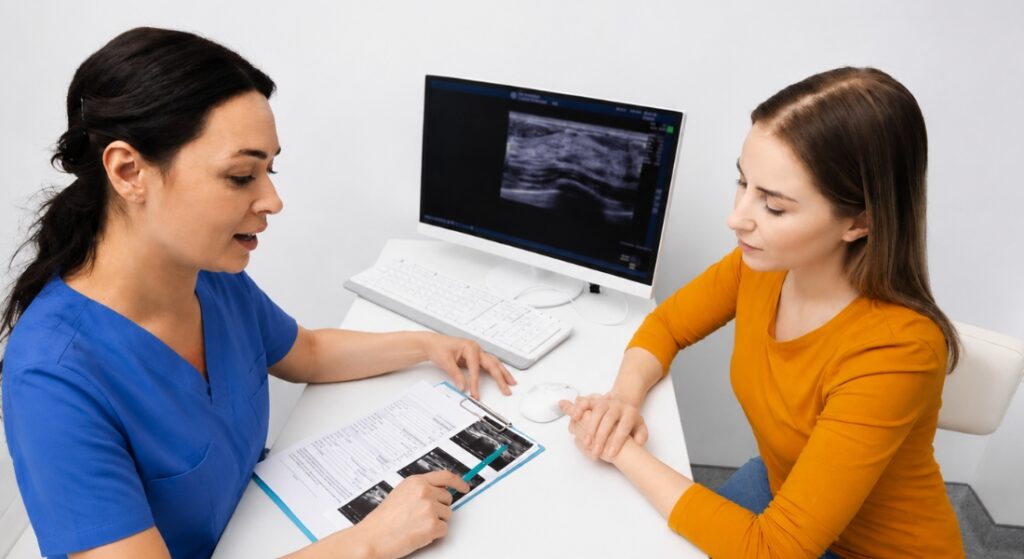
Ultrasound is commonly the first imaging test when fibroids are suspected, particularly if your womb feels enlarged or your clinician suspects a pelvic mass. If your symptoms suggest a submucosal fibroid or another abnormality inside the womb cavity, hysteroscopy may be recommended as the first investigation.
An endometrial biopsy is not routinely required simply because you have fibroids. If your symptoms or medical history suggest a higher risk of abnormalities in the womb lining, your specialist may take a small tissue sample during a hysteroscopy. NICE advises that endometrial sampling for heavy menstrual bleeding should be performed as part of hysteroscopy rather than as a blind biopsy.
Do Fibroids Always Need Treatment?
No. Fibroids do not always need treatment if they are not causing symptoms or affecting your fertility, pregnancy plans or nearby organs. When symptoms are mild, your clinician may recommend monitoring and reviewing your condition if anything changes.
Treatment is more likely to be recommended if fibroids cause heavy bleeding, anaemia, significant pain or pressure on your bladder or bowel. The best option depends on your symptoms, the size and location of the fibroids, your general health and your personal preferences.
Which Medicines Can Help Fibroid Symptoms?
Medicines can help control heavy bleeding and pain caused by fibroids, but they do not permanently remove the growths. Depending on your symptoms and whether the fibroids distort the womb cavity, treatment may include a levonorgestrel-releasing intrauterine system, sometimes called a hormonal coil, tranexamic acid, anti-inflammatory medicines, combined hormonal contraception or progestogen treatments. Some hormonal medicines may also temporarily reduce fibroid size.
Your clinician will recommend an option based on your medical history, symptoms and reproductive plans. If medicines do not control your symptoms or fibroids continue to cause significant problems, your specialist may discuss procedural or surgical treatments.
What Are GnRH Agonists and Oral GnRH Antagonists?
GnRH medicines reduce the activity of hormones that support fibroid growth, which can reduce bleeding and temporarily shrink fibroids. A GnRH agonist may sometimes be used before surgery, particularly when fibroids have enlarged or distorted the womb. Oral GnRH antagonists may also be considered for eligible adults with moderate-to-severe symptoms.
NICE-recommended options include relugolix combined with estradiol and norethisterone acetate. Linzagolix may also be offered to eligible adults under specific longer-term treatment and dosing conditions. These medicines do not permanently remove fibroids, and symptoms may return after treatment ends. Your specialist will consider your medical history, other medicines, risk factors, fertility plans and possible side effects before recommending treatment.
What Is Uterine Artery Embolisation?
Uterine artery embolisation (UAE), also called fibroid embolisation, is a minimally invasive procedure that shrinks fibroids by reducing their blood supply. During the procedure, an interventional radiologist guides a thin catheter through an artery in your wrist or groin and injects tiny particles into the blood vessels supplying the fibroids. Over the following months, the fibroids gradually shrink, which can improve heavy bleeding and pressure symptoms.
UAE is less invasive than major abdominal surgery and can treat several fibroids during the same procedure. However, it is not suitable for everyone. Before treatment, your specialist will discuss possible risks, including pain, infection and the possibility that further treatment may be needed. If you hope to become pregnant, they should also explain that the effects of UAE on future fertility and pregnancy remain uncertain.
Which Procedures and Operations Are Used to Treat Fibroids?
If medicines do not control your symptoms, your specialist may recommend a procedure or operation. A myomectomy removes your fibroids while preserving your womb and may be performed through a hysteroscopy, keyhole surgery or an open operation, depending on the size and location of your fibroids.
A hysterectomy removes your womb and is the only treatment that permanently prevents fibroids from returning. Before choosing surgery, your specialist will explain the benefits, risks and how each option may affect your recovery and future fertility.
How Is the Right Treatment Chosen?

The right treatment depends on your symptoms, the size and location of your fibroids, and whether you want to become pregnant in the future. If your symptoms are mild, monitoring or medicines may be enough. If they are more severe, your specialist may discuss uterine artery embolisation, myomectomy or a hysterectomy.
Your treatment should reflect your priorities. Your specialist will explain the benefits, risks and possible effect on your fertility, helping you choose the option that is most suitable for you.
Myth vs Fact
| Myth | Fact |
| Fibroids are a type of womb cancer. | Fibroids are benign, non-cancerous growths. A rare uterine cancer called sarcoma is generally considered a separate condition rather than a fibroid that has become cancerous. |
| All fibroids cause symptoms. | Many fibroids cause no symptoms and are found incidentally during an ultrasound scan or another examination. |
| Large fibroids always cause the most severe symptoms. | Symptoms often depend on fibroid location as well as size. A small submucosal fibroid inside the womb cavity may cause significant bleeding, while a larger fibroid on the outer surface may cause few symptoms. |
| You cannot become pregnant if you have fibroids. | Many people with fibroids conceive naturally and have healthy pregnancies. Fertility effects depend mainly on the size and location of the fibroids and whether they distort the womb cavity. |
| Fibroids always require surgery. | Fibroids may be monitored or treated with medicines, hormonal treatments, uterine artery embolisation or surgery, depending on your symptoms and circumstances. |
| Fibroids always grow continuously. | Fibroids may remain stable, grow or sometimes shrink. Many become smaller after menopause as hormone levels decline. |
Key Takeaways
- Fibroids are common, non-cancerous growths that develop in or around the womb.
- Many fibroids cause no symptoms and do not require treatment.
- Symptoms may include heavy periods, pelvic pressure, pain, abdominal swelling, bladder or bowel problems, and iron-deficiency anaemia.
- The effect of fibroids depends on their size, number and location.
- Most people with fibroids can still conceive, although fibroids that distort the womb cavity may affect fertility or pregnancy.
- Ultrasound is usually the first imaging test used to investigate suspected fibroids.
- Treatment options include monitoring, medicines, hormonal treatments, uterine artery embolisation, myomectomy and hysterectomy.
- Seek medical advice if you have persistent heavy bleeding, pelvic pain, pressure symptoms, fertility concerns or bleeding after menopause.
FAQs:
1. Can fibroids disappear without treatment?
Fibroids do not usually disappear on their own during the reproductive years, although some remain stable or grow very slowly. Many fibroids shrink after menopause because hormone levels naturally decline. If symptoms are mild or absent, monitoring may be all that is needed.
2. Can fibroids affect the chances of pregnancy?
Many people with fibroids conceive naturally and have healthy pregnancies. Fertility is more likely to be affected when fibroids distort the womb cavity or interfere with embryo implantation. A full fertility assessment is important because fibroids are only one of several possible factors.
3. Is surgery the only treatment for fibroids?
No. Treatment options may include monitoring, medicines to reduce bleeding or pain, hormonal therapies and uterine artery embolisation. Surgery is usually considered when symptoms are severe, fertility is affected or other treatments have not provided sufficient relief.
4. Can fibroids return after treatment?
New fibroids can develop after treatment, and small existing fibroids may continue to grow over time. The risk of recurrence depends on factors such as age, hormone levels and the number of fibroids present. A hysterectomy is the only treatment that completely prevents fibroids from returning.
5. When is specialist assessment recommended for fibroids?
Specialist assessment is recommended if fibroids cause heavy periods, anaemia, persistent pelvic pain, pressure symptoms or fertility concerns. Prompt medical review is also important for bleeding after menopause, rapid abdominal enlargement or symptoms that continue despite treatment. Urgent medical attention may be needed for sudden severe pelvic pain or very heavy bleeding with dizziness or weakness.
Final Thoughts: Understanding Your Fibroid Treatment Options
Fibroids are common, non-cancerous growths that affect people in different ways. While many cause no symptoms and only require monitoring, others can lead to heavy menstrual bleeding, pelvic pressure, pain or fertility concerns that significantly affect your quality of life. The most appropriate treatment depends on the size and position of the fibroids, the severity of your symptoms and whether you hope to become pregnant in the future.
If you are looking for expert fibroids treatment in London, our specialist team can assess your symptoms, explain how your fibroids may be affecting your health and discuss suitable investigations and treatment options. At Gynaecology Clinic London, we tailor your care to your symptoms, fertility goals and overall wellbeing, helping you make an informed decision about the most appropriate way forward.
References:
- NHS (2026) ‘Fibroids’. Page last reviewed 17 March 2026. Available at: https://www.nhs.uk/conditions/fibroids/
- National Institute for Health and Care Excellence (NICE) (2018, updated 2021; reviewed 2024) ‘Heavy menstrual bleeding: assessment and management (NICE guideline NG88)’. Available at: https://www.nice.org.uk/guidance/ng88
- National Institute for Health and Care Excellence (NICE) (2022) ‘Relugolix–estradiol–norethisterone acetate for treating moderate to severe symptoms of uterine fibroids (Technology appraisal guidance TA832)’. Available at: https://www.nice.org.uk/guidance/ta832
- National Institute for Health and Care Excellence (NICE) (2024) ‘Linzagolix for treating moderate to severe symptoms of uterine fibroids (Technology appraisal guidance TA996)’. Available at: https://www.nice.org.uk/guidance/ta996
- National Institute for Health and Care Excellence (NICE) (2010) ‘Uterine artery embolisation for fibroids (HealthTech guidance HTG240)’. Available at: https://www.nice.org.uk/guidance/htg240
- University College London Hospitals NHS Foundation Trust (UCLH) (2024) ‘Uterine Artery/Fibroid Embolisation (UAE)’. Page last updated 20 June 2024. Available at: https://www.uclh.nhs.uk/patients-and-visitors/patient-information-pages/uterine-arteryfibroid-embolisation-uae
- Royal College of Obstetricians and Gynaecologists (RCOG) (2019, reviewed 2024) ‘Morcellation for myomectomy or hysterectomy’. Available at: https://www.rcog.org.uk/for-the-public/browse-our-patient-information/morcellation-for-myomectomy-or-hysterectomy/
- Yang, Q., Ciebiera, M., Bariani, M.V., Ali, M., Elkafas, H., Boyer, T.G. and Al-Hendy, A. (2022) ‘Comprehensive review of uterine fibroids: developmental origin, pathogenesis, and treatment’, Endocrine Reviews, 43(4), pp. 678–719. Available at: https://pmc.ncbi.nlm.nih.gov/articles/PMC9277653/
- Micić, J. et al. (2024) ‘Currently available treatment modalities for uterine fibroids’, Medicina, 60(6), article 868. Available at: https://www.mdpi.com/1648-9144/60/6/868
- Li, H., Hu, Z., Fan, Y. and Hao, Y. (2024) ‘The influence of uterine fibroids on adverse outcomes in pregnant women: a meta-analysis’, BMC Pregnancy and Childbirth, 24(1), article 345. Available at: https://link.springer.com/article/10.1186/s12884-024-06545-5