



If you have been told you may need a gynaecology test or scan, it is natural to wonder what will happen and whether you will need several investigations. In practice, your doctor will usually start by talking through your symptoms and medical history, then recommend only the tests that can help answer a specific clinical question.
Depending on what you are experiencing, this might mean a blood test or pelvic ultrasound, or a more focused investigation such as colposcopy or hysteroscopy. MRI or CT is usually reserved for situations where your doctor needs more detailed information. You should be told why each test is being recommended and what it involves before you decide to go ahead.
How Does Your Gynaecologist Decide Which Tests You Need?
Your symptoms, medical history and individual circumstances help your gynaecologist decide which tests are appropriate for you. They may ask about your periods, when your symptoms started, how severe they are and whether they affect your daily life.
Your age, pregnancy plans and whether you have reached menopause can also influence the assessment. Your doctor may recommend an examination, scan or blood test to answer a specific clinical question rather than carrying out unnecessary tests.
| Test or Investigation | What It Assesses | Why It May Be Recommended |
| Blood tests | Anaemia, hormones or other specific markers | Heavy bleeding, irregular periods or selected ovarian/fertility concerns |
| Pelvic ultrasound | Womb, ovaries and surrounding pelvic structures | Fibroids, ovarian cysts, pelvic pain, heavy bleeding |
| Transvaginal ultrasound | More detailed view of pelvic organs | Endometriosis, adenomyosis, ovarian or womb assessment |
| Colposcopy | Cervix under magnification | Further assessment after certain cervical-screening results |
| Hysteroscopy | Inside of the womb | Abnormal bleeding, polyps, submucosal fibroids |
| Endometrial biopsy | Tissue from the womb lining | Selected abnormal-bleeding investigations |
| MRI | Detailed pelvic anatomy | Deep endometriosis or another condition needing specialist imaging |
| CT | Wider cross-sectional imaging of abdomen/pelvis | Selected complex conditions or cancer staging |
| Vaginal/cervical swabs | Infection | Discharge, irritation, pelvic symptoms or possible STI |
What Blood Tests Can You Have at a Gynaecology Clinic?
The blood tests you may need depend on your symptoms and what your gynaecologist is investigating. If you have heavy menstrual bleeding, a full blood count can check whether you have developed anaemia. Other blood tests, including thyroid or hormone tests, may be useful for particular symptoms such as irregular or absent periods, but they are not routinely needed for every person with heavy periods.
Other tests may be recommended for specific concerns, such as fertility problems or ovarian symptoms. Blood tests rarely provide the complete answer on their own, so your doctor will consider your results alongside your symptoms, examination and any scans.
What Is a Pelvic Ultrasound Scan?
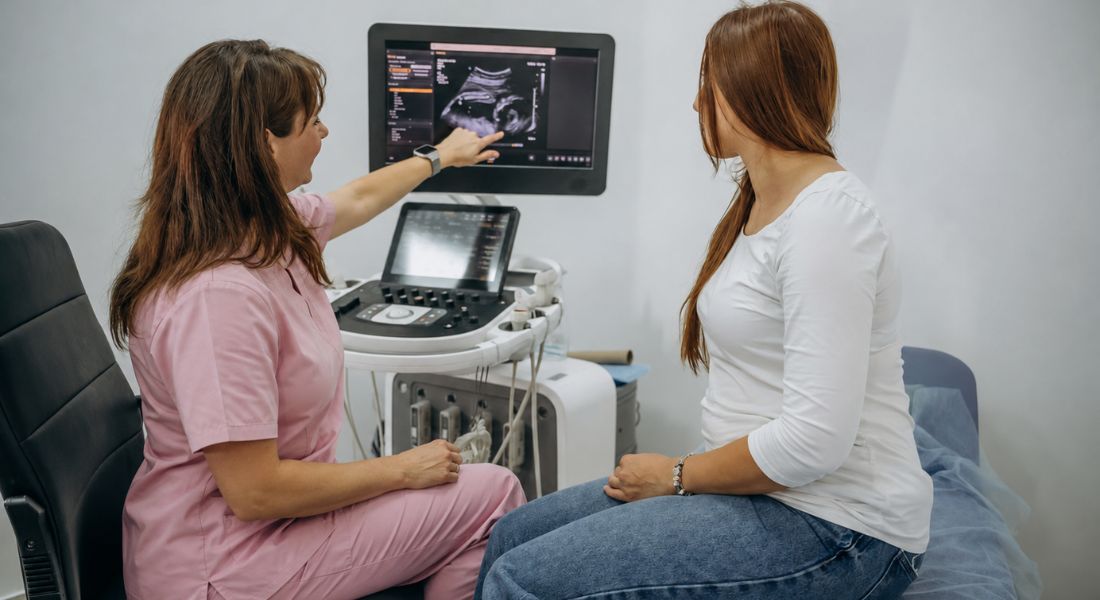
A pelvic ultrasound uses sound waves to create images of your womb, ovaries and surrounding pelvic structures. Your doctor may recommend one if you have pelvic pain, heavy periods, unusual bleeding, bloating or a suspected fibroid or ovarian cyst.
You may have an abdominal ultrasound, an internal transvaginal ultrasound or both, depending on what your doctor needs to assess. Ultrasound can provide useful information about conditions such as fibroids, ovarian cysts and adenomyosis, although a normal scan does not always rule out conditions such as endometriosis.
What Is the Difference Between an Abdominal and Transvaginal Ultrasound?
An abdominal ultrasound uses a probe over your lower abdomen, and you may need a full bladder for clearer images. A transvaginal ultrasound uses a slim probe inserted gently into your vagina, which can provide more detailed views of your womb and ovaries.
You should be told what the scan involves and asked for your consent before a transvaginal examination. You can ask questions, change your mind or ask for the scan to stop at any time. If you do not want a transvaginal scan or it is not suitable for you, tell your clinician so that alternative imaging can be discussed, although an abdominal scan may not provide the same level of detail.
What Can an Ultrasound Show About Fibroids and Adenomyosis?
An ultrasound can help your gynaecologist identify fibroids and assess their size, number and position. This information can help you and your doctor decide whether monitoring, medication or another treatment may be appropriate.
Ultrasound can also provide useful information when adenomyosis is suspected, particularly if you have heavy or painful periods. Your scan findings should always be considered alongside your symptoms, as imaging is only one part of your overall assessment.
What Tests Are Used When Endometriosis Is Suspected?
If you have symptoms such as painful periods, pelvic pain or pain during sex, your gynaecologist may use your symptoms, examination and imaging to investigate possible endometriosis. A normal examination or ultrasound does not rule out endometriosis.
If deep endometriosis is suspected, a specialist transvaginal ultrasound or pelvic MRI may be recommended to assess its extent. In some cases, laparoscopy may still be considered when symptoms persist, even if ultrasound or MRI findings are normal.
What Cervical Tests Might You Need?
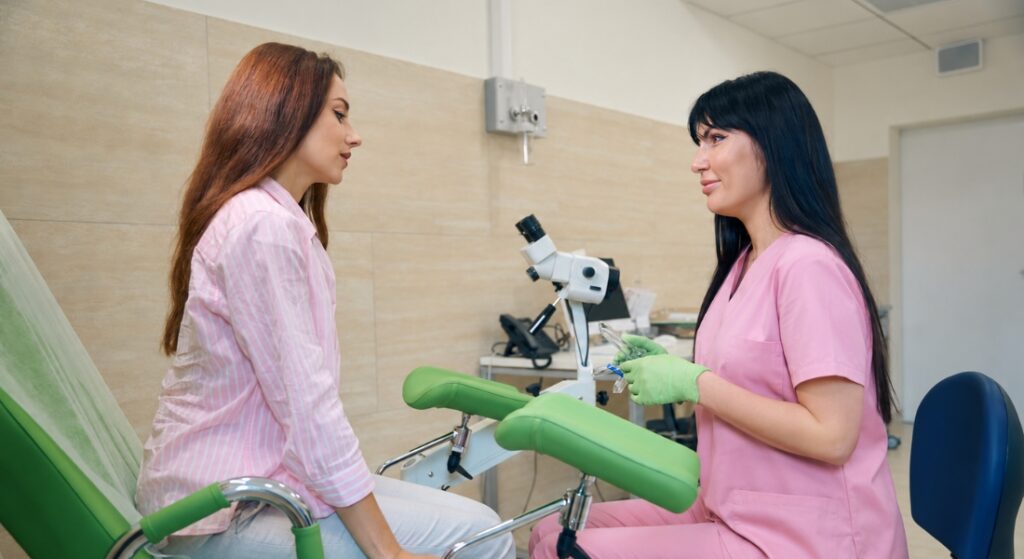
In England, cervical screening first checks your sample for high-risk human papillomavirus (HPV). If high-risk HPV is found, the same sample is then examined for abnormal cervical cell changes. Colposcopy provides a closer examination of the cervix when further assessment is needed.
Your gynaecologist may also examine your cervix with a speculum or take swabs if an infection is suspected. These tests provide different information, so you may sometimes need more than one investigation.
What Happens During a Colposcopy?
During a colposcopy, your clinician examines your cervix using a magnifying instrument that stays outside your body. A speculum is inserted so your cervix can be seen, and special solutions may be applied to highlight unusual areas.
If needed, your clinician may take a small biopsy for laboratory testing. You may feel some discomfort or a brief pinching sensation, but you can tell the clinician if you need a pause or want the examination to stop. If a biopsy is taken, you will usually need to wait for the result.
What Is a Hysteroscopy and When Might You Need One?
A hysteroscopy allows your clinician to look inside your womb using a thin camera passed gently through your vagina and cervix. You may be offered one if you have heavy or irregular bleeding, bleeding between periods, bleeding after menopause, or if your doctor suspects a polyp or fibroid inside your womb.
- Examining the Womb: A small camera allows your clinician to examine the lining of your womb and look for abnormalities.
- Investigating Abnormal Bleeding: You may need a hysteroscopy if you have heavy, irregular, or unexpected vaginal bleeding.
- Checking for Polyps or Fibroids: The procedure can help identify problems such as polyps or fibroids that may be contributing to your symptoms.
- Biopsy or Treatment: If needed, your clinician may take a biopsy or treat certain problems during the same procedure.
A hysteroscopy often takes around 5 to 10 minutes, although it may take longer if additional procedures are needed. Your clinician should explain what to expect, discuss pain-relief options, and help you decide whether an outpatient procedure is suitable for you.
What Is an Endometrial Biopsy?
An endometrial biopsy involves taking a small sample from the lining of your womb so it can be examined in a laboratory. Your gynaecologist may recommend this when you have certain patterns of abnormal bleeding, including bleeding after menopause.
Depending on why you are being investigated, an endometrial sample may be taken during hysteroscopy so the womb lining can be examined and tissue obtained when appropriate.
Clinical Safety Note: You Have Choices About Hysteroscopy
Outpatient hysteroscopy is manageable for many people, but some experience significant pain and it is difficult to predict who will find the procedure painful. RCOG guidance emphasises informed decision-making, including discussion of pain relief and alternative settings.
You can ask the clinician to pause or stop the procedure at any time. If outpatient hysteroscopy is not suitable or acceptable for you, your healthcare team can discuss alternatives such as hysteroscopy with sedation or an anaesthetic, depending on your circumstances and local services.
Can You Have Vaginal Swabs and Infection Tests?
Yes. Your gynaecologist may recommend a vaginal or cervical swab if you have unusual discharge, itching, pelvic discomfort, bleeding after sex or symptoms that could suggest an infection. The sample can be tested for specific infections, including some sexually transmitted infections.
Not every vaginal symptom is caused by an infection, so repeated self-treatment may not solve the problem. Your clinician can also consider other causes, such as irritation, hormonal changes or a vulval skin condition, and recommend the right tests for you.
When Might You Need an MRI Scan?
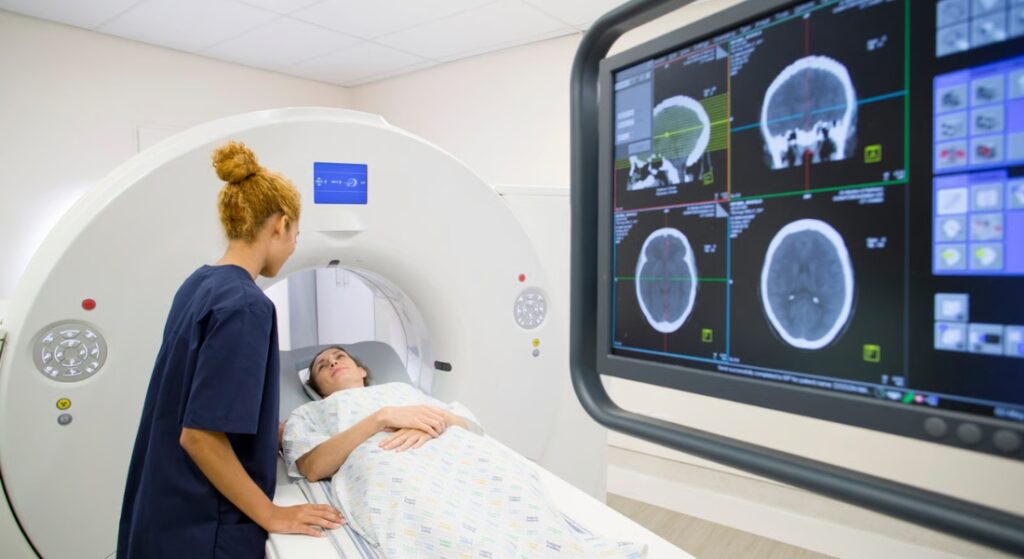
An MRI uses a strong magnetic field and radio waves to create detailed images of your pelvic organs. It is not usually the first scan for common gynaecological symptoms, as an ultrasound will often provide the information your doctor needs.
You may need an MRI when your gynaecologist needs more detailed information about a pelvic condition, such as deep endometriosis. Tell the radiology team if you may be pregnant, have an implanted device or metal in your body, have significant kidney problems or experience claustrophobia. These factors can affect how your scan is planned, particularly if MRI contrast is being considered.
When Might You Need a CT Scan in Gynaecology?
A CT scan creates detailed images across your abdomen and pelvis and is not usually needed for straightforward menstrual or gynaecological symptoms. Your doctor may recommend one when they need a wider view or more information than an ultrasound can provide.
CT can be used when a wider view of the abdomen and pelvis is needed. For example, if clinical assessment, CA125 and ultrasound findings raise concern about ovarian cancer, NICE recommends CT imaging to help assess the extent of disease. Having a CT scan does not mean that cancer has been confirmed.
Can a Biopsy Be Taken from Areas Other Than the Womb or Cervix?
Yes. Depending on your symptoms and examination findings, a biopsy may also be taken from the vulva or vagina. For example, your clinician may recommend a small tissue sample if there is a persistent area of itching, a lump, ulcer, skin change or another abnormal area that cannot be diagnosed confidently from examination or swabs alone.
The tissue is sent to a laboratory for examination. Vulval biopsies are often performed using local anaesthetic, although the exact procedure depends on the area being assessed. Being offered a biopsy does not mean that cancer is expected; biopsies can help diagnose a range of benign, inflammatory, precancerous or cancerous changes.
Can Several Tests Be Arranged During the Same Gynaecology Visit?
Sometimes you can have several investigations during the same visit, depending on your symptoms, the clinic and which tests you need. Your consultation, examination, blood tests or ultrasound may be coordinated where appropriate, while more specialised procedures may require separate appointments.
You do not necessarily need every test at once. Your gynaecologist may use the results of one investigation to decide whether you need another, such as an MRI, hysteroscopy or biopsy. A planned approach can help you avoid unnecessary tests while making sure the right investigations are arranged for you.
How Should You Prepare for Gynaecology Tests and Scans?

Preparation depends on the test you are having, so follow the instructions given by your clinic. You may need a full bladder for an abdominal ultrasound, while a transvaginal scan usually requires you to empty your bladder first.
Bring details of your medicines, previous scans and relevant cervical screening results, and know the date of your last period if possible. If you feel anxious about an internal examination or have had a difficult experience before, tell your clinical team so they can explain the procedure and discuss your concerns with you.
Myth vs Fact
| Myth | Fact |
| You need every available test at your first appointment. | Investigations should be chosen to answer specific questions based on your symptoms and history. |
| A normal ultrasound rules out endometriosis. | NICE advises that endometriosis should not be excluded simply because ultrasound or examination is normal. |
| A biopsy means your doctor thinks you have cancer. | Biopsies are used for many reasons and can identify benign, precancerous or other tissue changes. |
| Cervical screening automatically checks for abnormal cells in everyone. | In England, screening first checks for high-risk HPV. Cell changes are assessed when high-risk HPV is detected. |
| CT or MRI is always better than ultrasound. | Different scans answer different clinical questions. Ultrasound is often the appropriate first investigation for common pelvic symptoms. |
Key Takeaways
- You will not automatically need every available gynaecology test; investigations should be chosen according to your symptoms and medical history.
- Pelvic ultrasound is commonly used to assess the womb and ovaries, including fibroids, cysts and some signs of adenomyosis or endometriosis.
- Colposcopy examines the cervix, whereas hysteroscopy examines the inside of the womb.
- Biopsies provide tissue for laboratory examination and can answer questions that scans alone cannot.
- MRI and CT are usually used for specific clinical questions rather than as routine first-line scans for every gynaecological symptom.
- You should be told what an internal examination or procedure involves and asked for your consent before it is performed.
Frequently Asked Questions
1. What is the most common scan used in gynaecology?
Pelvic ultrasound is one of the most commonly used scans in gynaecology. It can assess the womb and ovaries and help investigate problems such as heavy periods, pelvic pain, fibroids and ovarian cysts.
2. Is a transvaginal ultrasound painful?
A transvaginal ultrasound may cause some pressure or mild discomfort, but experiences vary from person to person. The clinician should explain the procedure beforehand, and you can tell them if you are uncomfortable or want the examination to stop.
3. When might I need a hysteroscopy instead of an ultrasound?
A hysteroscopy may be recommended when your doctor needs to look directly inside the womb, particularly when investigating abnormal bleeding, polyps or fibroids that project into the womb cavity. A biopsy or certain treatments can sometimes be performed during the same procedure.
4. Does needing a biopsy mean that I have cancer?
No. A biopsy is used to examine tissue more closely and can help distinguish normal tissue, benign changes, precancerous abnormalities and cancer. Being offered a biopsy does not mean that your doctor expects cancer to be found.
5. Can you still have a gynaecological condition if your ultrasound is normal?
Yes. A normal pelvic ultrasound can be reassuring, but it does not rule out every condition. For example, NICE advises that endometriosis should not be excluded because an examination or ultrasound is normal. Your clinician will interpret your scan alongside your symptoms and may recommend further assessment if concerns continue.
Final Thoughts: Understanding Tests and Scans at a Gynaecology Clinic
Being advised to have a test or scan can feel worrying, but each investigation is chosen to answer a specific question about your symptoms. Ultrasound, blood tests, colposcopy, hysteroscopy, biopsies and MRI can provide different types of information, helping your gynaecologist understand the cause of abnormal bleeding, pelvic pain, period changes or other concerns.
If you are unsure which test or scan might be appropriate for your symptoms, you can contact our team at Gynaecology Clinic London to arrange an assessment. We can talk through your concerns, explain which investigations may be useful and help you understand what to expect before you decide on the next step.
References
- National Institute for Health and Care Excellence (NICE) (2018, updated 2021) Heavy menstrual bleeding: assessment and management. NICE guideline NG88. Available at: https://www.nice.org.uk/guidance/ng88
- National Institute for Health and Care Excellence (NICE) (2017, updated 2024) Endometriosis: diagnosis and management. NICE guideline NG73. Available at: https://www.nice.org.uk/guidance/ng73
- NHS (2025) What is cervical screening? Last reviewed 26 June 2025. Available at: https://www.nhs.uk/tests-and-treatments/cervical-screening/what-is-cervical-screening/
- Royal College of Obstetricians and Gynaecologists (RCOG) (2025) Outpatient hysteroscopy. Last reviewed 7 April 2025. Available at: https://www.rcog.org.uk/for-the-public/browse-our-patient-information/outpatient-hysteroscopy/
- National Institute for Health and Care Excellence (NICE) (2011, updated 2026) Ovarian cancer: recognition and initial management. Clinical guideline CG122. Available at: https://www.nice.org.uk/guidance/cg122
- Di Spiezio Sardo, A., Saccone, G., Carugno, J., Pacheco, L.A., Zizolfi, B., Haimovich, S. and Clark, T.J. (2022) ‘Endometrial biopsy under direct hysteroscopic visualisation versus blind endometrial sampling for the diagnosis of endometrial hyperplasia and cancer: systematic review and meta-analysis’, Facts, Views & Vision in ObGyn, 14(2), pp. 103–110. Available at: https://pubmed.ncbi.nlm.nih.gov/35781106/
- Van den Bosch, T., Heremans, R., Landolfo, C., Epstein, E., Leone, F.P.G., Bourne, T., Timmerman, D. and collaborators (2026) ‘ISUOG Consensus Statement on sonographic assessment of the endometrium: how to perform a gynecological ultrasound scan and report the findings’, Ultrasound in Obstetrics & Gynecology, 67(2), pp. 241–258. Available at: https://pmc.ncbi.nlm.nih.gov/articles/PMC12865526/