




Being told that abnormal cells have been found during a colposcopy can be worrying, especially when you are concerned about cervical cancer. However, abnormal cervical cells do not mean that you have cancer. Many changes are monitored or treated early to reduce the chance of them becoming more serious.
During a colposcopy, your cervix is examined closely, and a small biopsy may be taken if an area looks unusual. What happens next depends on your biopsy results and the degree of cell changes. Terms such as CIN 1, CIN 2 and CIN 3 describe different levels of cervical cell changes, not stages of cervical cancer.
What Does It Mean If Abnormal Cells Are Seen During a Colposcopy?
During a colposcopy, your cervix is examined closely under magnification. If an area looks different, your colposcopist may take a small biopsy so the cells can be checked more carefully in a laboratory.
Seeing an abnormal area does not mean that you have cervical cancer. Your biopsy result provides more specific information about the type and degree of cell changes and helps your doctor decide whether you need monitoring, treatment or further assessment.
Why Might a Biopsy Be Taken During Your Colposcopy?
During your colposcopy, your clinician can examine your cervix under magnification, but this may not show exactly what type of cell change is present. If an area looks unusual, a small biopsy can give you a more definite answer.
The tissue is examined in a laboratory to determine how significant the cell changes are. Your results can help your clinician decide whether you need monitoring or treatment. Not everyone needs a biopsy, particularly if your cervix appears normal or further sampling is not considered necessary.
What Is CIN and Why Is It Important?
CIN stands for cervical intraepithelial neoplasia and describes abnormal changes in the cells on the surface of the cervix. It does not mean that you have cervical cancer, but the grade helps your healthcare team understand how the changes may behave and whether monitoring or treatment is appropriate.
| CIN Grade | What It Means | Usual Significance | Management |
| CIN 1 | Mild cell changes | Often clears naturally | Monitoring may be recommended |
| CIN 2 | High-grade cell changes | Greater risk of persistence or progression | Monitoring or treatment may be considered |
| CIN 3 | High-grade cell changes | Higher risk of progression if untreated | Treatment is usually recommended |
What Happens If Your Biopsy Shows CIN 1?
If your biopsy shows CIN 1, you have a low-grade cervical cell change. This means the abnormal cells are limited to the lower part of the surface layer of your cervix and are not cervical cancer.
CIN 1 will not usually need immediate treatment. For many people with untreated CIN 1, particularly when the original screening result was low grade, follow-up in England involves another cervical screening test after 12 months. If high-risk HPV is not detected, you will usually be recalled again in three years.
If HPV is still present, cytology is performed on the same sample. If abnormal cells are found, you will be referred back to colposcopy; if the cytology is negative, another screening test is usually arranged 12 months later. Your follow-up may differ if your original screening result was high grade or does not match the biopsy findings.
Are Abnormal Cervical Cells the Same as Cervical Cancer?

No. If abnormal cervical cells are found during your screening or colposcopy, it does not mean you have cancer. These changes are often precancerous and can be monitored or treated before they become more serious.
Most cervical cell changes are linked to persistent high-risk HPV infection. HPV is very common, and your immune system often clears it naturally. If it persists, it can gradually cause cell changes, which is why your screening and colposcopy help detect problems early.
What Happens If Your Biopsy Shows CIN 2?
If your biopsy shows CIN 2, you have a higher-grade cervical cell change than CIN 1. Treatment is often recommended, but in some cases you may be offered close monitoring instead, depending on your individual results.
In selected circumstances, CIN 2 can be monitored rather than treated immediately. This is only appropriate when your colposcopy and biopsy findings meet specific safety criteria and you are able to attend regular follow-up. Monitoring generally involves colposcopy about every six months for up to two years, with further sampling if needed. If CIN 2 persists, progresses or has not resolved within the recommended surveillance period, treatment is usually offered.
Myth vs Fact
| Myth | Fact |
| Abnormal cervical cells mean you have cervical cancer. | CIN and CGIN are abnormal or precancerous cell changes, not cervical cancer. |
| Every abnormal result needs immediate treatment. | CIN 1 is usually monitored, and selected CIN 2 can sometimes be followed closely instead of being treated immediately. |
| CIN 3 means stage 3 cervical cancer. | CIN 3 is a high-grade precancerous cervical cell change. It is not stage 3 cancer. |
| Treatment always means major surgery. | High-grade CIN is commonly treated with LLETZ, usually as a short outpatient procedure under local anaesthetic. |
| Once abnormal cells are removed, no further screening is needed. | Follow-up HPV testing is important because abnormal changes can recur and persistent HPV may require further assessment. |
What Is CGIN and How Is It Different From CIN?
If your cervical screening or colposcopy result mentions cervical glandular intraepithelial neoplasia (CGIN), you may wonder how it differs from CIN. CGIN affects glandular cells inside the cervical canal rather than the squamous cells that cover the outer surface of the cervix.
- CGIN Affects Glandular Cells: CGIN develops in the glandular cells lining the cervical canal, whereas CIN affects the squamous cells on the outer part of the cervix.
- CGIN Is Not Cervical Cancer: Although CGIN is not cancer, it is considered a significant abnormality because untreated glandular changes can sometimes develop into adenocarcinoma.
- It Can Be Harder to See: Because the affected glandular cells are located inside the cervical canal, the abnormal area may be more difficult to see fully during colposcopy.
- Treatment and Follow-Up: Treatment usually involves removing the affected tissue so it can be examined and checked for complete removal, followed by specialist follow-up and HPV-based testing.
Your specialist will explain what your CGIN result means and when you need your follow-up tests. Keeping to the recommended follow-up schedule is important so that any remaining abnormal cells can be identified and managed appropriately.
Follow-up after treatment for CGIN differs from standard follow-up after CIN. If CGIN has been completely removed, an HPV-based test of cure is usually performed six months after treatment. If HPV is not detected, another test is normally performed 12 months later, around 18 months after treatment. If both results are HPV-negative, you can usually move to a three-year recall. If HPV is detected, you will normally be referred back to colposcopy.
What Happens If Your Biopsy Shows CIN 3?
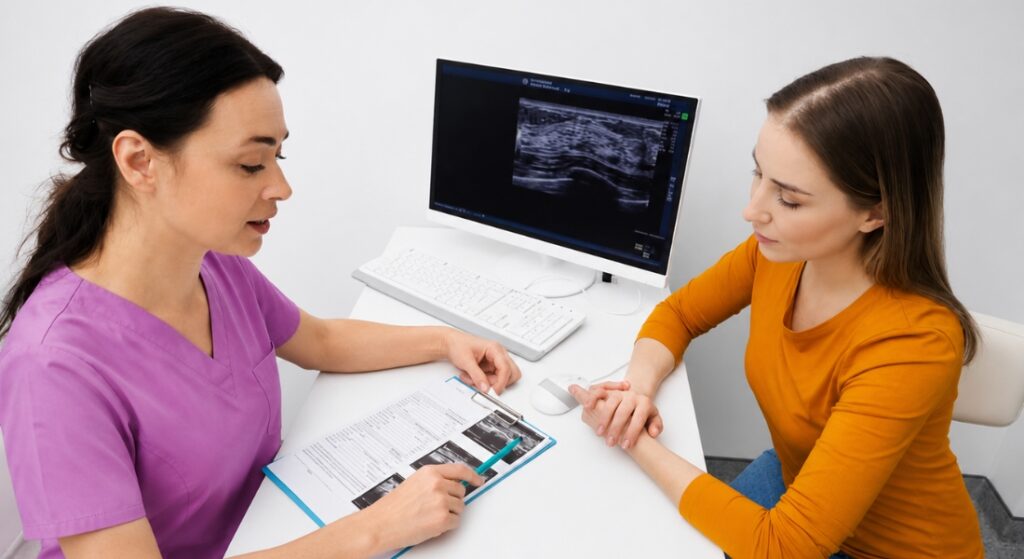
If your biopsy shows CIN 3, you have a high-grade cervical cell change. CIN 3 is not the same as cervical cancer, but treatment is usually recommended because the changes have a greater potential to progress if left untreated.
Your doctor may recommend a procedure such as LLETZ to remove the abnormal area. The tissue is then examined in a laboratory, and attending your recommended treatment and follow-up appointments helps ensure that your cervical health is monitored carefully.
Research Insight
A systematic review and meta-analysis published in the BMJ examined more than 3,000 people with CIN 2 managed with active surveillance. At 24 months, about half of the lesions had regressed, while some persisted or progressed. Regression was particularly common in younger patients. This helps explain why carefully selected people with CIN 2 may sometimes be offered monitoring, but close follow-up is essential because not every CIN 2 lesion will resolve naturally.
Will Abnormal Cells Be Treated During the Same Colposcopy?
Sometimes, your abnormal cells can be treated during the same colposcopy appointment. This may be considered when your screening results and the appearance of your cervix strongly suggest a high-grade abnormality.
In other cases, your clinician may take a biopsy and wait for the laboratory results before recommending treatment. What happens depends on your individual results, the appearance of your cervix and what your healthcare team considers safest for you.
How Are High-Grade Abnormal Cells Usually Removed?
If you have high-grade cervical cell changes, your clinician may recommend LLETZ to remove the abnormal tissue. This procedure uses a fine heated wire loop to remove the affected area of your cervix, usually under local anaesthetic.
LLETZ is usually a short procedure, and you can normally go home the same day. The removed tissue is sent to a laboratory so your pathologist can confirm the abnormality and check for any more significant changes.
Evidence Note
RCOG patient guidance reports that LLETZ is successful in more than 9 in 10 people, meaning most do not need further treatment for cervical cell changes. This is a population-level figure rather than a guarantee for an individual patient, which is why HPV-based follow-up remains important after treatment.
What Happens to the Tissue Removed During Treatment?
If tissue is removed during LLETZ or another treatment, it is usually sent to a laboratory for examination. Your pathologist checks the sample to confirm the type and degree of cervical cell changes and examines the edges of the tissue.
If abnormal cells extend to an edge, or margin, of the removed tissue, the next step depends on the type of abnormality, which margin is involved, your age and whether there is any concern about glandular or invasive disease. Further excision is not automatically needed after every case of CIN with involved margins. However, management is different for CGIN: if the excision margins are not clear of CGIN, a further excision is usually offered so your specialist can more confidently exclude invasive disease and try to obtain clear margins.
What Follow-Up Will You Need After Treatment?
After treatment, you will usually need a follow-up cervical screening test to check whether high-risk HPV is still present. In England, this is usually done six months after treatment as a test of cure.
If high-risk HPV is detected, you will be referred back to colposcopy for further assessment. Keeping your follow-up appointments is important for monitoring your cervical health.
UK Guidance Note
If high-risk HPV is not detected at the six-month test of cure, you will usually be invited for another cervical screening test in three years. If that test is also HPV-negative, you will usually return to the routine screening interval in England, which is currently five years for eligible people. Your exact recall date may vary depending on your previous screening results.
What Can You Expect After LLETZ or Similar Treatment?

After LLETZ, you may have mild period-like cramps, light bleeding or a watery, brownish discharge while your cervix heals. These symptoms usually settle gradually, and your clinic will give you specific aftercare advice.
You may be advised to avoid penetrative sex and putting anything inside your vagina, including tampons or menstrual cups, until bleeding or discharge has stopped, which is usually within about four weeks.
Contact your clinic, GP or NHS 111 if you develop heavy bleeding that is more than you would expect during a heavy period, unpleasant-smelling vaginal discharge, a high temperature or abdominal pain that does not improve. Seek urgent assessment if the bleeding becomes very heavy or you feel severely unwell.
Can Abnormal Cervical Cells Come Back After Treatment?
Yes, abnormal cervical cells can sometimes return after treatment, although treatment is effective for most people. This can happen if high-risk HPV remains present or if new cell changes develop later.
Your follow-up HPV test helps your healthcare team check whether you need further assessment. A positive high-risk HPV result does not automatically mean your treatment has failed, but you will be referred back to colposcopy for further assessment. Attending all your follow-up appointments is important, even if you feel completely well.
Can Treatment for Abnormal Cells Affect Pregnancy or Fertility?
If you have abnormal cervical cells, this does not usually affect your ability to become pregnant, and having a colposcopy itself is not expected to affect your fertility. Many people also have healthy pregnancies after LLETZ or similar treatment.
However, removing cervical tissue can slightly increase the risk of premature birth, particularly after deeper or repeated treatments. If you hope to have children, tell your colposcopist so your future pregnancy plans can be considered when discussing your treatment options.
LLETZ can also occasionally cause narrowing of the cervix, known as cervical stenosis. This does not happen to everyone, but in some people it can make future cervical screening more difficult and may occasionally affect conception. If you become pregnant after having excisional cervical treatment, tell your midwife or obstetric team, as some people may be offered additional assessment of cervical length during pregnancy.
What If Abnormal Cells Are Found While You Are Pregnant?

The main aim is to exclude invasive cervical cancer. A biopsy is not routinely required simply because CIN is suspected, and treatment for CIN is generally deferred until after delivery. However, if invasive cancer is suspected clinically or during colposcopy, a biopsy adequate to establish the diagnosis is important.
If CIN 2 or CIN 3 is suspected during pregnancy, repeat colposcopy is usually arranged towards the end of the second trimester. If your pregnancy is already beyond that point, follow-up is usually arranged around three months after delivery.
Key Takeaways
- Abnormal cervical cells are not the same as cervical cancer.
- A biopsy can show whether you have CIN 1, CIN 2, CIN 3 or another abnormality and helps determine what happens next.
- CIN 1 is usually monitored, while selected cases of CIN 2 may be monitored closely instead of being treated immediately, and CIN 3 is usually treated.
- LLETZ is the most common treatment used to remove high-grade cervical cell changes.
- HPV testing after treatment is important because it helps identify who needs further colposcopy or follow-up.
- Pregnancy changes how abnormal cervical cells are managed; treatment is usually postponed unless there is concern about invasive cancer.
Frequently Asked Questions
1. Does finding abnormal cells during a colposcopy mean you have cervical cancer?
No. Abnormal cervical cells are usually precancerous changes rather than cancer. The biopsy result helps determine whether the changes are low grade or high grade and whether monitoring or treatment is needed.
2. What happens if a colposcopy biopsy shows CIN 1, CIN 2 or CIN 3?
The next step depends on the grade of the abnormality. CIN 1 is often monitored because it can return to normal naturally, while CIN 2 may be monitored or treated in selected circumstances and CIN 3 will usually require treatment to reduce the risk of progression.
3. How long does it take to get colposcopy biopsy results?
The time can vary between clinics and laboratories. Your healthcare team should tell you when you can expect your results and how you will receive them.
4. Will you need treatment if abnormal cervical cells are found?
Not necessarily. Some low-grade changes can be monitored with follow-up screening or colposcopy, while higher-grade abnormalities are more likely to require treatment such as LLETZ to remove the affected tissue.
5. Can abnormal cervical cells come back after treatment?
Yes, abnormal changes can sometimes recur, particularly if high-risk HPV remains present. This is why follow-up testing, including the recommended test of cure after treatment, is important even when the abnormal cells have been successfully removed.
Final Thoughts: Understanding What Happens After Abnormal Cells Are Found
Being told that abnormal cervical cells have been found during a colposcopy can feel worrying, but abnormal cells do not mean that you have cervical cancer. Many changes are monitored or treated successfully, particularly when they are identified early through cervical screening and colposcopy.
If you are considering colposcopy in London, you can contact our team at Gynaecology Clinic London to discuss whether colposcopy may be appropriate for you and what to expect from the procedure.
References:
- Bruno, M.T. et al. (2025) ‘CIN2 and active surveillance: evidence from 48-month follow-up in an HPV-positive cohort’, Cancers, 17(23), article 3796. Available at: https://www.mdpi.com/2072-6694/17/23/3796
- Bogheanu, D.-M., Al Bayati, A.J.S., Poenaru, M.-O., Olaru, O.G., Gorecki, G.-P., Boiangiu, A.G., Hamoud, B.H., Sima, R.-M. and Ples, L. (2026) ‘Approaches to intraepithelial cervical neoplasia management in pregnancy: a narrative review’, Life, 16(5), article 809. Available at: https://www.mdpi.com/2075-1729/16/5/809
- Mariani, L., Sandri, M.T., Preti, M., Origoni, M., Costa, S., Cristoforoni, P., Bottari, F. and Sideri, M. (2016) ‘HPV-testing in follow-up of patients treated for CIN2+ lesions’, Journal of Cancer, 7(1), pp. 107–114. Available at: https://pmc.ncbi.nlm.nih.gov/articles/PMC4679387/
- Mailath-Pokorny, M., Schwameis, R., Grimm, C., Reinthaller, A. and Polterauer, S. (2016) ‘Natural history of cervical intraepithelial neoplasia in pregnancy: postpartum histo-pathologic outcome and review of the literature’, BMC Pregnancy and Childbirth, 16, article 74. Available at: https://pmc.ncbi.nlm.nih.gov/articles/PMC4825080/
- Louvanto, K., Aro, K., Nedjai, B., Bützow, R., Jakobsson, M., Kalliala, I., Dillner, J., Nieminen, P. and Lorincz, A. (2020) ‘Methylation in predicting progression of untreated high-grade cervical intraepithelial neoplasia’, Clinical Infectious Diseases, 70(12), pp. 2582–2590. Available at: https://academic.oup.com/cid/article/70/12/2582/5538807
- Xie, W., Wang, Y., You, K., Wang, Y., Geng, L. and Li, R. (2023) ‘Impact of cervical intraepithelial neoplasia and treatment on IVF/ICSI outcomes’, Human Reproduction, 38(Supplement 2), pp. ii14–ii23. Available at: https://academic.oup.com/humrep/article/38/Supplement_2/ii14/7425377
- Royal College of Obstetricians and Gynaecologists (2024) ‘Large loop excision of the transformation zone (LLETZ)’. Available at: https://www.rcog.org.uk/for-the-public/browse-our-patient-information/large-loop-excision-of-the-transformation-zone-lletz/