




Fibroids do not always need to be removed. Many fibroids cause no symptoms and can be safely monitored, while others may need treatment because they cause heavy bleeding, pain, pressure symptoms, fertility problems or other concerns. The right approach depends on your symptoms, the size and location of your fibroids, your future pregnancy plans and your personal preferences.
Your maternity team will consider your fibroid’s location, your baby’s position, your placenta and any previous fibroid surgery when planning your birth. Removing a fibroid during a caesarean birth, known as caesarean myomectomy, is not routinely performed because the procedure can carry a higher risk of significant bleeding compared with a caesarean birth alone. However, it may be considered in carefully selected circumstances by an experienced surgical team, such as when a fibroid obstructs delivery or prevents safe closure of the womb incision.
Do All Fibroids Require Treatment?
No. If your fibroids are not causing symptoms, you may not need any treatment. Many fibroids are found by chance during a scan and can be safely monitored, especially if they are not affecting your daily life or future pregnancy plans.
Having a fibroid does not automatically mean you need surgery. Your specialist will consider your symptoms, the size and location of the fibroid, and your overall health before recommending treatment. Monitoring is often a safe and appropriate option when your fibroids are not causing problems.
What Does “Removing a Fibroid” Mean?
Removing a fibroid does not always mean having the same type of operation. One or more fibroids may be removed while keeping your womb in place (myomectomy), or in some cases, a hysterectomy may be recommended, which removes the womb and the fibroids it contains.
Not every treatment physically removes a fibroid. Depending on your symptoms and the type of fibroid you have, your specialist may recommend treatments that shrink the fibroid or control your symptoms instead. Your gynaecologist should explain whether the planned treatment is intended to remove the fibroid, reduce its size or relieve your symptoms.
When Is Monitoring Usually Reasonable?

Monitoring may be the right option if your fibroids are not causing troublesome symptoms or if mild bleeding or pain is well controlled with simple treatment. Your specialist will consider the size, number and location of your fibroids, as well as whether they affect your womb or nearby organs.
Monitoring does not mean ignoring your fibroids. You should arrange another review if your bleeding becomes heavier, your pain worsens, your abdomen becomes more swollen, or bladder or bowel symptoms begin to affect your daily life.
Clinical Tip:
Monitoring does not mean that your fibroids are being ignored. It means that your specialist considers immediate treatment unlikely to offer enough benefit at this stage. Your follow-up plan may involve monitoring your symptoms, clinical review or further imaging when medically indicated. Arrange another assessment if your symptoms change or new concerns develop.
Which Factors Influence the Treatment Decision?
The best treatment depends on more than the size of your fibroids. Your specialist will consider your symptoms, including heavy bleeding, pain and pressure, as well as the size, number and location of your fibroids. Your age, general health, previous treatments and whether you are approaching menopause also play an important role.
Your future pregnancy plans and personal preferences are equally important. Some treatments preserve your womb, while others prevent future pregnancy. Your specialist should explain the benefits, risks and recovery for each option so you can choose the treatment that best suits your needs.
UK Guidance Note:
According to NICE guidance, treatment decisions for fibroids should be based on factors such as the severity of symptoms, fibroid characteristics, treatment risks, and your preferences. There is no single approach that is suitable for everyone. Your specialist should discuss the benefits and possible risks of monitoring, medication and procedures so you can make an informed decision.
When Does Heavy Bleeding Justify Treatment?
Heavy bleeding is one of the main reasons you may need treatment for fibroids. If your periods are very heavy, last longer than a week or regularly affect your work, sleep, exercise or daily activities, your specialist may recommend treatment. Your symptoms are just as important as the amount of blood you lose.
Heavy bleeding can also lead to iron-deficiency anaemia, making you feel tired, weak, dizzy or short of breath. A blood test can check for anaemia, and while iron treatment can replace lost iron, your fibroids may also need treatment to control the bleeding.
When Do Pain and Pressure Symptoms Require Intervention?
You may need treatment if your fibroids cause ongoing pain, pelvic pressure or symptoms that interfere with your daily life. Large fibroids can make you feel a heavy or full sensation in your lower abdomen and may press on your bladder or bowel, causing a need to pass urine more frequently, constipation or discomfort.
If your symptoms are getting worse or affecting your quality of life, your specialist may recommend treatment. Seek urgent medical advice if you develop sudden severe pain, especially if it is accompanied by fever, vomiting, bleeding during pregnancy or feeling seriously unwell.
Do Fibroids Need Removal Before Pregnancy?
Not always. Many people with fibroids conceive naturally without needing treatment. Whether a fibroid should be removed before pregnancy depends mainly on its location and whether it changes the shape of your womb cavity. Submucosal fibroids, which project into and may distort the womb cavity, are more likely to affect fertility than many fibroids located mainly on the outer surface of the womb.
Before recommending surgery, your specialist will consider your age, ovarian reserve, ovulation, fallopian tubes, sperm results and any previous fertility problems. If your fibroid is not affecting your fertility, monitoring may be more appropriate than surgery.
What If You Are Already Pregnant?
If you are already pregnant, your fibroids are not usually removed because surgery can cause significant bleeding. Instead, your maternity team will monitor your pregnancy and manage any symptoms. Many people with fibroids go on to have healthy pregnancies without needing treatment.
You may have extra ultrasound scans if a fibroid is large or close to your placenta or cervix. Contact your maternity team urgently if you develop severe pain, vaginal bleeding, contractions, leaking fluid, fever, fainting or reduced fetal movements, as these symptoms need prompt assessment.
Do Fibroids After Menopause Need to Be Removed?
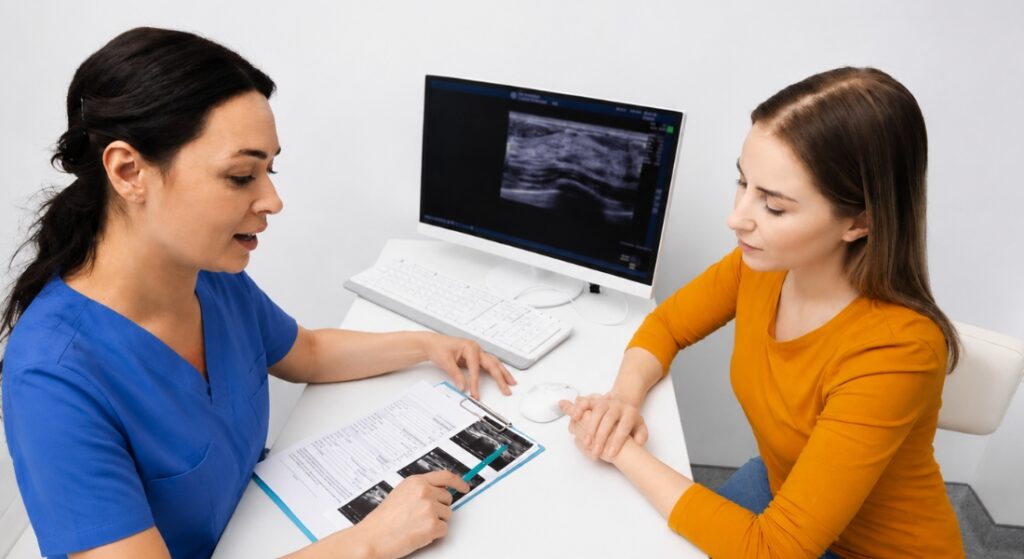
Not always. Fibroids often shrink after menopause, and if yours is stable and not causing symptoms, you may not need treatment. Your specialist may simply recommend monitoring if there are no concerning changes.
However, you should seek medical assessment if you develop new vaginal bleeding after menopause, notice a growing pelvic mass or experience new pressure symptoms. These changes should not be assumed to be caused by a fibroid, and further tests may be needed to rule out other conditions.
Could a Fibroid Actually Be Cancer?
Fibroids are benign growths and are not considered to transform into uterine sarcoma. Uterine sarcoma is a separate rare cancer that can sometimes resemble a fibroid on symptoms or imaging. No test can completely exclude uterine sarcoma before surgery, so your specialist will consider factors such as your age, menopausal status, symptoms, scan findings and whether a mass appears to be changing.
New bleeding after menopause or a growing or suspicious-looking mass requires further assessment. If surgery is being considered, ask how the tissue will be removed. Morcellation means dividing the womb or fibroid into smaller pieces so it can be removed through smaller incisions. If an unexpected sarcoma is present, morcellation may spread cancerous tissue, so your surgeon should discuss your individual risk and the available alternatives before the operation.
Should Medicines Be Tried Before Surgery?
Medicines are often the first treatment if your fibroids are mainly causing heavy bleeding or pain. Depending on your symptoms, your specialist may recommend anti-inflammatory pain relief, tranexamic acid or hormonal treatments to help control bleeding. In selected cases, an injectable GnRH agonist may be used temporarily to reduce bleeding or shrink fibroids before surgery. These medicines may not be suitable for everyone, including some people with certain cardiovascular, liver or bone health concerns.
If your symptoms improve with medicine, you may not need a procedure. However, if your bleeding, pain or pressure continues to affect your daily life, or your fibroids are affecting your fertility, your specialist may discuss other treatment options with you.
Can Newer Oral Medicines Help You Avoid Surgery?
Newer oral medicines, including GnRH antagonist treatments such as relugolix combination therapy and linzagolix, may reduce heavy menstrual bleeding and improve some fibroid-related symptoms in selected patients. These treatments may be options for adults of reproductive age with moderate to severe fibroid symptoms, but their suitability depends on your medical history, symptoms, pregnancy plans, other medicines and the relevant prescribing guidance.
These treatments do not remove fibroids permanently, and your symptoms may return once treatment stops. Before prescribing them, your specialist will consider your pregnancy plans, general health, bone health and any other medical conditions to decide whether they are the right option for you.
Can Uterine Artery Embolisation Replace Removal?
Uterine artery embolisation (UAE) is a minimally invasive treatment that shrinks fibroids by reducing their blood supply rather than removing them. It may improve heavy bleeding, pain and pressure symptoms while allowing several fibroids to be treated during a single procedure. Recovery is often shorter than after some forms of major surgery, although suitability varies between individuals.
UAE may be an alternative to myomectomy or hysterectomy for some people, but it is not suitable for everyone. If you are hoping to become pregnant in the future, discuss this carefully with your specialist, as pregnancy outcomes after UAE may vary and the evidence base is not as established as it is for myomectomy.
When Is Hysteroscopic Fibroid Removal Appropriate?
Hysteroscopic fibroid removal is suitable for fibroids that grow into your womb cavity. The procedure is performed through your vagina and cervix, so no abdominal incision is usually needed. It is commonly recommended when a submucosal fibroid is causing heavy bleeding or may be affecting your fertility.
Recovery is usually quicker than after abdominal surgery, although larger or deeper fibroids may require more than one procedure. Before treatment, your surgeon will explain the benefits, possible risks and whether you are likely to need any follow-up scans or further treatment.
When Is a Myomectomy Recommended?

A myomectomy may be recommended if your fibroids are causing significant symptoms and you want to keep your womb, particularly if you are planning a future pregnancy. Depending on the size, number and location of your fibroids, the operation may be performed through hysteroscopy, keyhole surgery (laparoscopy) or an open abdominal incision.
A myomectomy can relieve heavy bleeding, pain and pressure, but it is still an operation with risks such as bleeding, infection and scar tissue. Your surgeon should also explain the chance of fibroids returning and how the surgery may affect any future pregnancy or birth.
What the Evidence Shows
Research suggests that myomectomy can improve symptoms such as heavy bleeding and pressure symptoms in suitable patients while preserving the possibility of pregnancy. However, the benefits and risks depend on factors including fibroid number, size, location and the surgical approach used.
When Is Hysterectomy the Better Option?
A hysterectomy may be an appropriate option if your fibroids are causing severe symptoms, other treatments have not helped or are unsuitable, and you do not plan to become pregnant in the future. It removes the womb, meaning fibroids cannot develop again within the uterus.
| Myomectomy | Hysterectomy |
| Removes selected fibroids | Removes the womb and all uterine fibroids |
| Preserves the possibility of carrying a pregnancy | Pregnancy is no longer possible |
| Periods continue, although they may improve | Menstrual periods stop permanently |
| New fibroids may develop over time after treatments that preserve the womb | Fibroids cannot recur within the uterus because the womb has been removed |
| May involve hysteroscopic, keyhole or open surgery | May involve vaginal, keyhole or open surgery |
| A uterine scar may affect future pregnancy | No future pregnancy or labour-related scar issues |
| May be preferred when fertility matters | Often considered after completing your family |
If you are considering a hysterectomy, your specialist should explain the expected recovery, the benefits and risks, and whether your ovaries can be left in place. If your ovaries are retained, they will usually continue producing hormones, although ovarian function may sometimes decline earlier after hysterectomy. Your surgeon should explain whether removal of the ovaries is being considered and why.
Can Some Treatments Reduce Fibroid Symptoms Without Removing the Fibroid?
Yes. Some treatments can reduce symptoms without surgically removing the fibroid. Endometrial ablation destroys or removes the lining of the womb to reduce heavy menstrual bleeding, but it does not treat most fibroids within the womb muscle or on its outer surface. It is not suitable if you may want a future pregnancy. Endometrial ablation is also usually not recommended if you hope to become pregnant in the future.
Other options include selected radiofrequency ablation techniques and MRI-guided focused ultrasound, which aim to shrink or destroy fibroid tissue without major surgery. Availability is limited, not every fibroid is suitable, and the amount and quality of evidence vary between procedures. NICE recommends additional governance and monitoring arrangements for some radiofrequency techniques, and evidence about future fertility and pregnancy remains limited. Your specialist should explain the uncertainties, likelihood of further treatment and available alternatives.
How Should You Compare the Available Options?
The best treatment for fibroids depends on your symptoms, future pregnancy plans, and personal preferences. Understanding what matters most to you will help you and your specialist choose the most appropriate option.
- Identify your treatment priorities: Consider whether your main goal is lighter periods, relief from pressure, preserving fertility, a shorter recovery, or reducing the chance of future treatment.
- Understand which fibroids are causing symptoms: Ask your specialist to explain the size and location of your fibroids, as not every fibroid needs to be treated.
- Discuss all available options: Talk about monitoring, medication, and different procedures, including how each may affect recovery, fertility, and the likelihood of recurrence.
- Prepare for your consultation: Bring previous scan reports, blood test results, and details of any treatments you have already tried. Having this information helps your specialist recommend the most suitable approach.
A balanced consultation should explain all reasonable options, including monitoring when it is safe to do so. You should have enough information to make an informed decision and never feel pressured into treatment without understanding its potential benefits and risks.
What Are the Risks of Delaying Treatment?
If your fibroids are not causing symptoms, delaying treatment is often safe and may help you avoid unnecessary procedures. However, you should not ignore worsening symptoms. Ongoing heavy bleeding, persistent pain, increasing pressure on your bladder or bowel, worsening anaemia or fertility concerns may mean it is time to review your treatment options.
Seek urgent medical advice if you develop very heavy bleeding, severe or rapidly worsening pelvic pain, fever, repeated vomiting, difficulty passing urine, or significant pain or bleeding during pregnancy. Contact your GP or gynaecology team promptly if you develop new bleeding after menopause, a noticeable increase in abdominal swelling or new persistent pressure symptoms.
Myth vs Fact
| Myth | Fact |
| All fibroids need to be removed once they are diagnosed. | Many fibroids do not require treatment if they are not causing symptoms. Monitoring may be appropriate depending on your symptoms, fibroid characteristics and overall health. |
| The size of a fibroid alone decides whether surgery is needed. | Treatment decisions depend on several factors, including symptoms, location, number of fibroids, fertility plans and how the fibroids affect your daily life. |
| Having fibroids means you cannot become pregnant. | Many people with fibroids conceive naturally. Some fibroids may affect fertility, particularly if they distort the womb cavity, but this depends on individual circumstances. |
| Surgery is the only treatment option for fibroids. | Treatment may include monitoring, medicines, uterine artery embolisation, selected minimally invasive procedures or surgery, depending on your situation. |
| Untreated fibroids always become cancerous. | Fibroids are usually benign. Rare conditions such as uterine sarcoma are separate from typical fibroids and may require further assessment if concerning features are present. |
Key Takeaways:
- Not all fibroids need to be removed, especially if they are not causing symptoms.
- Treatment decisions depend on symptoms, fibroid size, number, location and your future pregnancy plans.
- Monitoring can be a safe option when fibroids are stable and not affecting your quality of life.
- Medicines and minimally invasive treatments may help manage symptoms without removing the fibroid.
- Surgery options such as myomectomy or hysterectomy are considered based on your individual needs and goals.
- Discussing the benefits, risks and alternatives with your specialist can help you choose the most suitable approach.
Frequently Asked Questions
1. Can fibroids go away without treatment?
Fibroids may shrink without treatment, particularly after menopause, but they do not always disappear completely. Some remain stable for many years. If they are not causing symptoms or concerning changes, monitoring may be all that is needed.
2. What size fibroid usually needs to be removed?
There is no specific size at which a fibroid must be removed. Treatment depends on factors such as symptoms, location, the number of fibroids, fertility plans and whether the fibroid is affecting nearby organs. Even relatively small fibroids may require treatment if they distort the womb cavity or cause significant symptoms.
3. Can fibroids come back after treatment?
New fibroids may develop after treatments that preserve the womb, such as myomectomy, because the uterus remains in place. A hysterectomy removes the uterus, meaning fibroids cannot develop again within the uterus.
4. Is surgery the only treatment for fibroids?
No. Surgery is not the only option. Depending on individual circumstances, treatment may include medicines to manage heavy bleeding or pain, uterine artery embolisation to shrink fibroids, or selected ablation procedures. The most appropriate approach depends on symptoms, fibroid characteristics and future pregnancy plans.
5. When should medical advice be sought for fibroids?
Medical assessment is recommended if fibroids cause heavy or prolonged menstrual bleeding, persistent pelvic pain, pressure on the bladder or bowel, difficulty becoming pregnant, or symptoms of anaemia such as tiredness or breathlessness. Urgent medical attention is needed for severe bleeding, sudden intense pelvic pain, inability to pass urine, or new bleeding after menopause.
Final Thoughts: Choosing the Right Fibroid Treatment for Your Needs
Not all fibroids need to be removed, and treatment is not always necessary. The most appropriate approach depends on your symptoms, the size, number and location of your fibroids, your age, fertility plans and how much they are affecting your daily life. For many people, careful monitoring is entirely appropriate, while others may benefit from medicines, minimally invasive procedures or surgery to improve symptoms and quality of life.
If you are considering fibroids treatment in London, our specialist team can assess your symptoms, discuss suitable options and help you understand the next steps. At Gynaecology Clinic London, we tailor discussions around your individual circumstances, helping you understand your options and make informed decisions about your care.
References:
- National Institute for Health and Care Excellence (NICE) (2018) Heavy menstrual bleeding: assessment and management. NICE guideline NG88. Published 14 March 2018, last updated 24 May 2021, minor update December 2024. Available at: https://www.nice.org.uk/guidance/ng88
- NHS (2026) Fibroids. Page last reviewed 17 March 2026. Available at: https://www.nhs.uk/conditions/fibroids/
- National Institute for Health and Care Excellence (NICE) (2022) Relugolix–estradiol–norethisterone acetate for treating moderate to severe symptoms of uterine fibroids. Technology appraisal guidance TA832. Available at: https://www.nice.org.uk/guidance/ta832
- National Institute for Health and Care Excellence (NICE) (2024) Linzagolix for treating moderate to severe symptoms of uterine fibroids. Technology appraisal guidance TA996. Available at: https://www.nice.org.uk/guidance/ta996
- National Institute for Health and Care Excellence (NICE) (2010) Uterine artery embolisation for fibroids. HealthTech guidance HTG240. Available at: https://www.nice.org.uk/guidance/htg240
- National Institute for Health and Care Excellence (NICE) (2021) Transcervical ultrasound-guided radiofrequency ablation for symptomatic uterine fibroids. HealthTech guidance HTG572. Available at: https://www.nice.org.uk/guidance/htg572
- National Institute for Health and Care Excellence (NICE) (2011) Magnetic resonance image-guided transcutaneous focused ultrasound for uterine fibroids. HealthTech guidance HTG277. Available at: https://www.nice.org.uk/guidance/htg277
- Royal College of Obstetricians and Gynaecologists (RCOG) (2024) Morcellation for myomectomy or hysterectomy. Published October 2019, last reviewed September 2024. Available at: https://www.rcog.org.uk/for-the-public/browse-our-patient-information/morcellation-for-myomectomy-or-hysterectomy/
- Ramasauskaite, D. et al. (2025) ‘Fibroids and pregnancy’, International Journal of Gynecology & Obstetrics. Available at: https://pmc.ncbi.nlm.nih.gov/articles/PMC12724024/