




Hormonal factors may contribute to recurrent thrush in some people, particularly during higher-oestrogen states. You may notice symptoms around your period, during pregnancy or after starting some forms of contraception or hormone replacement therapy, although hormonal changes are not always the reason Candida keeps returning.
Hormonal changes can affect your vaginal environment and may make Candida more likely to overgrow. However, you should have recurring symptoms assessed because menopause, bacterial vaginosis, dermatitis and vulval skin conditions can also cause itching, burning and soreness that feel similar to thrush.
How Can Hormones Affect the Vaginal Environment?
Your vagina contains microorganisms that normally live together without causing problems, and Candida can be present without causing symptoms. Changes in oestrogen exposure can affect the vaginal tissues, local immune responses and the environment in which Candida lives, which may increase susceptibility to symptomatic infection in some people.
You may therefore notice thrush more often during hormonally active stages such as pregnancy. However, hormonal changes do not automatically cause infection, and you may not need any hormone treatment simply because you experience recurrent symptoms.
Which Hormonal Changes Are Most Relevant to Recurrent Thrush?
| Hormonal situation | Relationship with thrush | Important point |
| Pregnancy | Increased susceptibility to VVC | Pregnancy also increases normal vaginal discharge |
| Luteal phase of menstrual cycle | Some people with recurrent VVC report cyclical flares | Timing alone does not prove Candida |
| Combined contraceptive pill | Higher-oestrogen oral contraception has been associated with increased susceptibility in some studies. | Association relates particularly to oestrogen exposure |
| Progestogen-only contraception | Much weaker/less consistent association | Do not assume it is causing recurrent Candida |
| Hormonal IUS | Evidence is mixed | Any association may involve the device itself as well as hormonal factors |
| Copper IUD | No hormonal exposure | Some studies report increased Candida colonisation, but causation of recurrent symptomatic thrush is uncertain |
| Perimenopause | Can produce fluctuating symptoms | Dryness and irritation can mimic thrush |
| Postmenopause without HRT | Lower oestrogen commonly causes GSM-type dryness and soreness | Repeated symptoms may not be Candida |
| Systemic HRT | Higher oestrogen exposure may increase susceptibility in some women | Do not stop prescribed HRT without review |
| Vaginal oestrogen | Low-dose local treatment for menopausal dryness | Symptoms still need assessment if Candida is suspected |
| Fertility treatment | Hormonal exposure changes substantially | Direct evidence linking treatment to recurrent VVC is limited |
Can Your Menstrual Cycle Trigger Thrush?
You may notice thrush-like symptoms appearing at a similar stage of your menstrual cycle, including during the days before your period. Hormonal changes after ovulation can affect your vaginal environment, although this does not prove that Candida is causing your symptoms.
If you notice the same pattern each month, you can record your periods and symptoms to show your clinician. Testing while your symptoms are present may also help confirm whether Candida is actually responsible.
Why Might Thrush Appear Before Your Period?
You may notice itching, soreness or discharge before your period while oestrogen and progesterone levels are changing across the luteal and premenstrual phases. These hormonal shifts may affect your vaginal environment, but you can also experience other cyclical causes of vulval irritation.
If your anti-thrush treatment only helps temporarily, you should not assume every premenstrual episode is caused by Candida. You can ask your clinician about testing while symptoms are present to confirm whether Candida is actually responsible.
Can Your Period Itself Affect Thrush Symptoms?
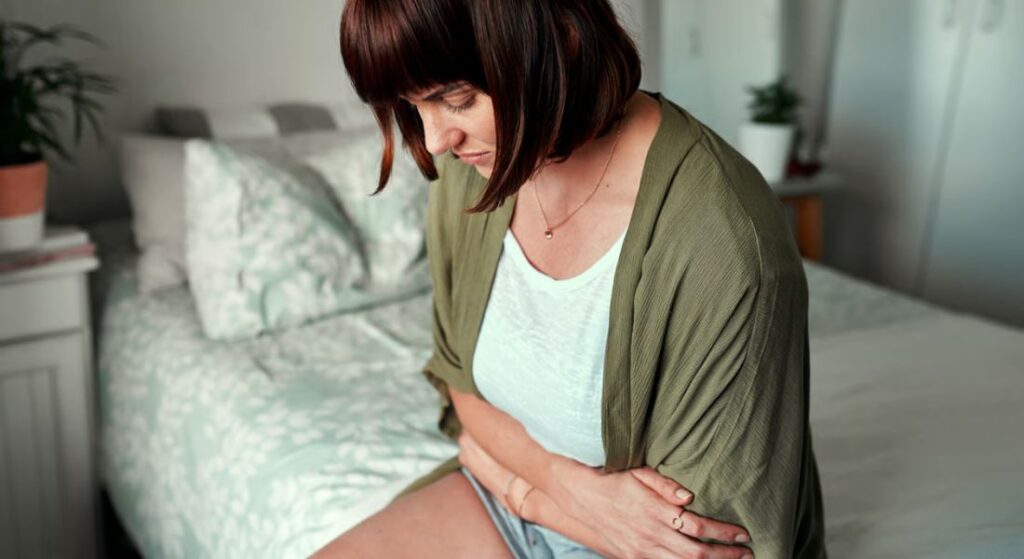
You may notice your symptoms improve when your period starts, while others may find that itching or irritation temporarily becomes worse. Your period products, moisture and friction can also make sensitive vulval skin feel more uncomfortable.
If you notice symptoms only when using a particular sanitary product, you should consider whether irritation could be contributing. You can try a simpler, unscented option while your clinician investigates the underlying cause.
Why Is Thrush More Common During Pregnancy?
Vaginal thrush is more common during pregnancy, and higher oestrogen levels together with other pregnancy-related changes may increase susceptibility to Candida. You may notice thick white discharge, itching, redness or soreness, although pregnancy itself can also increase normal vaginal discharge.
If you think you have thrush while pregnant, you should speak to your GP or midwife before treating yourself. Vaginal antifungal treatments such as clotrimazole are commonly used during pregnancy when recommended by a healthcare professional, while oral fluconazole is generally avoided.
Does Recurrent Thrush During Pregnancy Harm Your Baby?
There is no evidence that vaginal thrush harms your unborn baby, although you may still need treatment if symptoms are uncomfortable or keep returning. Even so, repeated symptoms during pregnancy should be assessed so that Candida is confirmed and other causes of discharge or irritation are not overlooked.
If your symptoms repeatedly return, you should speak to your GP or midwife to confirm the diagnosis. You should also seek advice if you have unusual-smelling discharge, bleeding, pelvic pain or fever rather than assuming these symptoms are caused by thrush.
Can the Combined Contraceptive Pill Cause Thrush?
Some evidence has linked higher-oestrogen oral contraceptive use with increased susceptibility to vulvovaginal candidiasis, but this does not mean that the combined pill directly causes recurrent thrush in everyone who uses it. However, many people use the pill without developing recurrent Candida infections, so you should not assume that contraception is automatically the cause.
- Hormonal Influence: Oestrogen exposure may alter the vaginal environment in ways that can make Candida overgrowth more likely in susceptible people.
- Look at the Timing: If your symptoms started or became more frequent after beginning or changing your pill, you should mention this pattern to your clinician.
- Confirm Candida First: Recurrent itching, soreness or discharge should be tested before being attributed solely to hormonal contraception.
- Review Your Options: If a clear association is suspected, your clinician can discuss whether another contraceptive method may be more suitable for you.
You should not stop your contraceptive pill without considering your ongoing need for reliable contraception. Confirming the diagnosis and reviewing other possible triggers can help you decide whether changing your contraceptive method is likely to be worthwhile.
Should You Stop the Pill Because of Recurrent Thrush?
You should not stop your prescribed contraceptive pill simply because you think it may be causing recurrent thrush. Stopping suddenly can leave you without reliable contraception, so you should discuss your concerns with your clinician first.
Your clinician can review whether your symptoms began or changed after starting the pill and confirm whether Candida is actually causing them. If another contraceptive is suitable for you, you can consider switching, although this may not necessarily stop recurrent thrush.
What About Progestogen-Only Contraception?

Progestogen-only contraception includes the mini-pill, implant, injection and hormonal intrauterine system, and each method affects your hormones differently. You may develop thrush while using one of these methods, but this does not necessarily mean your contraception is the cause.
If your symptoms began after starting a hormonal method, you can keep a record of when they occur and arrange testing during an episode. You should confirm that Candida is responsible before repeatedly changing your contraception.
Can a Hormonal Coil Be Linked With Recurrent Thrush?
Some studies have reported Candida colonisation or recurrent symptoms in people using an intrauterine system (IUS), but evidence that a hormonal coil directly causes recurrent thrush is limited. However, this does not mean the coil is definitely causing your symptoms, as other factors may also be involved.
If your symptoms began after having an IUS fitted, you should speak to your GP or sexual health clinician. You can discuss your symptoms, confirm whether Candida is responsible and consider your contraceptive needs before deciding whether changing the method is appropriate.
What About the Copper Coil?
The copper coil does not contain hormones, so you cannot attribute recurrent thrush to hormonal exposure from the device. However, some people using a copper coil report recurrent thrush, although the exact relationship remains uncertain.
If you have a copper coil and repeatedly develop confirmed Candida infections, you can discuss the timing and other possible risk factors with your clinician. You should consider your contraceptive needs before deciding whether changing your coil could be helpful.
Can Perimenopause Cause Recurrent Thrush?
During perimenopause, fluctuating and gradually changing hormone levels can contribute to vaginal or vulval dryness, burning, irritation and sensitivity. You may experience itching, burning or soreness that feels similar to recurrent thrush, even when Candida is not present.
If you suddenly develop repeated “thrush” symptoms during perimenopause, you should have Candida confirmed with appropriate testing. You may need treatment for vaginal dryness or other hormonal changes rather than repeated antifungal medication.
Why Can Menopause Be Mistaken for Thrush?
After menopause, lower oestrogen levels can make your vaginal and vulval tissues thinner, drier and more sensitive. You may experience itching, burning, soreness or pain during sex, which can feel similar to thrush.
If you repeatedly treat these symptoms without improvement, you should have the cause checked. If menopause-related changes are responsible, your clinician may discuss vaginal moisturisers, lubricants or vaginal oestrogen where appropriate rather than continuing repeated antifungal treatment.
Can HRT Increase the Risk of Thrush?

Systemic HRT may increase susceptibility to vaginal thrush in some people, particularly where oestrogen exposure is increased. However, you should not assume that HRT is the cause of every episode or stop effective treatment after one infection.
If your recurrent symptoms started after beginning or increasing HRT, you should discuss the timing with your clinician. You can review your HRT alongside other possible causes while confirming that Candida is actually responsible.
What About Vaginal Oestrogen?
Vaginal oestrogen is a low-dose local treatment and should not automatically be assumed to have the same effects as systemic HRT. Treating low-oestrogen vaginal changes may improve dryness, burning or irritation that previously felt similar to recurrent thrush.
If you have confirmed recurrent Candida, you should tell your clinician about any hormonal treatments you use, including vaginal oestrogen. You can then balance your menopause symptom control with your history of thrush rather than assuming you need to stop treatment.
Can Fertility Hormones or Other Hormone Treatments Trigger Thrush?
Fertility treatment can involve substantial changes in reproductive hormone exposure, but direct evidence showing that fertility medicines themselves cause recurrent vulvovaginal candidiasis remains limited. However, you should not assume that new itching, soreness or discharge is caused by hormones alone.
If you develop symptoms during fertility treatment, you should tell your reproductive medicine team so they can check for infection and consider hormonal changes. You should also tell them if you could be pregnant or are trying to conceive, as this can affect which thrush treatments are suitable.
Are Hormones Usually the Only Cause of Recurrent Thrush?
No. You may notice a hormonal pattern, but other factors such as antibiotics, poorly controlled diabetes or a weakened immune system can also contribute to recurrent thrush. You may also develop recurrent Candida without any clear underlying cause.
Your clinician can review your overall health history rather than focusing only on your hormones. You may be asked about your medicines, contraception, pregnancy, diabetes, immune health and previous antifungal treatments.
Evidence Note
Current evidence supports a meaningful relationship between oestrogen exposure and vulvovaginal candidiasis. A 2026 state-of-the-art review reports increased susceptibility during higher-oestrogen states including pregnancy, the luteal phase, combined oral contraception and menopausal hormone therapy. Oestrogen can affect vaginal glycogen and fungal adhesion and growth, although these biological mechanisms do not mean that every hormonal change will trigger symptoms.
The same review reports that progestogen-only contraception and levonorgestrel-releasing intrauterine contraception are much less strongly associated through hormonal mechanisms. This is why changing contraception solely on the basis of suspected thrush should not be recommended until Candida has actually been confirmed and other causes have been considered.
How Can You Confirm Whether Hormones Are Really Triggering Thrush?
You can keep a record of when your symptoms occur in relation to your periods, contraception or hormone treatment. A clear pattern may help your clinician understand whether hormonal changes could be contributing.
You should also have Candida confirmed while your symptoms are active, particularly if episodes keep returning. If your swabs are repeatedly negative, your clinician may need to consider other causes such as dermatitis, bacterial vaginosis, vulval skin conditions or menopause-related changes.
Myth vs Fact
| Myth | Fact |
| Any hormonal change can cause recurrent thrush. | Higher-oestrogen states have the clearest association; different hormonal situations affect the vagina differently. |
| Thrush before every period must be hormonal. | Cyclical Candida flares occur, but dermatitis and other conditions can also follow a cycle-related pattern. |
| Pregnancy thrush harms the unborn baby. | NHS guidance states there is no evidence that vaginal thrush harms the unborn baby. |
| The combined pill always causes thrush. | It may increase susceptibility in some people, but most users do not develop recurrent VVC. |
| Progestogen-only contraception has the same thrush risk as the combined pill. | Current evidence suggests a much weaker association. |
| A hormonal coil causes thrush because of its hormones. | Any association may relate partly to the presence of the device rather than levonorgestrel itself. |
| A copper coil cannot have any relationship with Candida because it has no hormones. | Some studies report increased colonisation, but this does not prove recurrent symptomatic infection. |
| Menopause commonly causes recurrent Candida infection. | Falling oestrogen commonly causes dryness and irritation that can mimic thrush. |
| You should stop HRT or contraception if thrush develops. | Medication or contraception should not be stopped without reviewing the diagnosis and alternatives. |
| A positive Candida swab proves hormones caused the infection. | Candida colonisation can occur without symptoms, and a test cannot identify the trigger by itself. |
How Is Hormone-Associated Recurrent Thrush Managed?

You should first have recurrent Candida confirmed rather than assuming hormones are the cause. If you have confirmed recurrent Candida albicans, you may need a longer initial antifungal course followed by maintenance treatment for several months.
Your clinician can then review your hormonal history alongside other possible triggers. You may consider changing contraception or HRT if there is a clear connection, but you should balance this with your symptom control, contraceptive needs and overall health.
Key Takeaways
- Hormonal factors may influence vulvovaginal candidiasis, but they are not the only cause of recurrent thrush.
- Higher-oestrogen states have the clearest association with increased Candida susceptibility.
- Pregnancy increases susceptibility to thrush, and treatment choices differ during pregnancy.
- Some people report cyclical symptoms around particular stages of the menstrual cycle, but timing alone does not confirm Candida.
- Higher-oestrogen oral contraception may be associated with VVC in some people, while evidence for progestogen-only methods is less consistent.
- Candida colonisation has been reported with some intrauterine devices, but colonisation does not prove recurrent symptomatic infection.
- Perimenopause and menopause can cause dryness, burning and irritation that may be mistaken for thrush.
- Systemic oestrogen-containing HRT may increase susceptibility in some women, whereas vaginal oestrogen is a low-dose local treatment.
- Recurrent symptoms should be confirmed as Candida before contraception or hormone treatment is changed.
Frequently Asked Questions
1. Can hormonal changes cause recurrent thrush?
Hormonal changes can contribute to recurrent thrush in some people, particularly during pregnancy or around changes in contraception or hormone treatment. However, hormones are not always the cause, so repeated symptoms should be confirmed as Candida rather than assumed to be thrush.
2. Can your period trigger thrush?
Some people notice that itching, soreness or discharge repeatedly develops around a particular stage of their menstrual cycle. Hormonal fluctuations may influence the vaginal environment, but cyclical symptoms can also have other causes. Keeping a record of your symptoms and periods can help your clinician identify a pattern.
3. Is thrush more common during pregnancy?
Yes. Hormonal and physiological changes during pregnancy can make vaginal thrush more common. If you develop repeated itching, soreness or unusual discharge while pregnant, speak to your GP or midwife before using treatment, as some medicines are not suitable during pregnancy.
4. Can contraception cause recurrent thrush?
Some people notice recurrent thrush after starting or changing hormonal contraception, although the evidence linking contraception with candidiasis is not consistent. If your symptoms began after changing your contraceptive method, tell your clinician so they can consider the timing alongside other possible causes and confirm whether Candida is present.
5. Can menopause symptoms be mistaken for recurrent thrush?
Yes. Lower oestrogen levels during perimenopause and menopause can cause vaginal dryness, burning, itching and soreness that may feel very similar to thrush. If your symptoms repeatedly return but tests do not show Candida, your clinician may need to consider menopause-related vaginal changes or another condition.
Final Thoughts: Finding the Right Approach to Recurrent Thrush
Recurrent thrush can be difficult to manage, particularly when symptoms keep returning after treatment. Confirming that Candida is causing your symptoms, identifying the species involved and looking for factors such as antibiotics, diabetes or hormonal changes can help you receive more appropriate treatment.
If you are considering recurrent thrush treatment in London, you can contact our team at Gynaecology Clinic London to discuss your symptoms and whether treatment may be appropriate for you.
References:
- Rautemaa-Richardson, R., Sobel, J.D., Stone, N., De Seta, F., Cassone, A., Vieira-Baptista, P., Comar, M., Warris, A. and Roselletti, E. (2026) ‘State-of-the-art review: Managing vulvovaginal candidiasis’, Clinical Infectious Diseases, 82(3), pp. 371–382. Available at: https://academic.oup.com/cid/article/82/3/371/8525096
- Lobo, M., Cerqueira, C., Rodrigues, A.G. and Lisboa, C. (2025) ‘Recurrent vulvovaginal candidosis and its underlying mechanisms: A systematic review’, Journal of Fungi, 11(5), article 357. Available at: https://www.mdpi.com/2309-608X/11/5/357
- NHS (2024) ‘Thrush’. Available at: https://www.nhs.uk/pregnancy/common-symptoms/thrush/
- He, Y., Tang, R., Deng, J., Cai, T., He, P., Wu, J. and Cao, Y. (2022) ‘Effects of oestrogen on vulvovaginal candidosis’, Mycoses, 65(1), pp. 4–12. Available at: https://pubmed.ncbi.nlm.nih.gov/34699636/
- Kumwenda, P. et al. (2022) ‘Estrogen promotes innate immune evasion of Candida albicans through inactivation of the alternative complement system’, Cell Reports, 38(1), article 110183. Available at: https://www.sciencedirect.com/science/article/pii/S2211124721016831