



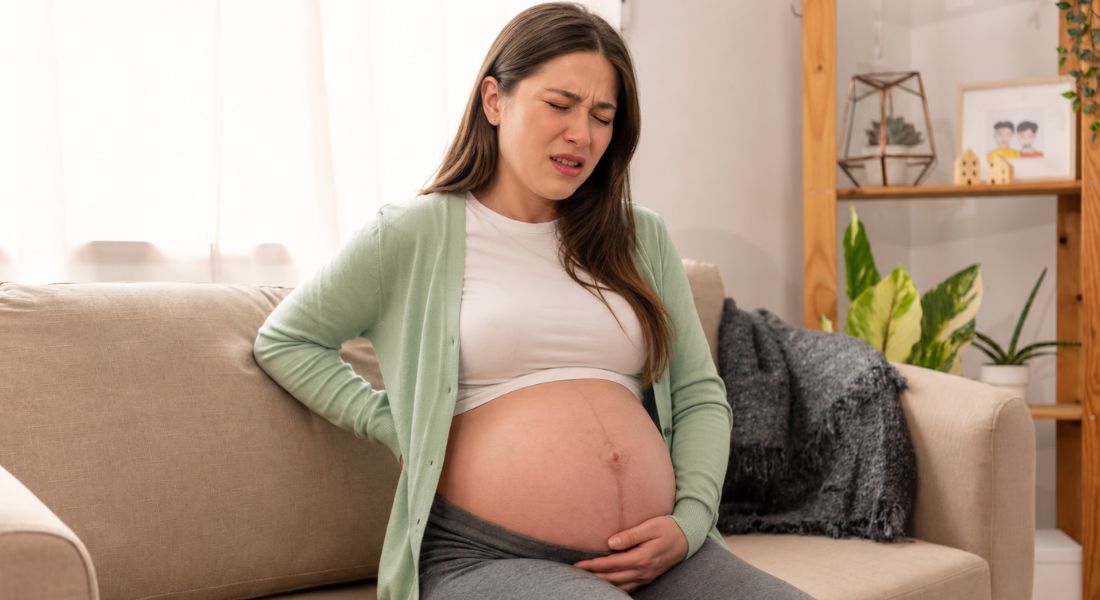
Pelvic pain during pregnancy is common, but it can still feel worrying when you are unsure what is causing it. You may feel aching, pressure, pulling or sharp discomfort in your lower abdomen, hips, groin, pubic area, lower back or perineum, which is the area between your vagina and anus.
Many causes are linked to common pregnancy-related changes, such as your growing womb, stretching tissues, changes in posture and increased demands on the muscles and joints around your pelvis. However, pelvic pain can sometimes indicate a complication. Contact your maternity team if the pain is severe, persistent, worsening or unusual, or if it occurs with bleeding, fever, vomiting, regular tightenings, fluid leakage or reduced baby movements. You should always seek advice if you feel that something is not right.
Can Pelvic Pain Occur During Pregnancy?
Mild pelvic or lower abdominal discomfort can occur during pregnancy and is often linked to ligament stretching, constipation, trapped wind or changes affecting the muscles and joints around your pelvis. You may notice that it comes and goes, improves with rest or a change of position, or appears after walking, exercising, coughing or standing for a long time.
Common pregnancy-related aches are often mild or manageable and may improve with rest or a change of position. Pain that is persistent, severe or associated with feeling unwell should be assessed. If your pain affects your sleep, movement or daily activities, you should speak to your midwife or GP rather than waiting until it becomes severe.
Round Ligament Pain
The round ligaments help support your womb and are placed under increasing tension as your womb grows. This can cause a sharp, pulling or stabbing sensation on one or both sides of your lower abdomen, especially during the second trimester, and you may notice it when standing quickly, turning in bed, coughing, sneezing or making sudden movements.
Suspected round ligament pain is often brief and may improve with rest, changing position or moving more slowly.
However, you should contact your maternity team if the pain is severe, constant, getting worse or occurs with bleeding, fever, vomiting or urinary symptoms, as these may need further assessment.
What Can the Pattern of Pain Suggest?
| Pain pattern or accompanying symptom | Possible explanation or action |
| Brief pulling pain with movement or coughing | May be round ligament pain |
| Pain when walking, climbing stairs or turning in bed | May be pregnancy-related pelvic girdle pain |
| Burning when passing urine with frequency or urgency | Possible UTI requiring assessment |
| One-sided lower abdominal pain with bleeding, dizziness or shoulder-tip pain | Contact a GP, early pregnancy service or NHS 111 urgently; call 999 for severe pain, fainting or collapse |
| Sudden one-sided pain with nausea or vomiting | Urgent assessment for ovarian torsion or a cyst complication |
| Regular tightenings before 37 weeks | Contact the maternity unit immediately |
| Severe continuous abdominal pain, a hard or tender womb, frequent contractions or bleeding | Contact the maternity unit immediately; call 999 if severe pain or bleeding makes you feel unwell |
| Pain with reduced or changed baby movements | Contact the maternity unit immediately |
Pregnancy-Related Pelvic Girdle Pain

Pregnancy-related pelvic girdle pain, or PGP, describes pain affecting the joints and surrounding tissues of your pelvic girdle. It was previously often called symphysis pubis dysfunction, or SPD, although PGP is now the preferred term. You may feel pain over your pubic bone, lower back, hips, groin or thighs, and it can make everyday movements uncomfortable.
You may notice that the pain becomes worse when walking, climbing stairs, standing on one leg, turning in bed or getting out of a car. PGP does not usually harm your baby, but it can significantly affect your mobility, sleep and wellbeing. Speak to your midwife if you develop these symptoms because early assessment and individual physiotherapy advice may help you manage them.
Evidence Note
Pregnancy-related pelvic girdle pain affects up to one in five pregnant women. Early assessment and individual advice from a pelvic health or obstetric physiotherapist may help reduce the effect of symptoms and support mobility. Physiotherapy can be provided during pregnancy, but treatment should be adapted to your symptoms, movement and overall health.
Managing Pelvic Girdle Pain
You may be able to reduce the impact of pelvic girdle pain by pacing activities, changing how you perform difficult movements and avoiding repeated actions that significantly worsen your symptoms. Simple changes, such as sitting down to get dressed, keeping your knees together when getting out of bed or a car, and avoiding heavy lifting, may reduce strain on your pelvic joints.
A pelvic health physiotherapist can assess your movement, posture and muscle function to create a suitable plan for you. Treatment may include individual exercises, movement advice, manual techniques or trialling a pelvic support belt. Prolonged bed rest is generally avoided, but activity should be adjusted to your pain, mobility and maternity or physiotherapy advice.
Constipation and Trapped Wind
Pregnancy hormones can slow your digestion, while your growing womb may place additional pressure on your bowel. This can cause constipation, bloating, trapped wind and cramping that you may feel across your lower abdomen or pelvis.
- Typical Symptoms: You may experience bloating, hard stools, straining or discomfort that improves after passing wind or opening your bowels.
- Fluids and Fibre: Drinking enough water and eating fibre-rich foods can help keep your bowel movements regular.
- Gentle Activity: Regular light movement, such as walking, may support digestion and reduce constipation during pregnancy.
- When to Seek Advice: Contact your midwife or GP if the pain is severe or occurs with fever, vomiting, blood in your stool or difficulty passing stool or wind.
Constipation and trapped wind are common during pregnancy, but you should not assume that every episode of pelvic pain is caused by digestion. Speak to a healthcare professional before taking medicines and seek advice if your symptoms are severe, persistent or unusual.
Braxton Hicks Contractions
Braxton Hicks contractions are practice tightenings that can become more noticeable later in pregnancy. Your womb may feel firm for a short time before relaxing again, and these tightenings are usually irregular rather than becoming stronger and closer together like established labour contractions.
They may improve when you rest, change position, drink water or empty your bladder. You should contact your maternity unit if the tightenings become painful, regular or stronger, and seek advice urgently if you are under 37 weeks because this may be a sign of premature labour.
Urinary Tract Infections
A urinary tract infection (UTI) can cause pain or pressure in your lower abdomen or pelvis. You may also notice burning when you pass urine, needing to urinate more often, urgency, cloudy urine or an unusual smell.
Some urinary changes are common during pregnancy, which can make infections harder to recognise. You should contact your GP, midwife or maternity service if you think you may have a UTI, as untreated infections can spread and increase the risk of complications. Seek urgent help if you develop fever, shivering, vomiting, back or side pain or feel very unwell.
Ectopic Pregnancy
An ectopic pregnancy occurs when a fertilised egg implants outside your womb, usually inside a fallopian tube. You may experience one-sided lower abdominal pain, vaginal bleeding or brown discharge, shoulder-tip pain or discomfort when opening your bowels.
Symptoms often appear in early pregnancy, but you may not realise you are pregnant and the bleeding can sometimes seem like an unusual period. Seek emergency help by calling 999 or going to A&E if you have sudden severe abdominal pain, fainting, severe dizziness, nausea or marked paleness, as these can be signs of internal bleeding.
Pain and Bleeding in Early Pregnancy
Light cramping and spotting can happen during early pregnancy, and you may find that these symptoms do not always mean there is a problem. Changes around your cervix, early pregnancy development or other minor causes can sometimes explain what you are experiencing.
You should still speak to a healthcare professional if you have pain or bleeding in the first trimester, as you may need further assessment. Seek urgent help if you have severe pain, one-sided pain, heavy bleeding, dizziness, fainting or shoulder-tip pain, as these symptoms can require immediate investigation for conditions such as an ectopic pregnancy.
Miscarriage
Vaginal bleeding is the most common sign of miscarriage and may occur with lower abdominal cramping or pelvic pain. You may notice anything from light spotting to heavier bleeding with clots, but bleeding and pain do not always mean that you are losing the pregnancy.
You should speak to a healthcare professional for assessment if you have these symptoms, as you may need an ultrasound, blood tests or follow-up monitoring. Seek urgent medical help if you have very heavy bleeding, severe pain, fainting, fever or unusual-smelling discharge, as these may need immediate treatment.
Ovarian Cysts and Ovarian Torsion
Ovarian cysts are fluid-filled sacs that may be present before pregnancy or develop during early pregnancy. Most cysts are harmless and cause few symptoms, but you may notice one-sided pelvic aching, pressure or discomfort if a cyst becomes larger.
Rarely, an ovary can twist around its supporting tissues, causing ovarian torsion and reducing its blood supply. You may experience sudden severe one-sided pain with nausea or vomiting, and you should seek urgent hospital assessment because prompt treatment may be needed to protect your ovary.
Premature Labour
Premature labour means labour that starts before you reach 37 completed weeks of pregnancy. You may notice pelvic pressure, period-like cramps, lower back pain or regular abdominal tightenings as possible early signs.
You may also experience changes in vaginal discharge, bleeding or a trickle or gush of fluid if your waters have broken. Contact your maternity unit immediately if you think you may be going into labour early, as assessment can help check your contractions, your baby’s heartbeat, your cervix and whether your waters have broken.
Placental Abruption
Placental abruption happens when the placenta partially or completely separates from the wall of your womb before your baby is born. You may experience sudden abdominal or pelvic pain, vaginal bleeding, frequent contractions or a womb that feels hard and tender.
The amount of bleeding you see does not always show how serious the condition is, as blood can sometimes collect behind the placenta. Contact your maternity unit urgently or call 999 if you have severe continuous pain, heavy bleeding, faintness or signs of shock, as placental abruption needs immediate assessment.
Pre-Eclampsia and Upper Abdominal Pain
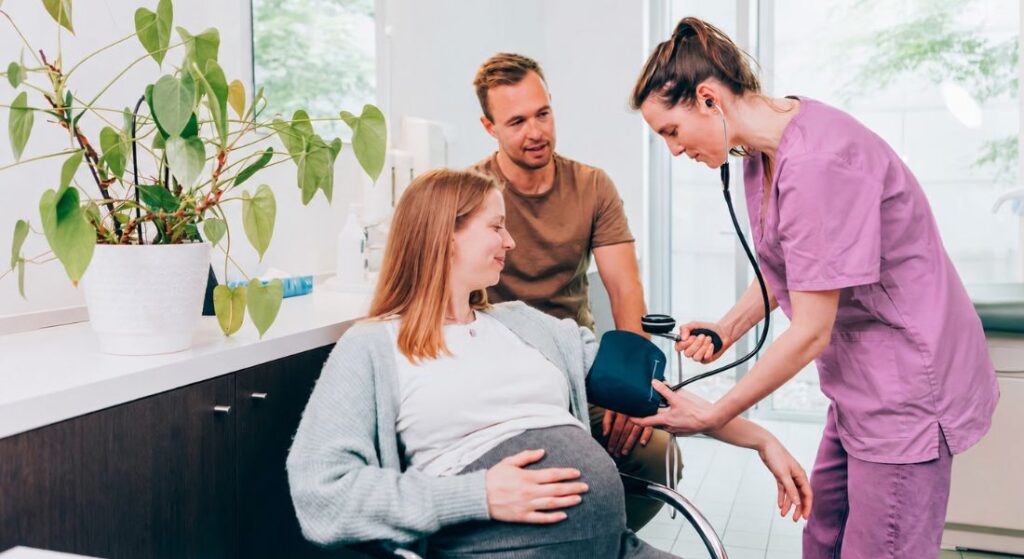
Pre-eclampsia is a pregnancy-related condition linked with high blood pressure and changes in how your body is functioning. It usually develops after 20 weeks of pregnancy and is often identified through routine blood pressure checks and urine tests.
Although pre-eclampsia does not usually cause low pelvic pain, contact your maternity team immediately if you have severe or persistent pain below your ribs, especially on the right side. You should also seek immediate advice if you develop a severe headache, changes in your vision, vomiting, sudden swelling of your face, hands or feet, or feel very unwell, even if you do not have rib pain.
Reduced or Changed Baby Movements
Pelvic or abdominal pain together with reduced or changed baby movements needs prompt maternity advice. Even if your pain feels manageable, a noticeable change in your baby’s usual movement pattern should always be checked.
Your baby should continue to move throughout pregnancy, although the type of movements may change as your baby grows and space becomes more limited. Contact your midwife or maternity unit immediately if your baby is moving less than usual, has stopped moving or the pattern has changed, and do not wait until the next day for advice.
Fluid Leakage or Unusual Vaginal Discharge
A sudden gush or ongoing trickle of clear fluid may mean that your waters have broken. It can sometimes be difficult to tell the difference between amniotic fluid and urine, especially when the leakage is small.
You should contact your maternity unit if you think your waters may have broken, particularly if you are under 37 weeks, the fluid is green, brown, blood-stained or has an unpleasant smell. You should also seek advice if you have unusual discharge with pelvic pain, fever, itching or feel unwell, as this may need assessment for infection.
Fever, Vomiting and Feeling Unwell
Pregnancy-related ligament or joint pain should not usually cause fever, severe shivering or a strong feeling that you are seriously unwell. These symptoms may suggest an infection or another condition that needs urgent medical assessment.
You should seek advice if you have repeated vomiting, cannot keep fluids down, are passing very little urine or feel dizzy when standing. Contact your maternity unit, NHS 111 or emergency services depending on how severe your symptoms are, especially if you have severe pain, confusion, breathing difficulties, collapse or rapidly worsening illness.
Pain After a Fall, Accident or Abdominal Injury
You should contact your maternity service after a significant fall, road accident, direct blow to your abdomen or physical assault, even if you initially feel well. Your maternity team can assess whether you or your baby need further monitoring after the injury.
Tell them if you have pain, contractions, bleeding, fluid leakage or changes in your baby’s movements, and let them know how many weeks pregnant you are and whether your abdomen was affected. Call 999 for serious injuries, heavy bleeding, severe pain, breathing difficulty or loss of consciousness, as urgent assessment may be needed.
When and Where to Seek Medical Advice
Call 999 or go to A&E if you have severe or worsening pain with fainting, heavy bleeding, shoulder-tip pain, breathing difficulty or collapse. You should not drive yourself if you feel faint, seriously unwell or unable to travel safely.
For urgent pregnancy concerns, contact your maternity triage unit, labour ward, midwife, early pregnancy service or NHS 111. The best place to seek advice depends on how many weeks pregnant you are and the maternity services available in your local area.
UK Guidance Note
Contact your GP, midwife, early pregnancy service or NHS 111 for pain or bleeding during early pregnancy, depending on the services available locally. From 20 weeks onwards, contact your midwife or maternity unit for urgent pregnancy concerns. Check your local maternity guidance because the service you should contact can vary by area. Call 999 or go to A&E for severe or rapidly worsening pain, fainting, shoulder-tip pain, heavy bleeding, breathing difficulty, confusion or collapse.
Myth vs Fact
| Myth | Fact |
| All pelvic pain is a normal part of pregnancy. | Common causes exist, but severe or unusual pain requires assessment. |
| Bleeding always means miscarriage. | Bleeding has several causes, but it should still be assessed. |
| You cannot have an ectopic pregnancy if you do not know that you are pregnant. | Symptoms may develop before you realise that you are pregnant, so seek urgent advice if pregnancy is possible. |
| Babies normally move less near the end of pregnancy. | Movements may feel different but should not reduce simply because space is limited. |
| Placental abruption always causes visible bleeding. | Bleeding can remain concealed behind the placenta. |
| Pelvic girdle pain harms the baby. | It can significantly affect mobility but does not usually harm the baby. |
Key Takeaways
- Mild pelvic discomfort can occur as pregnancy changes your body.
- Pelvic girdle pain can affect mobility but does not usually harm your baby.
- Pain and bleeding during early pregnancy should be assessed.
- Severe one-sided pain, shoulder-tip pain or fainting may indicate an ectopic pregnancy.
- Regular tightenings, pelvic pressure or fluid leakage before 37 weeks require immediate maternity advice.
- Placental abruption may cause severe continuous pain without visible bleeding.
- Severe headache, visual symptoms or pain below the ribs may indicate pre-eclampsia.
- Contact your maternity unit immediately if your baby’s movements reduce, stop or change.
- Babies should not move less simply because pregnancy is approaching full term.
- Call 999 or attend A&E for collapse, breathing difficulty, very heavy bleeding, or severe or rapidly worsening pain.
Frequently Asked Questions
1. Is pelvic pain during pregnancy always a sign that something is wrong?
No. Pelvic pain during pregnancy may be caused by common pregnancy-related changes or conditions, including ligament stretching, pressure from the growing womb and pregnancy-related pelvic girdle pain. However, severe, persistent, worsening or unusual pain should be discussed with your maternity team.
2. When should I contact my maternity team about pelvic pain?
You should seek advice if the pain is severe, getting worse, affecting your daily activities or accompanied by bleeding, fever, vomiting, contractions or changes in your baby’s movements. It is always appropriate to contact your midwife if you feel concerned.
3. What is pregnancy-related pelvic girdle pain (PGP)?
Pregnancy-related pelvic girdle pain (PGP) is pain affecting the joints of the pelvic girdle and the surrounding muscles and tissues during pregnancy. It can cause pain around your pubic bone, hips, lower back, groin or thighs, and physiotherapy and movement advice may help manage the symptoms.
4. Can pelvic pain in early pregnancy be a warning sign?
Yes, pelvic pain in early pregnancy can sometimes be linked with conditions such as miscarriage or ectopic pregnancy, especially when combined with bleeding, one-sided pain, dizziness or fainting. Early assessment can help identify the cause and provide appropriate support.
5. How can pelvic pain during pregnancy be managed?
Management depends on the cause and may include activity modification, rest breaks, gentle movement, pelvic health physiotherapy and advice on daily activities. Only take pain-relieving medicines that have been recommended as suitable for you by your midwife, doctor or pharmacist.
Final Thoughts: Understanding Pelvic Pain During Pregnancy and Knowing When to Seek Help
Pelvic pain during pregnancy can feel worrying, especially when you are unsure whether it is a normal part of your body changing or something that needs medical attention. While many causes, such as ligament stretching, pregnancy-related pelvic girdle pain and pressure from your growing baby, are common and manageable, it is important to pay attention to how the pain feels and whether it is changing.
For urgent pregnancy-related symptoms, contact your midwife, maternity unit or NHS 111. For a non-urgent specialist assessment, you can contact Gynaecology Clinic London to discuss pelvic pain treatment in London.
References:
- NHS (2024) ‘Stomach pain in pregnancy’. Page last reviewed 18 November 2024. Available at: https://www.nhs.uk/pregnancy/common-symptoms/stomach-pain/
- NHS (2026) ‘Pregnancy symptoms you need to get help for’. Page last reviewed 24 June 2026. Available at: https://www.nhs.uk/pregnancy/common-symptoms/pregnancy-symptoms-you-need-to-get-help-for/
- NHS (2022) ‘Ectopic pregnancy: symptoms’. Page last reviewed 23 August 2022. Available at: https://www.nhs.uk/conditions/ectopic-pregnancy/symptoms/
- NHS (2024) ‘Your baby’s movements’. Page last reviewed 8 July 2024. Available at: https://www.nhs.uk/pregnancy/keeping-well/your-babys-movements/
- Royal College of Obstetricians and Gynaecologists (2015) ‘Pelvic girdle pain and pregnancy’. Published June 2015. Available at: https://www.rcog.org.uk/for-the-public/browse-our-patient-information/pelvic-girdle-pain-and-pregnancy/
- National Institute for Health and Care Excellence (2019, updated 2026) ‘Ectopic pregnancy and miscarriage: diagnosis and initial management’. NICE guideline NG126. Published 17 April 2019; last updated 17 June 2026. Available at: https://www.nice.org.uk/guidance/ng126
- National Institute for Health and Care Excellence (2015, updated 2022; minor change February 2026) ‘Preterm labour and birth’. NICE guideline NG25. Published 20 November 2015; last updated 10 June 2022. Available at: https://www.nice.org.uk/guidance/ng25
- National Institute for Health and Care Excellence (2019, updated 2023) ‘Hypertension in pregnancy: diagnosis and management’. NICE guideline NG133. Published 25 June 2019; last updated 17 April 2023. Available at: https://www.nice.org.uk/guidance/ng133
- NHS (2026) ‘What complications can affect the placenta?’. Page last reviewed 29 May 2026. Available at: https://www.nhs.uk/pregnancy/labour-and-birth/placenta-complications/
- NHS (2025) ‘Urinary tract infections (UTIs)’. Page last reviewed 11 July 2025. Available at: https://www.nhs.uk/conditions/urinary-tract-infections-utis/
- NHS (2023) ‘Ovarian cyst’. Page last reviewed 21 June 2023. Available at: https://www.nhs.uk/conditions/ovarian-cyst/
- NHS (2022) ‘Pelvic pain in pregnancy’. Page last reviewed 12 December 2022. Available at: https://www.nhs.uk/pregnancy/common-symptoms/pelvic-pain/
- NHS Greater Glasgow and Clyde/Right Decisions (2024) ‘Abdominal Trauma/Fall in Pregnancy’. Available at: https://www.rightdecisions.scot.nhs.uk/maternity-gynaecology-guidelines/maternity/common-obstetric-problems-maternity-assessment/abdominal-trauma-fall-in-pregnancy-321/