




A sudden change in your period pain can feel worrying, especially if your periods were previously manageable. You may notice that your usual cramps have become stronger, last longer or no longer improve with the treatments that once helped.
Period pain can vary between cycles because prostaglandin activity, uterine contractions and the way pain is experienced are not identical every month. However, if your pain continues to worsen, regularly affects your daily activities or appears with other symptoms, it may be linked to an underlying condition.
Conditions such as endometriosis, adenomyosis, fibroids and pelvic inflammatory disease can cause periods to become more painful over time. Ovarian cysts, changes in contraception and other pelvic conditions may also contribute to new or worsening symptoms.
The timing and pattern of your pain can provide useful clues, although the cause may not always be confirmed at the first assessment. Your clinician will ask when the change began, whether the pain only occurs during your period and whether you have noticed heavier bleeding, bleeding between periods, unusual discharge or pain during sex.
Why a Sudden Change in Period Pain Matters
One unusually painful period does not always indicate an underlying condition because pain can vary between cycles. However, seek medical advice if the change persists, becomes progressively worse or affects work, sleep, exercise or daily activities.
Primary and Secondary Dysmenorrhoea
The medical term for painful periods is dysmenorrhoea. Primary dysmenorrhoea is period pain that occurs without an identifiable pelvic condition and is linked mainly to prostaglandin-driven uterine contractions. Secondary dysmenorrhoea is pain associated with an underlying gynaecological or pelvic condition.
Primary dysmenorrhoea often begins during adolescence after ovulatory cycles become established and usually follows a broadly similar pattern each month. If your period pain develops later in life, changes after years of manageable periods or becomes increasingly severe over time, your clinician may investigate whether secondary dysmenorrhoea is the cause.
Stronger Womb Contractions
Your womb naturally contracts during your period to help remove its lining. Prostaglandins released from the womb lining stimulate uterine contractions and can also contribute to nausea, diarrhoea, headache and other period-related symptoms.
The intensity of these contractions can vary from one cycle to another because your hormone levels and prostaglandin activity are not exactly the same every month. However, if your period pain becomes consistently more severe, it is important to consider whether changes in your bleeding pattern or other symptoms may suggest another cause.
Endometriosis
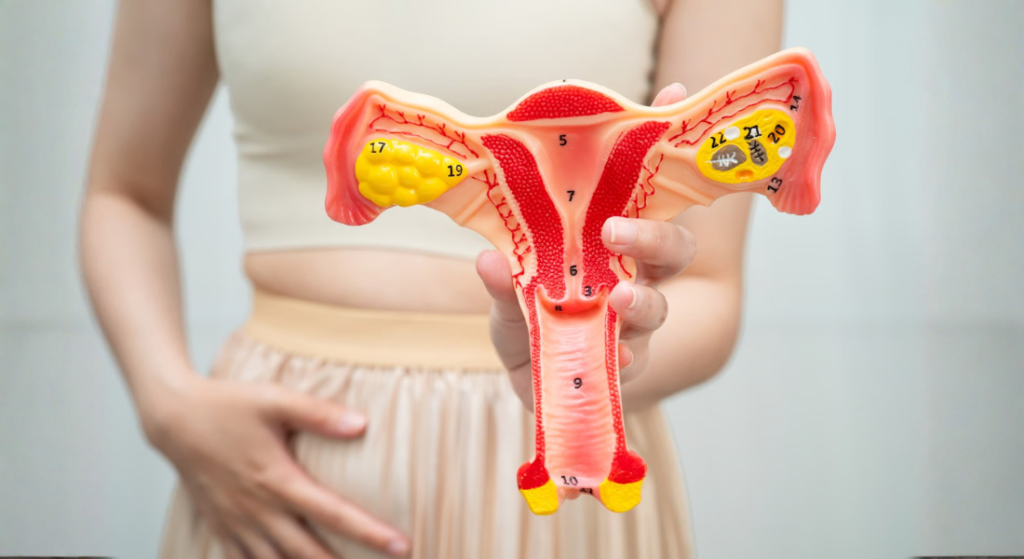
Endometriosis is a condition in which tissue similar to the lining of the womb is found elsewhere in the body, commonly within the pelvis. This tissue can trigger inflammation and scarring, which may cause pain that becomes more noticeable before, during or after your period.
You may experience cramps that begin several days before your bleeding starts and continue after your period has finished. Other symptoms can include ongoing pelvic pain, pain during or after sex, pain when passing urine or opening your bowels, particularly when these symptoms follow a cyclical pattern, fatigue or difficulty becoming pregnant, although symptoms can vary between individuals.
Why Endometriosis Pain May Worsen Over Time
Endometriosis symptoms can change over time. Pain may become more frequent, last longer or respond less well to treatments that previously helped, although symptom progression differs between individuals. The discomfort may spread to different areas of your pelvis or begin affecting your work, sleep, exercise or everyday activities.
Pain severity does not always match the amount of endometriosis seen on imaging or during surgery. Seek medical advice if symptoms repeatedly affect daily life.
UK Guidance Note
NICE recommends offering a transvaginal ultrasound when endometriosis is suspected, even when the abdominal or pelvic examination is normal. A transabdominal ultrasound should be considered when a transvaginal scan is declined or unsuitable. A normal examination or ultrasound does not exclude endometriosis, and referral may still be appropriate when symptoms persist, recur or significantly affect daily life.
Adenomyosis
Adenomyosis is a condition in which tissue from the womb lining grows into the muscular wall of the womb. It may cause painful periods, heavy bleeding, pelvic pain, bloating or a feeling of pressure or fullness.
You may also notice changes such as heavier or longer periods, passing larger or more frequent blood clots or more painful bleeding. Some people experience pelvic heaviness, bloating or pain during sex, and these symptoms may occur throughout your cycle rather than only during your period.
How Adenomyosis Pain May Feel
Adenomyosis pain is often described as a deep ache, pressure or strong gripping sensation in your lower abdomen. The discomfort may spread to your back or legs and can become severe enough to affect your work, sleep, exercise or other daily activities.
The symptoms can be similar to those caused by endometriosis or fibroids, and you may have more than one condition at the same time. A transvaginal ultrasound is generally the first imaging test when adenomyosis is suspected. MRI may be considered in selected circumstances.
Adenomyosis and Endometriosis: Common Differences
| Feature | Adenomyosis | Endometriosis |
| Main location | Endometrial glands and supporting tissue within the womb muscle | Tissue similar to the womb lining outside the womb |
| Common symptoms | Painful and heavy periods, pressure, fullness or bloating | Painful periods, pelvic pain, pain during sex and cyclical bowel or bladder symptoms |
| Imaging | Transvaginal ultrasound is usually the first imaging test; MRI may be considered in selected cases. | Ultrasound may identify endometriomas or deep disease |
| Normal scan | A normal scan does not necessarily exclude adenomyosis | Does not exclude endometriosis |
| Can both occur together? | Yes | Yes |
Fibroids
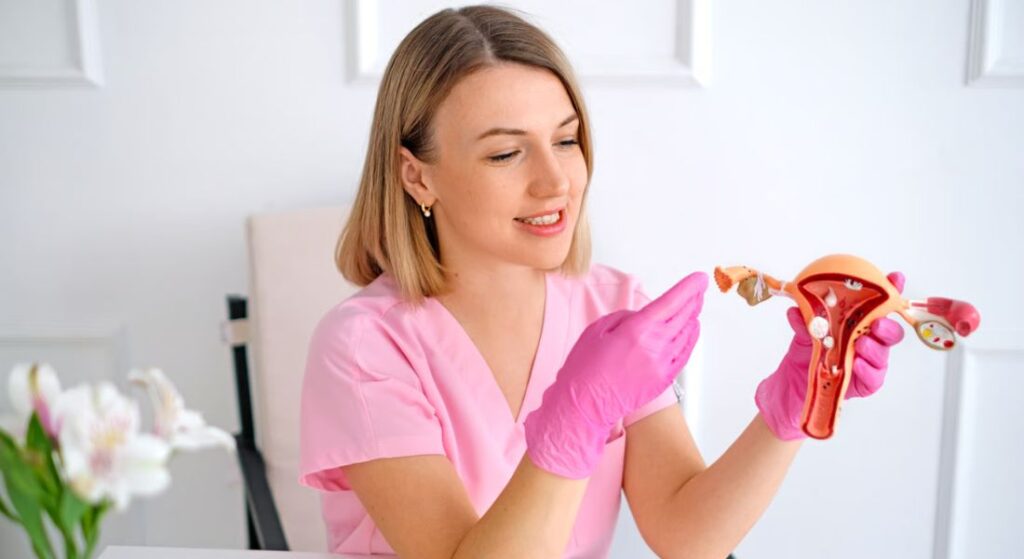
Fibroids are benign growths made from muscle and fibrous tissue that develop within or around the womb. Many fibroids do not cause symptoms, but their size and location may influence whether they contribute to bleeding, cramping or pressure symptoms that were previously easier to manage.
You may experience heavy or painful periods, pelvic pressure, abdominal discomfort or lower back pain. Larger fibroids can also press on your bladder or bowel, causing symptoms such as frequent urination, constipation, bloating or discomfort during sex.
Why Fibroid Position Is Important
Fibroid position can influence symptoms. Fibroids that project into or distort the womb cavity are more likely to cause heavy bleeding, while larger fibroids in or around the womb wall may cause pelvic pressure or bladder and bowel symptoms.
Finding a fibroid during an ultrasound does not always mean it is the cause of your symptoms. Your clinician will consider the fibroid’s size, location and number alongside when your pain started, changes in your periods and any other symptoms before deciding whether treatment or monitoring is needed.
Pelvic Inflammatory Disease
Pelvic inflammatory disease is an infection of the upper female reproductive tract, which may involve the womb, fallopian tubes, ovaries and surrounding tissues. It can cause new or persistent pelvic pain that may feel similar to period cramps but is often different from your usual pattern of discomfort.
You may also experience unusual vaginal discharge, bleeding between periods, bleeding after sex, deep pain during sex or discomfort when passing urine. PID can cause mild or non-specific symptoms. Seek urgent advice from a GP, sexual health clinic or NHS 111 if pelvic pain occurs with unusual discharge, bleeding between periods or after sex, pain during sex, fever or possible pregnancy.
Why PID Requires Prompt Treatment
PID is usually treated with antibiotics. Prompt treatment reduces the risk of long-term pelvic pain, damage to the fallopian tubes, fertility problems and ectopic pregnancy.
You should seek medical advice if worsening period pain occurs alongside a fever, unusual vaginal discharge or a recent risk of a sexually transmitted infection. Attend A&E if pelvic pain is severe or rapidly worsening, particularly when it occurs with vomiting, a very high temperature, dizziness, fainting, heavy bleeding or feeling very unwell.
Ovarian Cysts
An ovarian cyst is a fluid-filled sac that develops on or within your ovary. Many ovarian cysts are benign functional cysts that form as part of the menstrual cycle and resolve without treatment, but a larger cyst, bleeding into a cyst, rupture or ovarian torsion can cause new or worsening pelvic pain.
You may experience a dull ache, pressure or heaviness on one side of your lower abdomen, which may become more noticeable around your period. Other symptoms can include bloating, pain during sex, difficulty emptying your bowel or a frequent need to urinate, although these symptoms can also occur with other conditions.
Sudden Pain from a Cyst or Ovarian Torsion

Sudden severe one-sided pelvic pain, particularly with nausea or vomiting, needs urgent assessment because it may indicate ovarian torsion, a ruptured cyst or another acute abdominal condition. Contact NHS 111 or go to A&E for urgent advice. Call 999 if you faint, collapse or become very unwell, as ovarian torsion may require urgent surgery.
Changes in Contraception
Starting, changing or stopping contraception can affect your bleeding pattern and the way you experience period pain. Some hormonal contraceptive methods can reduce bleeding or period pain, although their effects vary between methods and individuals.
This does not always mean that stopping contraception has caused a new problem. In some cases, hormonal contraception may previously have suppressed bleeding or pain associated with primary dysmenorrhoea, endometriosis or another condition, allowing symptoms to become noticeable after it is stopped.
A Copper Intrauterine Device
A copper intrauterine device, also known as a copper coil, can sometimes make your periods heavier, longer or more painful. These changes are often most noticeable during the first few months after fitting and may improve as your body adjusts.
- Early Changes: Periods may initially become heavier, longer or more painful.
- Possible Improvement: These changes may become less noticeable after the first few months.
- Seek Medical Advice: Get advice if pain is persistent or worsening, or occurs with fever, unusual discharge, very heavy bleeding, possible pregnancy or a change in the coil threads. Your clinician may check its position and assess for infection, pregnancy or another pelvic condition.
Hormonal Changes and Perimenopause
As you approach menopause, changes in your hormone levels can make your periods become irregular and sometimes heavier. Heavier bleeding may make womb contractions feel stronger, but new or severe period pain should not automatically be assumed to be caused by perimenopause alone.
Fibroids or adenomyosis may also contribute to heavier bleeding or worsening cramps during perimenopause. Mention hot flushes, night sweats and cycle changes, as well as pelvic pressure, pain during sex or pain between periods.
New severe pain, persistent pelvic pain, bleeding between periods or after sex, or persistent bloating still need medical assessment. Pregnancy remains possible until menopause is established, so pregnancy-related causes should be considered when pain occurs with late or unusual bleeding.
Other Symptoms That Can Help Identify the Cause
The symptoms that occur alongside your period pain can provide important clues about the possible cause. Heavy bleeding may be linked with conditions such as adenomyosis or fibroids, while bleeding after sex, unusual vaginal discharge or fever may suggest an infection such as pelvic inflammatory disease (PID).
Pain during sex, or pain that occurs when opening your bowels or passing urine at certain points in your cycle, may raise the possibility of endometriosis. Persistent or frequently recurring bloating, pelvic fullness, feeling full unusually quickly or one-sided pain should be discussed with a clinician, particularly when the symptoms are new or worsening.
When Sudden Period Pain Needs Urgent Help

Seek urgent medical help if pain is severe, rapidly worsening or very different from your usual cramps, especially when it occurs with vomiting, fever, heavy bleeding, dizziness or fainting.
If pregnancy is possible, one-sided lower abdominal pain with vaginal bleeding or brown discharge, shoulder-tip pain, dizziness or fainting needs urgent assessment. Call 999 or go to A&E for sudden intense abdominal pain with fainting, collapse, severe dizziness or looking very pale.
How Worsening Period Pain Is Investigated
Your clinician will ask when your period pain started to change, how long the pain lasts and whether it occurs only during your period or at other times in your cycle. You may also be asked about your bleeding pattern, contraception, sexual health, pregnancies, previous procedures and any bowel or bladder symptoms, particularly when they occur in a cyclical pattern.
These details help your clinician understand the pattern of your symptoms and decide which assessments may be helpful. Depending on your symptoms, assessment may include an abdominal or pelvic examination, a pregnancy test, urine or infection testing, blood tests or a pelvic ultrasound. A full blood count should be arranged when heavy menstrual bleeding is being assessed. Not everyone needs every test, and the cause may not be confirmed during the first appointment.
Myth vs Fact: Suddenly Worsening Period Pain
| Myth | Fact |
| One unusually painful period always means there is a serious condition. | Pain can vary between cycles, but repeated or progressively worsening pain deserves assessment. |
| Period pain becoming worse is simply part of getting older. | New pain may be linked to endometriosis, adenomyosis, fibroids, PID, an ovarian cyst, contraception or another cause. |
| A normal ultrasound rules out endometriosis. | Ultrasound can identify some forms of endometriosis, but a normal result does not completely exclude the condition. |
| Finding a fibroid means it is causing the pain. | Many fibroids do not cause symptoms. Their size and location must be considered alongside the symptom pattern. |
| PID always causes a high temperature and obvious discharge. | PID can cause mild or non-specific symptoms and may develop gradually. |
| Sudden one-sided pain is just a stronger menstrual cramp. | Sudden severe one-sided pain, particularly with vomiting, may indicate ovarian torsion, a cyst complication or an ectopic pregnancy. |
| Pregnancy is impossible if there is bleeding that looks like a period. | Pregnancy-related bleeding can be mistaken for a period, so pregnancy must be considered when clinically possible. |
| All contraception reduces period pain. | Some hormonal methods reduce pain, while a copper IUD may make periods heavier or more painful. |
Key Takeaways
- One unusually painful cycle does not always indicate a serious condition.
- Repeated, progressive or newly different pain should be assessed.
- Secondary dysmenorrhoea may be linked to endometriosis, adenomyosis, fibroids, PID or another condition.
- A normal ultrasound does not completely exclude endometriosis.
- Fibroids found on a scan do not automatically explain the pain.
- PID symptoms may be mild and are not always limited to periods.
- Sudden severe one-sided pain with nausea or vomiting requires urgent assessment.
- Pregnancy-related causes must be considered when pregnancy is possible.
- A copper IUD may increase pain, while some hormonal methods reduce it.
- The cause may not always be confirmed during the first assessment.
Frequently Asked Questions
1. Why have your periods suddenly become more painful?
A sudden increase in period pain can have several causes. While occasional changes may occur from one cycle to another, persistent or worsening pain may be linked to conditions such as endometriosis, adenomyosis, fibroids or pelvic inflammatory disease. If your pain continues to worsen or affects your daily life, you should arrange a medical assessment.
2. When should you be concerned about worsening period pain?
You should seek medical advice if your period pain becomes more severe than usual, lasts longer than expected or no longer improves with your usual treatments. It is also important to be assessed if you have heavy bleeding, bleeding between periods, pain during sex, unusual vaginal discharge, fever or pain outside your menstrual cycle.
3. Can endometriosis cause period pain to become worse over time?
Yes. Endometriosis can cause pain that gradually becomes more severe and may begin before your period starts or continue after it ends. You may also experience pelvic pain, pain during or after sex, bowel or bladder symptoms, or fatigue. Early assessment can help identify the cause and discuss suitable treatment options.
4. Can a change in contraception affect your period pain?
Yes. Starting, stopping or changing contraception can alter your menstrual symptoms. Hormonal contraception often reduces period pain, while a copper coil may make your periods heavier or more painful, particularly during the first few months. If your pain is severe, persistent or accompanied by other symptoms, you should seek medical advice.
5. When is sudden period pain a medical emergency?
Seek urgent medical care for severe one-sided pelvic pain, vomiting, heavy bleeding or fever. If pregnancy is possible, pain with bleeding or shoulder-tip pain also needs urgent assessment. Call 999 or go to A&E for sudden intense abdominal pain with fainting, collapse, severe dizziness or looking very pale.
Final Thoughts: Understanding Changes in Your Period Pain
A sudden increase in period pain can be difficult to ignore, especially when your symptoms feel different from your usual cycle. While occasional changes may happen, ongoing or worsening cramps should not be dismissed, as they can sometimes be linked to conditions such as endometriosis, adenomyosis, fibroids or pelvic infections. Understanding the cause of your symptoms is the first step towards finding the right support and improving your quality of life.
If you are looking for specialist advice about painful periods treatment in London, you can contact Gynaecology Clinic London.
References:
- Becker, C.M. et al. (2022) ‘ESHRE guideline: Endometriosis’, Human Reproduction Open, 2022(2), hoac009. Available at: https://academic.oup.com/hropen/article/2022/2/hoac009/6537540
- British Association for Sexual Health and HIV (2019) United Kingdom national guideline for the management of pelvic inflammatory disease: 2019 interim update. Available at: https://www.bashh.org/resources/6/guidelines_pid_2019
- Burnett, M. (2025) ‘Guideline No. 345: Primary dysmenorrhea’, Journal of Obstetrics and Gynaecology Canada, 47(5), 102840. Available at: https://pubmed.ncbi.nlm.nih.gov/40216328/
- Dason, E.S. et al. (2023) ‘Guideline No. 437: Diagnosis and management of adenomyosis’, Journal of Obstetrics and Gynaecology Canada, 45(6), pp. 417–429.e1. Available at: https://pubmed.ncbi.nlm.nih.gov/37244746/
- Dev, H., Falkner, N.M. and Lee, E. (2026) ‘Navigating complexity: Review and updates of endometriosis and adenomyosis imaging’, British Journal of Radiology, 99(1180), pp. 656–668. Available at: https://academic.oup.com/bjr/article/99/1180/656/8417666
- Dixon, S., Topbas Selcuki, N.F., Round, T., Hayward, G. and Vincent, K. (2023) ‘Uterine adenomyosis: An update for GPs’, British Journal of General Practice, 73(736), pp. 524–525. Available at: https://bjgp.org/content/73/736/524
- Faculty of Sexual & Reproductive Healthcare (2023, amended 2025) FSRH guideline: Intrauterine contraception. Available at: https://www.fsrh.org/Common/Uploaded%20files/documents/fsrh-clinical-guideline-intrauterine-contraception-mar-23-amended.pdf
- Itani, R., Soubra, L., Karout, S., Rahme, D., Karout, L. and Khojah, H.M.J. (2022) ‘Primary dysmenorrhea: Pathophysiology, diagnosis, and treatment updates’, Korean Journal of Family Medicine, 43(2), pp. 101–108. Available at: https://pmc.ncbi.nlm.nih.gov/articles/PMC8943241/
- National Institute for Health and Care Excellence (2023) Dysmenorrhoea. NICE Clinical Knowledge Summary. Last revised October 2023. Available at: https://cks.nice.org.uk/topics/dysmenorrhoea/
- National Institute for Health and Care Excellence (2019, updated 2026) Ectopic pregnancy and miscarriage: Diagnosis and initial management. NICE guideline NG126. Available at: https://www.nice.org.uk/guidance/ng126
- National Institute for Health and Care Excellence (2017, updated 2024) Endometriosis: Diagnosis and management. NICE guideline NG73. Available at: https://www.nice.org.uk/guidance/ng73
- National Institute for Health and Care Excellence (2018, updated 2026) Heavy menstrual bleeding: Assessment and management. NICE guideline NG88. Available at: https://www.nice.org.uk/guidance/ng88
- National Institute for Health and Care Excellence (2015, updated 2026) Menopause: Identification and management. NICE guideline NG23. Available at: https://www.nice.org.uk/guidance/ng23
- NHS (2023) Adenomyosis. Page last reviewed 17 July 2023. Available at: https://www.nhs.uk/conditions/adenomyosis/
- NHS (2022) Ectopic pregnancy: Symptoms. Page last reviewed 23 August 2022. Available at: https://www.nhs.uk/conditions/ectopic-pregnancy/symptoms/
- NHS (2024) Endometriosis. Page last reviewed 27 August 2024. Available at: https://www.nhs.uk/conditions/endometriosis/
- NHS (2026) Fibroids. Page last reviewed 17 March 2026. Available at: https://www.nhs.uk/conditions/fibroids/
- NHS (2024) Heavy periods. Page last reviewed 19 September 2024. Available at: https://www.nhs.uk/conditions/heavy-periods/
- NHS (2024) How contraception affects periods. Page last reviewed 31 January 2024. Available at: https://www.nhs.uk/contraception/choosing-contraception/effects-on-periods/
- NHS (2023) Ovarian cyst. Page last reviewed 21 June 2023. Available at: https://www.nhs.uk/conditions/ovarian-cyst/
- NHS (2025) Pelvic inflammatory disease. Page last reviewed 17 December 2025. Available at: https://www.nhs.uk/conditions/pelvic-inflammatory-disease-pid/
- NHS (2026) Period pain. Page last reviewed 18 March 2026. Available at: https://www.nhs.uk/symptoms/period-pain/