




Painful periods do not automatically mean that you will have difficulty becoming pregnant. Many people experience primary dysmenorrhoea, which is period pain that occurs without an identifiable pelvic condition and is linked mainly to prostaglandin-driven uterine contractions.
However, severe or worsening period pain can sometimes be linked to conditions such as endometriosis, pelvic inflammatory disease, fibroids, adenomyosis or certain ovarian problems, which may affect fertility in some cases. If you are concerned about your symptoms or have been trying to conceive without success, speaking to your GP or a gynaecologist can help determine whether fertility investigations or specialist assessment may be appropriate.
Painful Periods Do Not Always Mean Fertility Problems
Dysmenorrhoea is the medical term for painful periods. Primary dysmenorrhoea occurs without an identifiable pelvic condition, while secondary dysmenorrhoea is associated with an underlying cause such as endometriosis, adenomyosis, fibroids or pelvic inflammatory disease.
Severe cramps alone do not prove that your fertility has been affected. You may have very painful periods and still become pregnant without difficulty, while some fertility conditions cause only mild pain or no noticeable menstrual symptoms.
What Is Primary Dysmenorrhoea?
Primary dysmenorrhoea is period pain that occurs without an identifiable pelvic condition or structural problem. It often begins during adolescence and is linked to natural substances called prostaglandins, which cause your womb to contract as it sheds its lining.
These contractions may cause cramping, nausea, headaches, diarrhoea and tiredness, but primary dysmenorrhoea does not damage the womb, ovaries or fallopian tubes and is not considered a direct cause of infertility. The pain can still be severe enough to require treatment.
Why the Cause of Your Pain Matters

The key question is not simply how painful your periods are, but what is causing the pain. If your discomfort comes from normal menstrual contractions, it is unlikely to affect conception, whereas a condition involving your ovaries, fallopian tubes or womb may have implications for fertility.
You should also pay attention to any symptoms that occur alongside your cramps. Pain during sex, discomfort when opening your bowels, unusual discharge, heavy bleeding, bleeding between periods or pain at other times of the month may mean that further assessment is needed.
Endometriosis and Fertility
Endometriosis is a condition in which tissue similar to the lining of the womb is found elsewhere in the body, commonly within the pelvis, often around the ovaries, fallopian tubes or pelvic lining. You may experience severe period pain, pelvic discomfort, pain during sex or cyclical bowel and bladder symptoms.
- Possible Fertility Difficulties: Endometriosis can make conception more difficult for some people by affecting the ovaries, fallopian tubes or surrounding pelvic tissues.
- Natural Conception: Many people with endometriosis become pregnant naturally, although it may take longer in some cases.
- Individual Effects: The effect on fertility varies and may be influenced by age, ovarian reserve, tubal function, ovarian endometriomas, previous surgery, other fertility factors and how long you have been trying to conceive.
- Fertility Support: Your clinician may recommend further assessment or fertility treatment if you have difficulty becoming pregnant.
Having endometriosis does not mean that you cannot become pregnant. Seeking medical advice can help you understand how the condition may affect your fertility and what support may be suitable for you.
How Endometriosis May Affect Conception
Endometriosis may affect fertility through several mechanisms. Adhesions or scarring can distort pelvic anatomy or affect the fallopian tubes, while ovarian involvement may affect ovarian function. In other people, fertility difficulties occur without obvious tubal blockage, and the exact mechanism may not be clear.
Endometriosis can cause ovarian cysts called endometriomas, which may be associated with reduced ovarian reserve. Surgery involving an endometrioma can also remove or damage healthy ovarian tissue, so decisions about surgery should take account of symptoms, age, ovarian reserve, previous surgery and fertility plans. However, the impact on fertility varies considerably, and some people with endometriosis conceive without difficulty.
Pain Severity Does Not Predict Fertility
The level of pain you experience does not reliably show how extensive endometriosis is or whether you will have difficulty conceiving. You may have severe pain with limited disease, while someone with more extensive endometriosis may experience only mild symptoms.
Disabling cramps do not automatically mean that you are infertile, and mild periods do not rule out a fertility-related condition. Your medical history, test results and experience of trying to conceive all need to be considered together.
Adenomyosis and Fertility
Adenomyosis is a condition in which tissue from the womb lining grows into the muscular wall of the womb. It can cause painful or heavy periods, pelvic pressure, bloating and discomfort during sex.
The relationship between adenomyosis and natural conception remains uncertain because the available evidence is limited and affected by factors such as age, coexisting endometriosis and the way adenomyosis is diagnosed. Studies in people undergoing fertility treatment have associated adenomyosis with lower pregnancy or live-birth rates and a higher risk of pregnancy loss, although individual outcomes vary.
Why Adenomyosis Requires Individual Advice
Finding adenomyosis on a scan does not automatically mean that it is causing fertility difficulties. Some people have no symptoms, while others experience significant pain or heavy bleeding and still conceive without problems.
Fertility advice should consider your age, ovarian reserve where clinically relevant, previous pregnancies, duration of trying, semen analysis results, tubal function and whether endometriosis or another condition is also present. As adenomyosis and endometriosis can occur together, your clinician may also assess whether another condition is contributing to both your pain and difficulty becoming pregnant.
Fibroids and Fertility
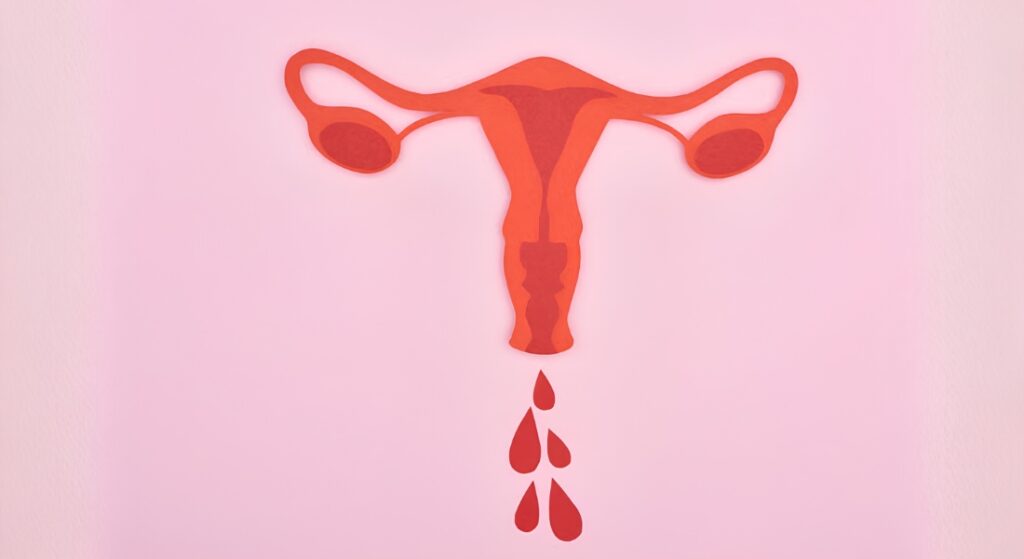
Fibroids are benign growths made from muscle and fibrous tissue that develop within or around the womb. You may experience heavy or painful periods, pelvic pressure, lower back pain, abdominal swelling or discomfort during sex.
Most fibroids do not prevent pregnancy, and you may be able to conceive without treatment. However, some fibroids may affect implantation or pregnancy, particularly when they project into or distort the womb cavity. The importance of an intramural fibroid depends on its size, location and whether it affects the cavity, while outer-surface fibroids are less likely to affect implantation directly.
Why the Position of a Fibroid Matters
Fibroids that grow towards or inside the cavity of your womb are more likely to affect implantation than those on the outer surface. A large fibroid may also distort the womb cavity or, depending on its position, interfere with the openings of your fallopian tubes.
Finding a fibroid during an ultrasound does not prove that it is causing your pain or fertility difficulties. Your specialist will assess its size and location, how closely it matches your symptoms, and whether monitoring, further investigation or treatment is appropriate. Removing a fibroid does not improve fertility in every situation, so the likely benefit and treatment risks should be considered individually.
Fibroid Location and Possible Fertility Relevance
| Fibroid pattern | Possible effect |
| Submucosal or cavity-projecting | More likely to affect the womb cavity and implantation |
| Intramural without cavity distortion | Fertility significance varies with size and position |
| Subserosal or outer-surface fibroid | Less likely to affect implantation directly |
| Large or multiple fibroids | May distort anatomy or require individual assessment |
| Small incidental fibroid | May not explain pain or fertility difficulty |
Why Early PID Treatment Is Important
PID is treated with antibiotics. Prompt treatment reduces the risk of chronic pelvic pain, damage to the fallopian tubes, fertility problems and ectopic pregnancy. Antibiotics can treat the infection but cannot reliably reverse scarring that has already developed.
You should seek medical advice promptly if painful periods occur alongside unusual discharge, fever, bleeding after sex or possible exposure to a sexually transmitted infection, including chlamydia or gonorrhoea. Although treatment may not reverse existing scarring, early care can help reduce the risk of further damage.
Clinical Safety Note
Previous PID increases the risk of ectopic pregnancy. If pregnancy is possible, seek urgent medical advice for one-sided lower abdominal pain, vaginal bleeding or brown discharge, shoulder-tip pain, dizziness or fainting, even without a positive pregnancy test. Call 999 or go to A&E for sudden intense abdominal pain with fainting, collapse, severe dizziness or looking very pale.
Ovarian Cysts and Fertility
Ovarian cysts are fluid-filled sacs that develop on or inside an ovary. Most functional cysts resolve without treatment and do not usually affect fertility. Larger cysts, bleeding into a cyst, rupture or ovarian torsion can cause pelvic pain or bloating.
Contact NHS 111 or go to A&E for sudden severe one-sided pain, particularly with nausea or vomiting. Endometriomas require individual consideration because the condition and surgery involving healthy ovarian tissue may affect ovarian reserve.
Pelvic Inflammatory Disease
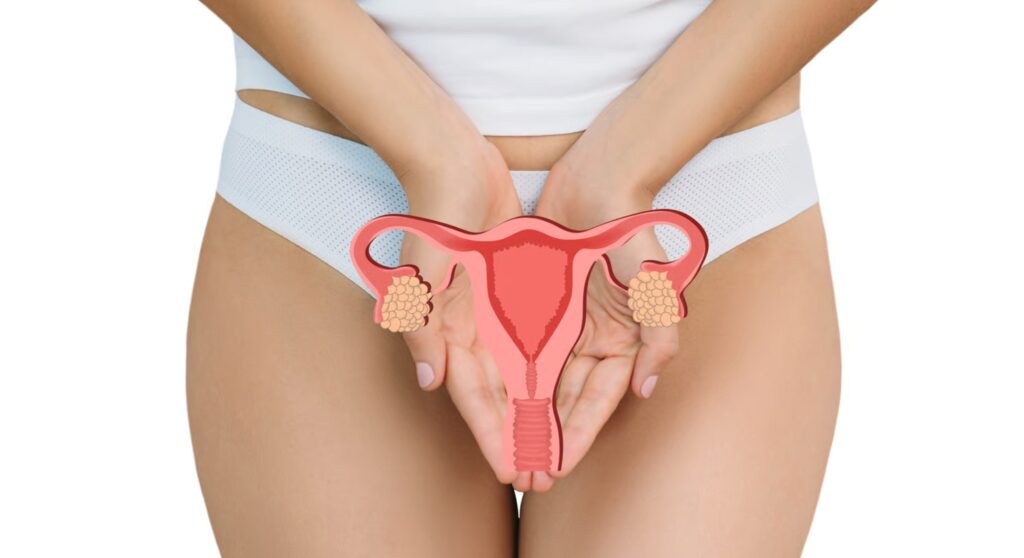
Pelvic inflammatory disease, usually called PID, is an infection of the upper female reproductive tract that may involve the womb, fallopian tubes, ovaries and surrounding tissues. You may experience pelvic pain, unusually painful or heavy periods, pain during sex, bleeding between periods or abnormal vaginal discharge.
PID can sometimes cause only mild symptoms, which means you may not realise that treatment is needed. If it is not diagnosed and treated promptly, inflammation may scar your fallopian tubes and make it more difficult for an egg to reach the womb.
Painful Periods and Regular Ovulation
Regular menstrual cycles make ovulation more likely, but they do not confirm that ovulation occurs in every cycle. You can experience strong cramps during an ovulatory cycle, and bleeding may still appear regular even when ovulation is inconsistent.
Conditions that affect ovulation more often cause irregular or absent periods rather than severe monthly pain. Your clinician may therefore ask about your cycle length, regularity and the severity of your cramps when assessing fertility.
Pain During Sex May Affect Conception Attempts
Conditions such as endometriosis, adenomyosis, fibroids and PID can cause deep pain during or after penetrative sex. Even when the condition has not directly affected fertility, you may find that regular intercourse becomes difficult or emotionally distressing.
You should mention this symptom during your assessment rather than feeling that you must continue despite significant discomfort. Your clinician can investigate possible physical causes and discuss ways to manage the pain while supporting your comfort, relationship and pregnancy plans.
When Should You Seek Fertility Advice?
Arrange an appointment if you have not conceived after one year of regular unprotected sex. Seek advice sooner if you are aged 36 or over or if there is a known or suspected fertility factor, such as significant pelvic pain, suspected endometriosis, irregular or absent periods, previous PID, cancer treatment or a known problem affecting either partner.
You do not need to wait for one year when painful periods are severe or accompanied by symptoms suggesting an underlying condition. Current NICE fertility guidance recommends referral at presentation when a known or suspected cause may affect fertility.
How Pain and Fertility Are Investigated
Your clinician will ask when the pain occurs, whether it has changed and how it affects your daily life. You may also be asked about your bleeding pattern, pain during sex, bowel or bladder symptoms, previous pregnancies, infections and how long you have been trying to conceive.
Investigations may include a properly timed progesterone blood test when confirmation of ovulation is needed, infection screening where indicated and an ultrasound to assess the womb and ovaries. Tubal-patency testing depends on your medical history. HSG or hysterosalpingo-contrast ultrasonography may be used when no pelvic condition is suspected, while laparoscopy and dye may be more appropriate when there is a history of PID, ectopic pregnancy or suspected endometriosis. Where there is a partner who produces sperm, semen analysis is an important part of the assessment. Not everyone needs every test.
What Can and Cannot Be Seen on an Ultrasound?
An ultrasound can identify fibroids, many ovarian cysts and signs of adenomyosis. It may also detect ovarian endometriomas or some deeper forms of endometriosis, making it an important first test when you have painful periods.
However, a normal ultrasound does not completely rule out endometriosis. If you continue to experience severe or recurring pain, particularly alongside fertility difficulties, your clinician should consider your symptoms even when the scan does not show an obvious problem.
A routine pelvic ultrasound also cannot confirm that the fallopian tubes are open; this requires separate tubal-patency testing.
Choosing Treatment When You Want to Conceive
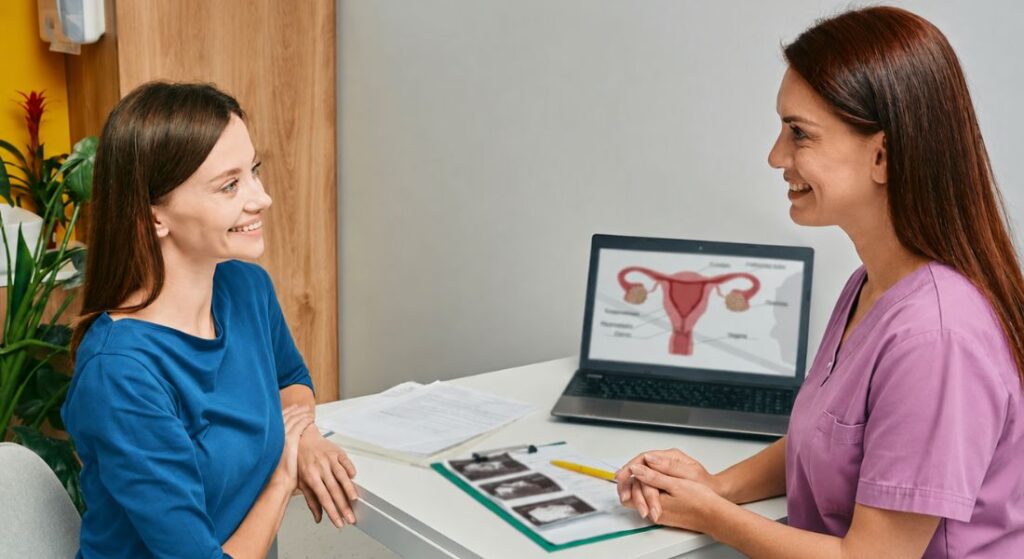
Treatment for painful periods should reflect whether you are trying to become pregnant now or may wish to do so later. Hormonal treatments may reduce endometriosis-related pain or bleeding, but they are not fertility treatments and should not be offered to improve spontaneous pregnancy rates while you are actively trying to conceive.
Your clinician may discuss suitable pain relief, fertility investigations, expectant management, fertility treatment or surgery according to the diagnosis. Ask which medicines are suitable when trying to conceive or if pregnancy is possible. Surgery should not be presented as automatically improving fertility, particularly when an ovarian endometrioma is present, because potential benefits must be balanced against the risk to ovarian reserve.
Myth vs Fact
| Myth | Fact |
| Severe period pain means that I am infertile. | Pain severity does not reliably predict fertility. |
| Primary dysmenorrhoea damages the womb or ovaries. | Primary dysmenorrhoea causes pain without an identified pelvic disease and is not generally a direct cause of infertility. |
| Everyone with endometriosis will struggle to conceive. | Endometriosis may affect fertility, but many people conceive naturally. |
| Mild pain means that my fertility is normal. | Some fertility-related conditions cause mild symptoms or none at all. |
| Every fibroid reduces fertility. | Many fibroids do not affect conception; location and cavity distortion are particularly important. |
| A normal ultrasound proves that there is no fertility-related condition. | Ultrasound cannot exclude superficial endometriosis or confirm that the fallopian tubes are open. |
| Regular periods prove that ovulation occurs every month. | Regular cycles make ovulation likely, but testing may be used to confirm it during fertility assessment. |
| Hormonal treatment improves the chance of natural conception in endometriosis. | Hormonal treatment may reduce pain but does not improve spontaneous pregnancy rates while you are trying to conceive. |
Key Takeaways
- Primary dysmenorrhoea does not itself damage the reproductive organs or directly cause infertility.
- Severe period pain does not prove that you are infertile.
- Endometriosis may affect fertility, but many people conceive naturally.
- Evidence about natural conception and adenomyosis remains limited, while some studies associate adenomyosis with poorer assisted-reproduction and pregnancy outcomes.
- Fibroid location and distortion of the womb cavity matter more than the presence of a fibroid alone.
- Previous PID may damage the fallopian tubes and increase ectopic-pregnancy risk.
- Most functional ovarian cysts do not affect fertility.
- Fertility investigations may involve both partners.
- A normal ultrasound cannot confirm that the fallopian tubes are open.
- Hormonal treatment does not improve spontaneous pregnancy rates while actively trying to conceive.
- Earlier fertility advice is appropriate from age 36 or when a known fertility factor is present.
Frequently Asked Questions
1. Can painful periods make it difficult to become pregnant?
Painful periods do not automatically mean that you will have difficulty becoming pregnant. However, if the pain is caused by endometriosis, pelvic inflammatory disease, certain fibroids or another underlying condition, fertility may be affected in some cases.
2. Does severe period pain mean that I am infertile?
No, severe period pain does not mean that you are infertile. Some people with very painful periods conceive naturally, while others with fertility problems may experience only mild pain or no noticeable symptoms.
3. How can endometriosis affect fertility?
Endometriosis may affect fertility through changes in pelvic anatomy, tubal involvement, ovarian endometriomas or other mechanisms. The effect varies between individuals, and many people still become pregnant naturally.
4. When should I seek medical advice about painful periods?
Speak to a healthcare professional if your period pain is severe, getting worse or affecting your daily life. You should also seek advice if it occurs with heavy bleeding, pain during sex, unusual discharge, bleeding between periods or difficulty becoming pregnant.
5. Can a normal ultrasound rule out endometriosis?
No, a normal ultrasound cannot completely rule out endometriosis. Although it can detect ovarian endometriomas and some deeper forms of the condition, smaller or superficial areas may not appear on the scan.
Final Thoughts: Understanding Painful Periods and Fertility
Painful periods do not automatically mean that your fertility has been affected, but persistent, worsening or newly different period pain may be associated with an underlying condition and should be assessed, particularly when it occurs with pain during sex, unusual discharge, heavy bleeding, irregular cycles or difficulty conceiving. If you are looking for specialist advice about painful periods treatment in London, you can contact Gynaecology Clinic London.
References:
- Becker, C.M. et al. (2022) ‘ESHRE guideline: Endometriosis’, Human Reproduction Open, 2022(2), hoac009. Available at: https://academic.oup.com/hropen/article/2022/2/hoac009/6537540
- British Association for Sexual Health and HIV (2019) United Kingdom national guideline for the management of pelvic inflammatory disease: 2019 interim update. Available at: https://www.bashh.org/resources/6/guidelines_pid_2019
- Freytag, D., Günther, V., Maass, N. and Alkatout, I. (2021) ‘Uterine fibroids and infertility’, Diagnostics, 11(8), 1455. Available at: https://pmc.ncbi.nlm.nih.gov/articles/PMC8391505/
- Itani, R., Soubra, L., Karout, S., Rahme, D., Karout, L. and Khojah, H.M.J. (2022) ‘Primary dysmenorrhea: Pathophysiology, diagnosis and treatment updates’, Korean Journal of Family Medicine, 43(2), pp. 101–108. Available at: https://pmc.ncbi.nlm.nih.gov/articles/PMC8943241/
- National Institute for Health and Care Excellence (2017, updated 2024) Endometriosis: Diagnosis and management. NICE guideline NG73. Available at: https://www.nice.org.uk/guidance/ng73
- National Institute for Health and Care Excellence (2019, updated 2026) Ectopic pregnancy and miscarriage: Diagnosis and initial management. NICE guideline NG126. Available at: https://www.nice.org.uk/guidance/ng126
- National Institute for Health and Care Excellence (2023) Dysmenorrhoea. NICE Clinical Knowledge Summary. Last revised October 2023. Available at: https://cks.nice.org.uk/topics/dysmenorrhoea/
- National Institute for Health and Care Excellence (2026) Fertility problems: Assessment and treatment. NICE guideline NG257. Available at: https://www.nice.org.uk/guidance/ng257
- NHS (2023) Adenomyosis. Page last reviewed 17 July 2023. Available at: https://www.nhs.uk/conditions/adenomyosis/
- NHS (2023) Diagnosis – Infertility. Page last reviewed 9 August 2023. Available at: https://www.nhs.uk/conditions/infertility/diagnosis/
- NHS (2023) Ovarian cyst. Page last reviewed 21 June 2023. Available at: https://www.nhs.uk/conditions/ovarian-cyst/
- NHS (2024) Endometriosis. Page last reviewed 27 August 2024. Available at: https://www.nhs.uk/conditions/endometriosis/
- NHS (2025) Pelvic inflammatory disease. Page last reviewed 17 December 2025. Available at: https://www.nhs.uk/conditions/pelvic-inflammatory-disease-pid/
- NHS (2026) Fibroids. Page last reviewed 17 March 2026. Available at: https://www.nhs.uk/conditions/fibroids/
- Pados, G. et al. (2023) ‘Adenomyosis and infertility: A literature review’, Medicina, 59(9), 1551. Available at: https://pmc.ncbi.nlm.nih.gov/articles/PMC10534714/