



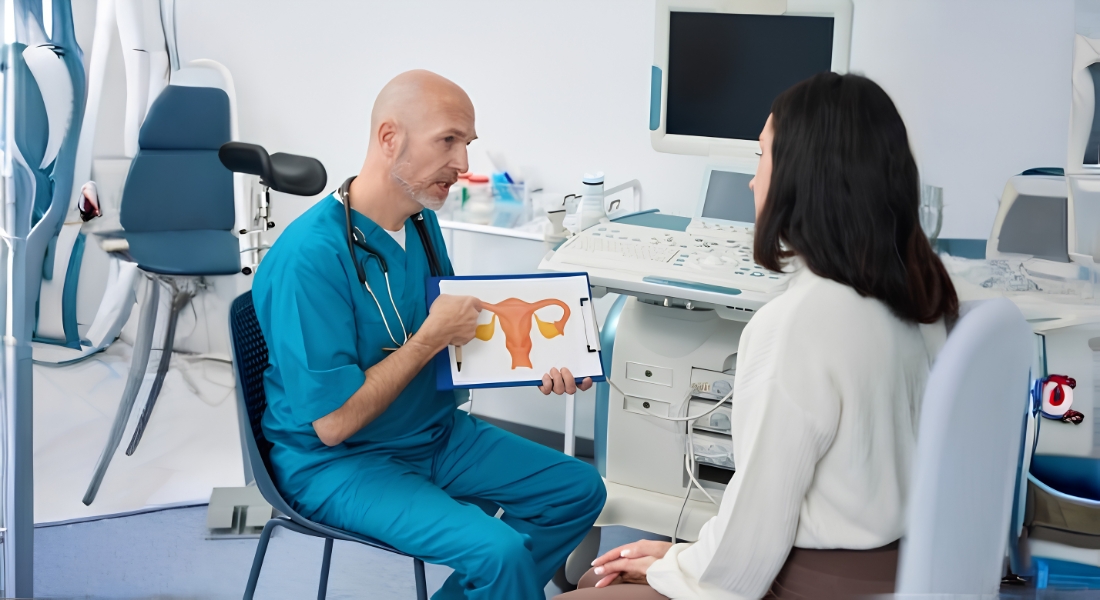
Finding out that you have adenomyosis can leave you wondering whether it could affect your ability to become pregnant. You may already be trying to conceive, considering fertility treatment or simply thinking ahead about your future family plans. While many women with adenomyosis go on to have healthy pregnancies, it is understandable to have concerns about how the condition might affect your fertility.
Having adenomyosis does not mean you cannot have a baby. Research suggests that the condition may reduce fertility or increase the risk of miscarriage for some women, particularly those undergoing fertility treatment, but the relationship is not always straightforward. Your age, ovarian reserve, sperm quality, fallopian tube health, the presence of endometriosis and the extent of adenomyosis can all influence your chances of conception, which is why a diagnosis alone cannot predict your individual outcome.
What Is the Link Between Adenomyosis and Fertility?
If you have adenomyosis, you may wonder whether it could affect your ability to become pregnant. Adenomyosis occurs when tissue similar to the lining of your womb grows within the muscular wall of the uterus, which can cause symptoms such as heavy periods, painful menstruation and pelvic discomfort. Because your womb plays a central role in conception and pregnancy, researchers have explored whether these changes could influence your fertility.
For a pregnancy to develop successfully, an embryo must implant into your womb lining and continue growing in an environment that can support it. Studies suggest that adenomyosis may be associated with lower implantation rates, reduced pregnancy rates and a higher risk of miscarriage for some women, particularly those undergoing fertility treatment. However, your age, overall reproductive health and the presence of conditions such as endometriosis can also affect your fertility, so adenomyosis is only one part of the picture.
Can You Become Pregnant Naturally with Adenomyosis?
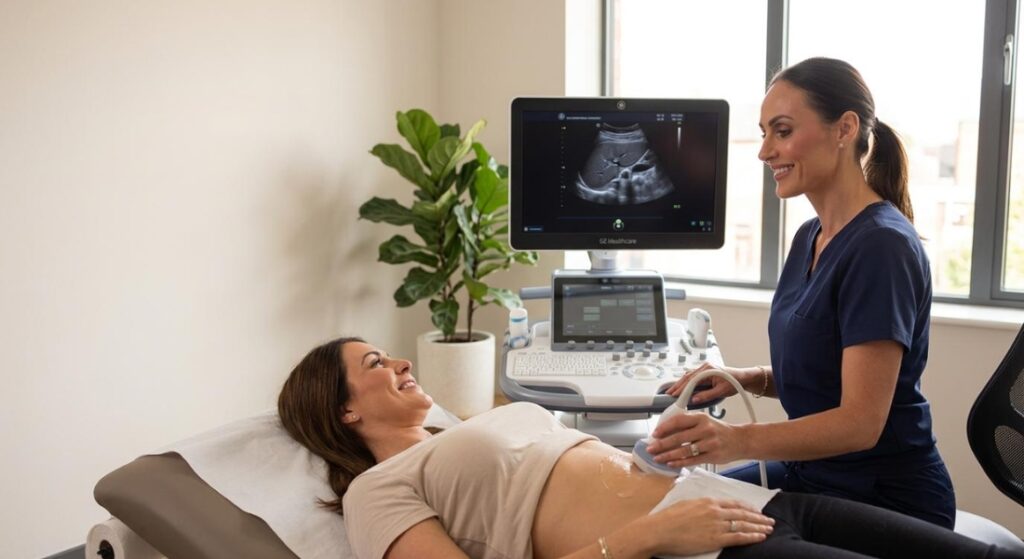
Yes, you can become pregnant naturally if you have adenomyosis. The condition does not automatically mean that you are infertile, and many women with adenomyosis conceive without fertility treatment. Current evidence does not suggest that adenomyosis completely prevents natural conception.
However, adenomyosis is only one factor that may influence your fertility. Your age, ovulation, egg quality, fallopian tube health and your partner’s fertility can all affect your chances of becoming pregnant. This is why your fertility cannot be predicted based on adenomyosis alone.
How Might Adenomyosis Make Conception More Difficult?
Researchers believe that adenomyosis may affect fertility in several ways. The condition can cause changes within your womb, including altered muscle contractions, inflammation and differences in local hormone activity. These changes may make it more difficult for conception and implantation to occur.
Adenomyosis may also affect how your womb lining responds when an embryo reaches it. Some studies have identified changes in blood flow, tissue structure and implantation-related processes, although the exact effects are not fully understood. Researchers continue to investigate these mechanisms, and they do not necessarily predict your individual chances of pregnancy.
Does Adenomyosis Affect Ovulation or Egg Quality?
Adenomyosis mainly affects your womb rather than your ovaries. In most cases, it does not prevent you from ovulating or directly reduce the quality of your eggs. The condition is not usually considered a direct cause of a low ovarian reserve.
However, your fertility may also be influenced by factors such as age, endometriosis or a history of ovarian surgery. These factors can affect the number and quality of your eggs independently of adenomyosis. This is why fertility specialists assess your overall reproductive health rather than focusing on adenomyosis alone.
Do the Type and Severity of Adenomyosis Matter?
Adenomyosis can vary from one woman to another. In some cases, it affects a larger area of the womb muscle, while in others it is confined to a smaller, more localised area. The type and extent of adenomyosis may influence both your symptoms and its potential impact on fertility.
Some studies suggest that more extensive adenomyosis or certain ultrasound findings may be associated with lower fertility rates or a higher risk of miscarriage. However, scan results alone cannot predict your individual outcome. Your specialist will consider your age, symptoms, fertility history and overall reproductive health when assessing what adenomyosis may mean for you.
What If You Also Have Endometriosis or Fibroids?
Adenomyosis can occur alongside other gynaecological conditions, particularly endometriosis and fibroids. If you have more than one condition, each may contribute differently to symptoms such as pelvic pain, heavy bleeding or fertility difficulties. This can make it harder to identify the exact cause of a problem with conception.
For this reason, your fertility assessment should look at more than adenomyosis alone. Your specialist may evaluate your womb, ovaries and fallopian tubes, as well as check for signs of endometriosis or fibroids. Understanding the full picture helps ensure that any treatment recommendations are tailored to your individual needs.
What Does the Current Evidence Suggest?
Current research suggests that adenomyosis may have a negative effect on fertility, particularly among women undergoing IVF or other forms of assisted conception. Some studies have reported lower implantation, pregnancy and live birth rates, as well as a higher risk of miscarriage. However, results vary between studies, making it difficult to draw firm conclusions for every individual.
It is important to remember that research findings describe trends within groups of people rather than predicting what will happen to you personally. Your age, fertility history, embryo quality and scan findings can all influence your chances of success. A fertility specialist can provide the most accurate assessment based on your individual circumstances.
Evidence Note:
Research suggests that adenomyosis may affect fertility outcomes for some women, particularly during assisted reproduction. A systematic review and meta-analysis found that adenomyosis was associated with a lower clinical pregnancy rate after assisted reproductive technology and a higher miscarriage rate. However, these findings describe trends across groups rather than predicting what will happen to you personally. Your age, embryo quality, ovarian reserve, endometriosis, fibroids and previous fertility history remain important parts of your individual assessment.
How Can Adenomyosis Affect IVF?
IVF can help overcome certain causes of infertility by creating embryos outside the body before transferring them into your womb. However, because implantation still takes place within your womb, adenomyosis may continue to influence the chances of a successful pregnancy. Researchers have therefore investigated whether the condition affects IVF outcomes.
Some studies suggest that adenomyosis may be associated with lower pregnancy rates and a higher risk of miscarriage during IVF treatment, particularly when the condition is more extensive. However, research findings are not completely consistent, and not every study has found a significant reduction in live birth rates. Your age, embryo quality and overall fertility health remain important factors in determining your individual chances of success.
IVF Considerations for Women with Adenomyosis
| Factor | Potential Impact | Notes / Considerations |
| Adenomyosis Severity | May reduce implantation or pregnancy rates | Larger or more diffuse adenomyosis may have greater effect |
| Embryo Quality | High-quality embryos improve chances of success | Embryo quality remains an important independent influence on implantation and pregnancy success, but it does not remove the possible effect of adenomyosis. |
| Hormonal Pretreatment | May reduce adenomyosis activity | GnRH agonists sometimes used before IVF; evidence mixed |
| Type of Transfer | Fresh vs frozen embryo | Frozen transfers may allow better uterine preparation in adenomyosis |
| Miscarriage Risk | Higher in some studies | Individual risk varies, and miscarriage is not inevitable |
| Coexisting Conditions | Endometriosis, fibroids | Can compound fertility challenges; assessed by specialist |
| Age & Ovarian Reserve | Age and egg quality remain critical | Adenomyosis primarily affects the uterus, not egg quality |
| Surgical Interventions | Rarely, focal adenomyosis surgery | Considered in select cases; evidence limited |
Evidence Note:
A 2022 systematic review and meta-analysis reported that women with adenomyosis had reduced IVF clinical outcomes. It also found that long-term GnRH agonist pretreatment did not clearly improve outcomes for everyone. This means pretreatment may be considered in selected cases, but it should not be presented as a guaranteed way to improve IVF success. Your fertility specialist should explain why any pretreatment is being recommended and how it may affect your overall timeline.
Does Adenomyosis Prevent an Embryo from Implanting?
Adenomyosis does not make implantation impossible. Many women with adenomyosis conceive naturally or achieve pregnancy through fertility treatment, showing that successful implantation can still occur. However, some studies suggest that changes within your womb may make implantation less likely in certain cases.
Researchers believe that factors such as altered womb contractions, inflammation and changes in hormone responses may affect how easily an embryo attaches to your womb lining. At the same time, implantation also depends on embryo quality, which can be influenced by age and other fertility factors. This means adenomyosis is only one part of a much broader picture when implantation does not occur.
Does Adenomyosis Increase Miscarriage Risk?
Research suggests that adenomyosis may be associated with a higher risk of miscarriage, particularly among women undergoing IVF or other fertility treatments. Several studies have reported more early pregnancy losses in women with adenomyosis compared with those without the condition. Some evidence also indicates that certain ultrasound features of adenomyosis may be linked to a greater miscarriage risk.
However, having adenomyosis does not mean that miscarriage is inevitable. Many women with the condition go on to have successful pregnancies, and miscarriage can occur for many different reasons, including age and chromosomal abnormalities within the embryo. If you have experienced recurrent pregnancy loss, your specialist will usually investigate a range of possible causes rather than focusing on adenomyosis alone.
Can Adenomyosis Affect Pregnancy After Conception?
Adenomyosis may continue to affect pregnancy after conception in some cases. Research has linked the condition with a higher risk of complications such as preterm birth, pre-eclampsia, placental problems and restricted fetal growth. However, these findings are based mainly on observational studies and do not mean that every pregnancy with adenomyosis will develop complications.
Many women with adenomyosis have healthy pregnancies and deliver healthy babies. If you become pregnant, it is important to inform your midwife or obstetric team about your diagnosis so they can consider whether any additional monitoring is needed based on your health, fertility history and previous pregnancies.
When Should You Ask for a Fertility Assessment?
You may wish to consider a fertility assessment if you have adenomyosis and are concerned about your chances of becoming pregnant. NICE recommends seeking advice after 12 months of regular unprotected intercourse if there is no known cause of infertility, or earlier if you are aged 36 or over or have other fertility concerns.
You do not always need to wait a year before speaking to a specialist, particularly if you have endometriosis, irregular periods or a history of pregnancy loss. An early consultation can help you understand your fertility, discuss your options and decide whether any investigations or treatments may be helpful for you.
UK Guidance Note:
NICE quality standards recommend referral for specialist fertility consultation if conception has not occurred after 1 year of intercourse, or earlier in certain circumstances. Earlier referral is recommended at presentation if the woman is aged 36 or over, or if there is a suspected or known clinical cause of infertility or a history of factors that may affect fertility. For you, this means you do not always need to wait a full year before seeking specialist advice, especially if adenomyosis, endometriosis, previous pelvic surgery or recurrent pregnancy loss is already part of your history. NICE updated this fertility quality standard in March 2026.
How Is Adenomyosis Diagnosed During Fertility Assessment?

When adenomyosis is suspected during a fertility assessment, transvaginal ultrasound is usually the first imaging test considered. This scan can help assess changes in your womb muscle while also looking at your ovaries, womb cavity and other pelvic structures. The accuracy of the assessment can depend on the experience of the person performing the scan.
Your specialist may look for features such as uneven womb muscle thickness, small cyst-like areas, changes in tissue appearance and differences between the inner and muscular layers of your womb. An MRI scan may be recommended if ultrasound findings are unclear or if more detailed information is needed for treatment planning. Asking whether your scan is performed by someone experienced in assessing adenomyosis and endometriosis can help ensure a more reliable evaluation.
UK Diagnosis Note:
NICE guidance on heavy menstrual bleeding recommends transvaginal ultrasound when adenomyosis is suspected, especially when heavy bleeding is associated with significant period pain or a bulky, tender uterus. NICE also advises that MRI is not usually the first-line test for heavy menstrual bleeding, although it may be useful when ultrasound is unclear or more detail is needed for treatment planning. This supports the article’s point that ultrasound is often the first imaging test, but specialist interpretation matters.
What Other Fertility Tests May You Need?
If you have adenomyosis, fertility assessment usually looks at your overall reproductive health rather than focusing on one condition. Tests may be recommended for both you and your partner to identify any factors affecting your chances of conceiving.
- Ovarian Assessment: Blood tests may be used to help confirm whether you are ovulating. Anti-Müllerian hormone testing and antral follicle count may help estimate ovarian reserve and likely response to ovarian stimulation, but they do not directly measure egg quality or predict whether you will conceive naturally.
- Partner Testing: Your partner may be offered a semen analysis to evaluate sperm health.
- Fallopian Tube Evaluation: Your fallopian tubes may be assessed to ensure they are open and functioning properly if indicated.
- Personalised Testing Plan: Your specialist will recommend tests based on your age, medical history and fertility goals.
Overall, a comprehensive fertility assessment helps identify all potential factors that may affect conception, ensuring that you and your partner receive targeted advice and support.
Can Hormonal Treatment Improve Natural Fertility?
Hormonal treatments for adenomyosis, such as progestogen medication, the combined contraceptive pill and hormonal intrauterine systems, may help reduce symptoms like pain and heavy bleeding. However, these treatments usually prevent pregnancy while you are using them, so they are not designed to improve your chances of conceiving naturally during treatment.
Some specialists may consider medications such as GnRH agonists before fertility treatment to temporarily reduce hormone activity and adenomyosis symptoms. However, the evidence for improving fertility outcomes is still mixed, and this approach is not suitable for everyone. Your doctor can discuss whether this treatment may be appropriate for you based on your fertility plans and individual circumstances.
Does Pretreatment Improve IVF Success?
Some fertility specialists use hormonal pretreatment before IVF to reduce the activity of adenomyosis before embryo transfer. The aim is to create a more favourable environment in your womb by reducing inflammation, womb size or abnormal muscle activity. However, research has not yet shown that this approach improves outcomes for everyone.
Some studies suggest that longer GnRH-agonist treatment may improve pregnancy rates in certain groups, but evidence for a clear increase in live birth rates remains uncertain. If pretreatment is being considered, your doctor will weigh up factors such as your age, ovarian reserve, previous IVF outcomes and the possible delay before embryo transfer.
Fresh or Frozen Embryo Transfer
During IVF, you may have the option of a fresh or frozen embryo transfer. A fresh transfer takes place in the same cycle as egg collection, while a frozen embryo transfer is carried out later after your embryo has been stored and your womb lining has been prepared.
Some specialists may recommend a frozen transfer if you have significant adenomyosis, as it allows more time to manage the condition before implantation. However, there is no single approach that is proven to work best for everyone. Your fertility clinic will consider factors such as your embryo quality, previous treatment outcomes, ovarian response and overall fertility situation when recommending the most suitable option for you.
Can Surgery or Other Procedures Improve Fertility?
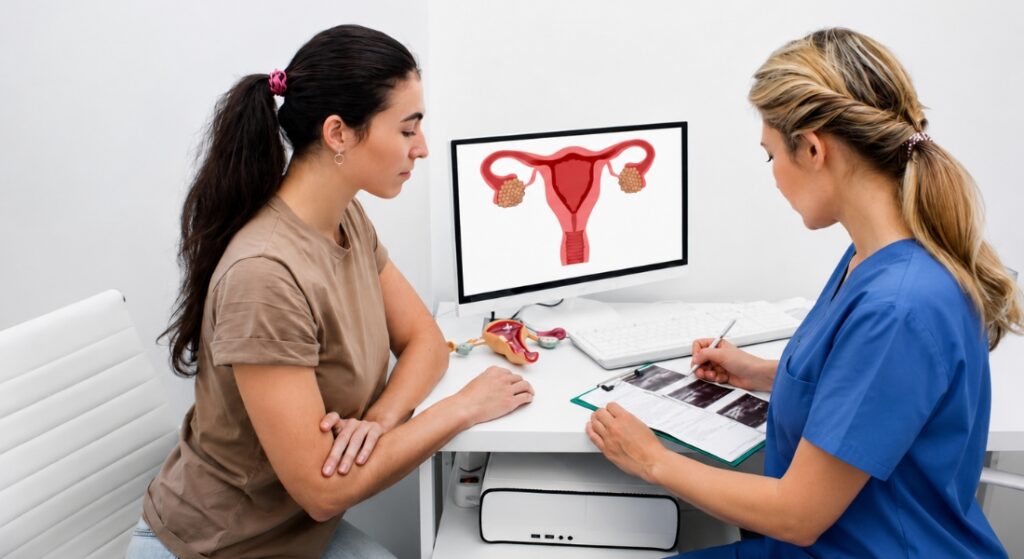
Some fertility-preserving procedures, such as removing a focal area of adenomyosis, may be considered in carefully selected cases. However, these operations are complex and are not suitable for everyone. While pregnancy has been reported after surgery, the available evidence is limited, and more research is needed to understand who may benefit most.
Image-guided treatments, including high-intensity focused ultrasound, have been studied for adenomyosis, but evidence about future fertility and pregnancy outcomes remains limited. Endometrial ablation is not suitable if you wish to become pregnant. The possible effects of uterine artery embolisation on fertility and pregnancy should also be discussed carefully with a specialist before treatment.
When Should You Seek Prompt Medical Advice?
If you are trying to conceive and have severe pelvic pain, very heavy bleeding, fainting, dizziness, fever or pain with a possible pregnancy, you should seek urgent medical advice. These symptoms should not be assumed to be due to adenomyosis.
If you become pregnant, tell your midwife or obstetric team that you have adenomyosis, especially if you conceived after fertility treatment or have a history of miscarriage or pregnancy complications. Many pregnancies progress well, but your team can decide whether any additional monitoring is appropriate.
You should also speak to your doctor if heavy bleeding is causing tiredness, breathlessness, palpitations or feeling faint, as these can be symptoms of iron-deficiency anaemia.
Myth vs Fact
| Myth | Fact |
| Adenomyosis means you cannot get pregnant. | Many women with adenomyosis conceive naturally or with fertility treatment. |
| Adenomyosis always affects egg quality. | Adenomyosis mainly affects the womb rather than the ovaries. Age is a major influence on egg quality, while ovarian reserve tests mainly estimate egg quantity and likely response to fertility treatment. |
| IVF cannot work if you have adenomyosis. | IVF can still be successful, although some studies suggest lower success rates in certain groups. |
| Hormonal treatment improves natural fertility while you take it. | Many hormonal treatments reduce symptoms but prevent pregnancy while being used. |
| Miscarriage is inevitable with adenomyosis. | Miscarriage risk may be higher in some studies, but many women have healthy pregnancies. |
| Surgery is always the best fertility treatment. | Surgery is only considered in selected cases and may carry risks for future pregnancy. |
Key Takeaways
- Adenomyosis does not automatically mean you are infertile.
- Many women with adenomyosis conceive naturally and have healthy pregnancies.
- Adenomyosis mainly affects the womb rather than the ovaries, so it does not usually directly reduce egg quality.
- Some studies link adenomyosis with lower implantation rates, reduced IVF outcomes and higher miscarriage risk.
- Fertility is influenced by many factors, including age, ovarian reserve, embryo quality, sperm quality, fallopian tubes, fibroids and endometriosis.
- Hormonal treatments can reduce symptoms but usually prevent pregnancy while you are using them.
- Pretreatment before IVF may be considered in selected cases, but it is not guaranteed to improve outcomes for everyone.
- If you are aged 36 or over, have known fertility concerns or have another condition such as endometriosis, earlier specialist advice may be appropriate.
FAQs:
1. Can adenomyosis make it harder to get pregnant?
Adenomyosis is not the only factor that determines fertility, and many people with the condition conceive naturally. However, research suggests that adenomyosis may contribute to fertility difficulties for some people by affecting implantation, pregnancy outcomes or assisted reproduction success.
2. Is IVF still successful if you have adenomyosis?
Yes, many people with adenomyosis achieve successful pregnancies through IVF. While some studies suggest lower pregnancy rates or a higher risk of miscarriage, your chances will also depend on factors such as your age, embryo quality, ovarian reserve and any other fertility conditions.
3. Does adenomyosis always increase the risk of miscarriage?
No. Although research has found a higher miscarriage rate in some groups of people with adenomyosis, many go on to have healthy pregnancies. Miscarriage can occur for many different reasons, including chromosomal abnormalities and other medical factors.
4. Should fertility treatment be delayed if adenomyosis is diagnosed?
Not necessarily. Some fertility specialists recommend hormonal treatment before IVF in selected cases, while others may proceed directly with treatment. The best approach depends on your age, fertility history, symptoms and the severity of adenomyosis.
5. When should fertility advice be sought if adenomyosis is present?
It is worth seeking advice sooner if you are aged 36 or over, have been trying to conceive without success, have recurrent pregnancy loss or also have a condition such as endometriosis. An early assessment can help you understand your fertility and explore the most appropriate options.
Final Thoughts: Understanding Fertility with Adenomyosis
A diagnosis of adenomyosis can leave you with questions about your chances of becoming pregnant, but the condition does not automatically prevent conception. Many people with adenomyosis conceive naturally and go on to have healthy pregnancies. While research suggests that adenomyosis may affect implantation, miscarriage risk and fertility treatment outcomes for some individuals, fertility is influenced by many factors. Your age, ovarian reserve, egg quality and any coexisting conditions can all play an important role.
If you have adenomyosis and are planning a pregnancy or have concerns about your fertility, contact Gynaecology Clinic London to discuss your assessment options and treatment considerations with a specialist.
References:
- National Institute for Health and Care Excellence (NICE) (2014, updated March 2026) Fertility problems (QS73): Quality statement 2: Referral for specialist consultation. Available at: https://www.nice.org.uk/guidance/qs73/chapter/quality-statement-2-referral-for-specialist-consultation
- National Institute for Health and Care Excellence (NICE) (2018, updated July 2026) Heavy menstrual bleeding: assessment and management (NG88). Available at: https://www.nice.org.uk/guidance/ng88
- National Health Service (NHS) (2023) Adenomyosis. Available at: https://www.nhs.uk/conditions/adenomyosis/
- Nirgianakis, K. et al. (2021) ‘Fertility, pregnancy and neonatal outcomes of patients with adenomyosis: a systematic review and meta-analysis’, Reproductive BioMedicine Online, 42(1), pp.185–206. Available at: https://www.sciencedirect.com/science/article/pii/S1472648320305289
- Cozzolino, M. et al. (2022) ‘The Effect of Uterine Adenomyosis on IVF Outcomes: A Systematic Review and Meta-analysis’, Reproductive Sciences. Available at: https://pubmed.ncbi.nlm.nih.gov/34981458/
- Razavi, M. et al. (2019) ‘Systematic review and meta-analysis of adverse pregnancy outcomes after uterine adenomyosis’, International Journal of Gynaecology and Obstetrics. Available at: https://pubmed.ncbi.nlm.nih.gov/30828808/
- National Institute for Health and Care Excellence (NICE) (2026) Fertility problems: assessment and treatment (NG257). Available at: https://www.nice.org.uk/guidance/ng257
- National Institute for Health and Care Excellence (NICE) (2017, updated 2024) Endometriosis: diagnosis and management (NG73). Available at: https://www.nice.org.uk/guidance/ng73