



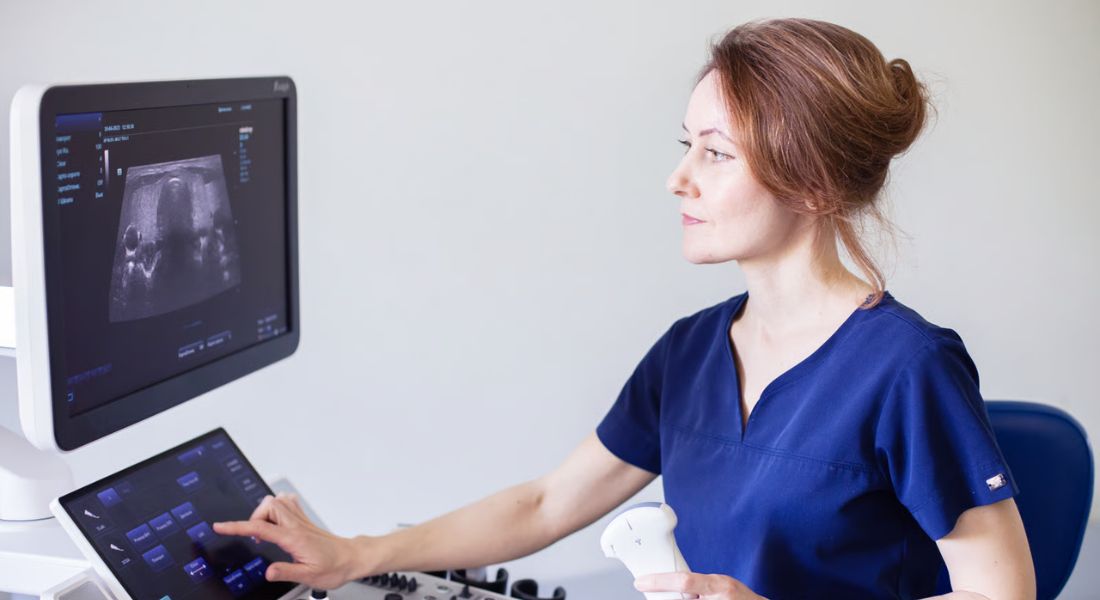
Endometriosis can be difficult to diagnose because the symptoms vary from person to person and often overlap with other gynaecological, bowel or bladder conditions. You may experience severe period pain, painful bowel movements or fertility problems, while someone else with endometriosis may have very different symptoms.
Your diagnosis is usually based on a combination of your symptoms, examination and imaging tests rather than a single investigation. Even if your examination or ultrasound is normal, you can still have endometriosis, so your clinician may recommend further assessment if your symptoms strongly suggest the condition.
UK Guidance Note:
NICE advises that investigations such as ultrasound, referral where necessary and initial treatment can take place alongside one another rather than requiring each stage to be completed before the next begins. A normal examination or ultrasound does not exclude endometriosis, and further assessment may still be appropriate when symptoms persist.
What Does an Endometriosis Diagnosis Mean?
Endometriosis is a condition in which tissue similar to the lining of your womb is found elsewhere in the body, most commonly within the pelvis. Your clinician will consider whether endometriosis may explain your symptoms and whether further assessment is needed to identify its possible location or involvement of nearby organs.
You may be told that you have suspected endometriosis, endometriosis identified on imaging or surgically confirmed endometriosis, depending on your symptoms and investigation results. You do not always need surgery before starting treatment, and your specialist may begin managing your symptoms while arranging further investigations if needed.
Which Symptoms Make Endometriosis More Likely?
Your clinician will ask about your symptoms, when they occur and how they affect your daily life. Symptoms that may raise suspicion of endometriosis include severe period pain, ongoing pelvic pain, pain during or after sex, bowel or bladder symptoms that worsen around your period, difficulty becoming pregnant or persistent fatigue.
| Symptom | What you may experience |
| Painful periods | Pain that affects your work, studies or everyday activities |
| Chronic pelvic pain | Ongoing aching, pressure or sharp pain between or during periods |
| Pain during or after sex | Deep pelvic pain rather than discomfort at the vaginal entrance |
| Bowel symptoms | Pain, constipation or diarrhoea that worsens around your period |
| Urinary symptoms | Pain when passing urine, urgency or blood in your urine that appears to follow your menstrual cycle. Blood in your urine should be assessed by a healthcare professional because it can have causes other than endometriosis. |
| Fertility difficulties | Difficulty becoming pregnant, particularly when this occurs alongside pelvic pain, painful periods or other symptoms suggestive of endometriosis |
| Fatigue | Persistent tiredness associated with pain or heavy periods |
| Chest symptoms (rare) | Recurrent chest or shoulder pain, breathlessness or coughing up blood around your period. New or severe chest pain, significant difficulty breathing or coughing up blood requires urgent medical assessment and should not be assumed to be caused by endometriosis. |
Your symptoms do not have to occur only during your period, and severe pain does not always mean you have extensive endometriosis. Your specialist will consider your symptoms alongside your examination and investigations before making a diagnosis.
Why Is Your Symptom History So Important?

Your symptom history is an important part of diagnosing endometriosis because some forms of the condition may not be visible on routine scans. Your clinician will ask when your symptoms started, whether they are linked to your menstrual cycle and how they affect your daily life.
Keeping a diary of your pain, bleeding, bowel or bladder symptoms and any medicines you take can help you identify patterns over time. Bringing this information to your appointment can make it easier for your specialist to understand your symptoms and decide whether further investigations are needed.
Does Family History Affect the Assessment?
Your clinician may ask whether a first-degree relative, such as your mother, sister or daughter, has been diagnosed with endometriosis because the condition can occur more frequently within families. However, you can still develop endometriosis without an affected relative, and having a family history does not mean you will definitely have it.
Your specialist will also ask about your previous pregnancies, pelvic surgery, ovarian cysts and any medicines you take to manage your periods. This information helps your clinician build a clearer picture of your symptoms and decide whether further investigations are needed.
What Happens at Your First GP Appointment?
At your first GP appointment, you will be asked about your periods, pain, bowel and bladder symptoms, sexual health and any fertility concerns. Your GP will also discuss your medical history, any treatments you have tried and how your symptoms affect your daily life.
Depending on your symptoms, your GP may arrange an examination, an ultrasound scan or other tests to investigate possible alternative causes. You may also be offered pain relief or hormonal treatment while further investigations or a specialist referral are arranged. Hormonal treatment is generally not used while you are actively trying to conceive, so tell your GP about your pregnancy plans before starting treatment.
What Does the Physical Examination Involve?
Your clinician may examine your abdomen first to check for tenderness, swelling or any unusual masses. They may also recommend an internal vaginal examination to assess your womb, ovaries and surrounding tissues, although many people with endometriosis have a normal examination.
An internal examination will only be carried out with your consent, and your clinician should explain why it is recommended and what it involves. You can ask for a chaperone, request a pause or stop the examination at any time if you feel uncomfortable or experience pain.
What If You Decline or Cannot Tolerate an Internal Examination?
You do not have to agree to an internal examination, and choosing not to have one should not stop you from receiving further assessment or treatment. Your clinician can still assess your symptoms and medical history, discuss appropriate imaging and offer an abdominal examination where suitable.
If you are worried about an internal examination or find it too painful, tell your clinician before the appointment begins. They can discuss alternative approaches, explain what information the examination may provide and help you decide on the next step that feels right for you.
Can Blood Tests Diagnose Endometriosis?
There is no routine blood test that can diagnose or rule out endometriosis on its own. Your clinician may still recommend blood tests to check for conditions such as anaemia or pregnancy, or to investigate other possible causes of your symptoms.
Even if your blood test results are normal, you can still have endometriosis. Your diagnosis will usually be based on your symptoms, examination and imaging findings rather than a single blood test.
Why Is a Transvaginal Ultrasound Recommended?
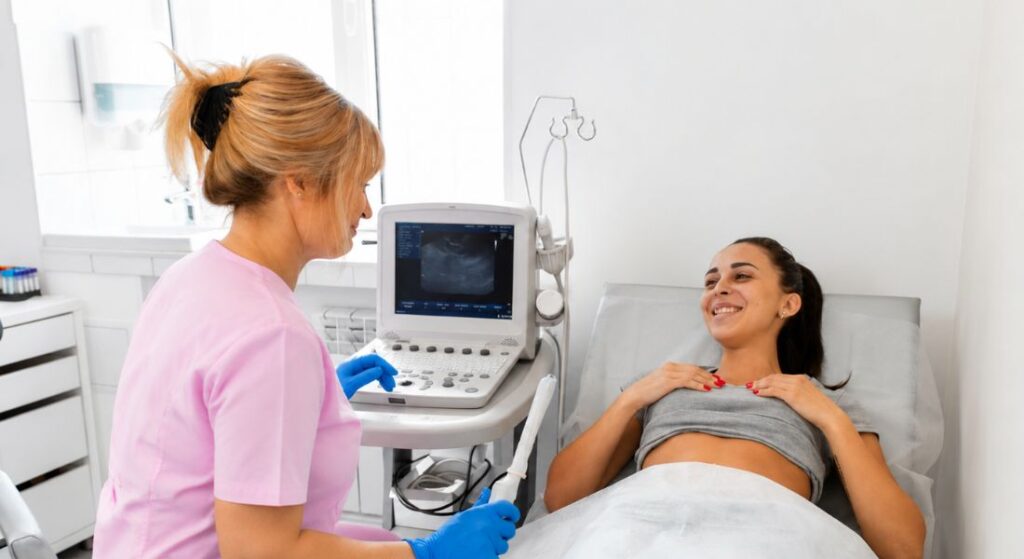
A transvaginal ultrasound is one of the first tests your clinician may recommend if endometriosis is suspected. It provides images of your womb, ovaries and surrounding pelvic structures and may identify ovarian endometriomas, some forms of deep endometriosis and other possible causes of your symptoms.
You can still have endometriosis even if your ultrasound is normal, as some forms of the condition cannot be seen on a scan. If you do not wish to have a transvaginal ultrasound, you can discuss having a transabdominal ultrasound instead, although it may not provide the same level of detail.
What Can an Ultrasound Show?
An ultrasound may identify ovarian endometriomas and signs suggesting deep endometriosis or restricted movement between pelvic organs. It can also help identify other conditions, such as fibroids, adenomyosis or ovarian cysts, which may be contributing to your symptoms.
| Ultrasound finding | What it may indicate |
| Cyst with features typical of an endometrioma | Possible endometrioma |
| Ovary fixed behind the womb | May suggest adhesions or deep endometriosis |
| Reduced movement between pelvic organs | Possible scar tissue or deep endometriosis |
| Nodule near the bowel or bladder | Possible deep endometriosis requiring specialist assessment |
| Thickened or bulky womb muscle | Adenomyosis |
| Fibroid or another ovarian cyst | A different or additional cause of your symptoms |
| Normal pelvic appearance | Endometriosis may still be present |
A normal ultrasound does not rule out endometriosis, particularly superficial disease that cannot be seen on imaging. The accuracy of your scan also depends on the type of endometriosis you have and the experience of the clinician performing and interpreting the examination.
Research Insight:
An international imaging consensus statement and recent systematic reviews indicate that specialist transvaginal ultrasound and MRI can both provide useful information about ovarian and deep endometriosis. Accuracy varies according to disease location, scanning technique and professional expertise, and normal imaging cannot exclude all superficial endometriosis.
Can a Normal Ultrasound Rule Out Endometriosis?
No. If your ultrasound is normal, it does not mean you do not have endometriosis. Superficial endometriosis can be too small to appear on imaging, and ultrasound is better at detecting ovarian endometriomas and some forms of deep endometriosis than small surface lesions.
If your symptoms continue despite a normal scan, your clinician may still refer you for further assessment or specialist care. You can also ask whether your ultrasound specifically looked for signs of deep endometriosis, as a routine pelvic scan may not assess every possible area.
What Is a Specialist Endometriosis Ultrasound?
A specialist endometriosis ultrasound is a detailed transvaginal scan performed by a clinician with expertise in diagnosing endometriosis. In addition to examining your womb and ovaries, the scan can assess areas around your bowel, bladder and other pelvic organs for signs of deep endometriosis or adhesions.
If deep endometriosis is suspected, your specialist may recommend this type of scan to help plan your treatment or any future surgery. Even so, you can still have endometriosis if your specialist ultrasound is normal, so your symptoms remain an important part of your assessment.
When Is an MRI Scan Used?
An MRI scan may be recommended if your specialist suspects deep endometriosis, particularly if it could involve your bowel, bladder, ureters or the tissue behind your womb. It provides detailed images of the pelvis and helps assess the extent of the condition before treatment or surgery.
- Assesses deep endometriosis: MRI is especially useful when endometriosis is suspected to affect the bowel, bladder, ureters or other deep pelvic structures.
- Supports treatment planning: The detailed images help your specialist plan surgery or other treatments more accurately.
- Not always the first test: A specialist transvaginal ultrasound may be equally effective in many cases, depending on your symptoms and examination findings.
- A normal MRI does not rule out endometriosis: Superficial endometriosis may not be visible on MRI, so further assessment may still be needed if symptoms persist.
An MRI is a valuable investigation for selected patients, but it is only one part of the diagnostic process. Your specialist will recommend the most appropriate test based on your symptoms, examination findings and the suspected type of endometriosis.
When Should You Be Referred to Gynaecology?
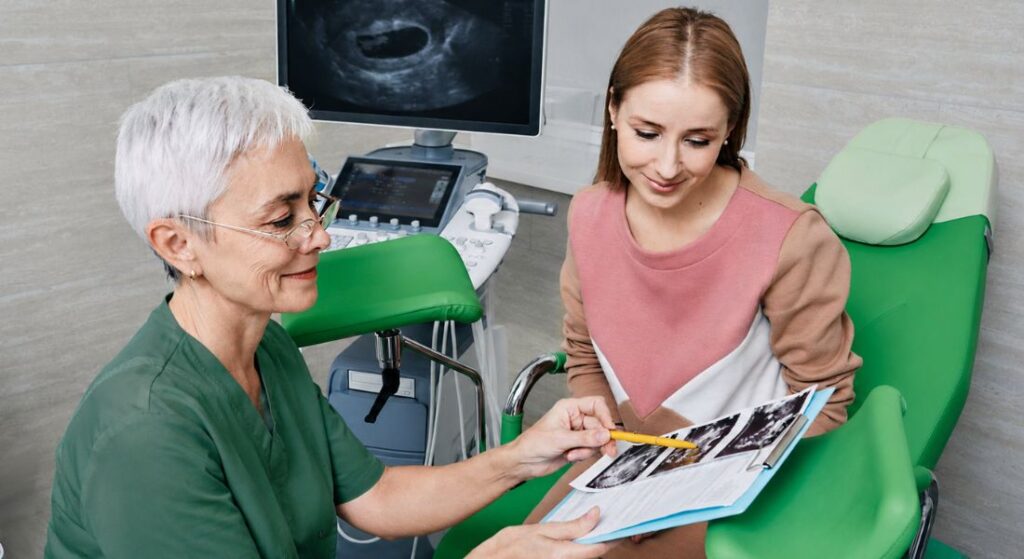
You should usually be referred to a gynaecology service if initial treatment has not helped, is not tolerated or is unsuitable for you, or if your symptoms are persistent, recurrent or having a significant effect on your daily activities. You do not need to wait for an abnormal ultrasound result, as endometriosis can still be present even when your initial scans are normal.
Your specialist may recommend further imaging, treatment or laparoscopy depending on your symptoms and test results. Bringing your symptom diary, medication list and previous scan reports to your appointment can help your gynaecologist decide on the most appropriate next steps.
What Is a Diagnostic Laparoscopy?
A diagnostic laparoscopy is a keyhole operation performed under general anaesthetic that allows your surgeon to examine your pelvis using a small camera. If endometriosis, adhesions or ovarian endometriomas are found, they may also be treated during the same procedure if you have given your consent beforehand.
Your specialist may consider laparoscopy if endometriosis remains strongly suspected despite normal imaging, particularly when symptoms continue, treatment based on the suspected diagnosis has not helped, or surgery may provide both diagnostic information and treatment. It is not automatically required for everyone with suspected endometriosis. As it is an operation, your surgeon will discuss the potential benefits and risks with you before deciding whether it is the right option.
Is a Biopsy Always Needed?
During a laparoscopy, your surgeon may take a small tissue sample, known as a biopsy, from an area that looks like endometriosis. Examining this sample in a laboratory can help confirm the diagnosis and rule out other conditions, but a biopsy is not always required in every case.
A negative biopsy does not completely exclude endometriosis because the sample may not contain diagnostic tissue. Your specialist will interpret the pathology result alongside your symptoms, imaging findings and what was seen during the laparoscopy.
Do You Need Surgery Before Treatment Can Begin?
No. You do not always need surgery before starting treatment for suspected endometriosis. Your clinician may recommend pain relief or hormonal treatment based on your symptoms and scan findings while further investigations or a specialist referral are arranged.
Surgery may still be considered if your symptoms remain severe, imaging suggests an endometrioma or deep endometriosis, treatment has not helped, or a clearer diagnosis would meaningfully affect your care. If becoming pregnant is a priority, your specialist will consider factors such as your age, ovarian reserve, the location of the suspected endometriosis, previous treatment and any other fertility factors before discussing whether surgery, fertility treatment or another approach may be more appropriate.
Are New Non-Invasive Diagnostic Tests Available?
In July 2026, NICE published draft guidance proposing that two technologies, EndoSure and Endotest, could be used in selected NHS primary care settings while further evidence is collected. The proposed pathway applies when endometriosis is suspected, examination findings are normal and ultrasound is negative, inconclusive, declined or unsuitable.
The NICE recommendations were still under consultation at the time of writing and may change before final guidance is issued. The accuracy of these tests in primary care and their effects on treatment decisions and patient outcomes remain uncertain. Results should therefore be interpreted by an appropriate healthcare professional alongside your symptoms, examination findings and imaging rather than being used alone to confirm or exclude endometriosis.
Why Can Endometriosis Diagnosis Be Delayed?

Endometriosis can take time to diagnose because its symptoms often overlap with conditions such as adenomyosis, fibroids, irritable bowel syndrome and ovarian cysts. You may also have normal examination or scan results, even though endometriosis is still present, which can make diagnosis more challenging.
If your symptoms continue, worsen or stop responding to treatment, you should ask for a further assessment even if previous tests were normal. You should also seek urgent medical attention if you develop sudden severe pelvic pain, heavy vaginal bleeding, fever, vomiting or fainting, as these symptoms may have another serious cause.
Key Takeaways:
- Endometriosis is assessed using your symptoms, medical history, examination findings and imaging results.
- A normal ultrasound or MRI does not exclude every form of endometriosis.
- Specialist transvaginal ultrasound may identify ovarian and deep endometriosis.
- MRI may help assess the location and extent of suspected deep disease.
- Laparoscopy is not required before treatment in every case.
- Persistent symptoms may justify further assessment even when initial tests are normal.
FAQs:
1. Can endometriosis be diagnosed with an ultrasound scan?
Ultrasound can identify ovarian endometriomas and some forms of deep endometriosis, but it cannot detect every type of disease. Superficial endometriosis may not appear on a scan. A normal ultrasound therefore does not rule out endometriosis.
2. Is laparoscopy the only way to diagnose endometriosis?
Many people can receive a suspected diagnosis or have endometriosis identified on imaging based on their symptoms, examination findings and scan results. Laparoscopy can provide direct visual assessment and may confirm the diagnosis, but it is not always required before treatment begins.
3. Can a blood test diagnose endometriosis?
There is currently no routine blood test that can accurately diagnose or exclude endometriosis. CA125 can be raised for several reasons, including endometriosis, but NICE advises that it should not be used to diagnose the condition. A normal CA125 result also cannot rule endometriosis out. Blood tests are mainly used to investigate other possible causes of symptoms.
4. Why does it often take so long to diagnose endometriosis?
Endometriosis symptoms can resemble those of several other conditions, including irritable bowel syndrome, adenomyosis and bladder disorders. Symptoms may also be dismissed as normal period pain, and some forms of endometriosis do not show up on routine imaging. These factors can contribute to delays in diagnosis.
5. When should you see a specialist about possible endometriosis?
Referral to gynaecology is generally appropriate if your symptoms persist or recur, significantly affect your daily activities, or do not improve with initial treatment. Referral to a specialist endometriosis service may be recommended when an endometrioma, deep endometriosis or endometriosis outside the pelvis is suspected or confirmed. Early assessment can help guide appropriate investigations and treatment options.
Final Thoughts: About Endometriosis Diagnosis
Diagnosing endometriosis often requires looking at the whole picture rather than relying on a single test. Your symptoms, medical history, examination findings and imaging results all play an important role, and it is important to remember that normal ultrasound or MRI findings do not always exclude the condition. Timely assessment can help clarify possible causes, guide appropriate treatment and support you in managing the effects that ongoing pain or fertility concerns may have on your quality of life.
If you are looking for expert assessment and personalised endometriosis treatment in London, our specialist team can provide a comprehensive evaluation, review previous investigations and discuss the most appropriate next steps for your situation. At Gynaecology Clinic London, we tailor our approach to your symptoms, fertility goals and overall health, helping you make informed decisions with confidence while supporting your long-term gynaecological wellbeing.
References:
- National Institute for Health and Care Excellence (NICE) (2017, last updated 2024; reviewed 2025) Endometriosis: diagnosis and management. NICE guideline NG73. Available at: https://www.nice.org.uk/guidance/ng73
- National Institute for Health and Care Excellence (NICE) (2026) Technologies for the rapid diagnosis of endometriosis: early use assessment (GID-HTE10082). Guidance in development. Expected publication 8 October 2026. Available at: https://www.nice.org.uk/guidance/indevelopment/gid-hte10082
- Becker, C.M. et al. (2022) ‘ESHRE guideline: endometriosis’, Human Reproduction Open, 2022(2), article hoac009. Available at: https://pubmed.ncbi.nlm.nih.gov/35350465/
- Condous, G. et al. (2024) ‘Non-invasive imaging techniques for diagnosis of pelvic deep endometriosis and endometriosis classification systems: an International Consensus Statement’, Facts, Views & Vision in ObGyn, 16(2), pp. 127–144. Available at: https://pmc.ncbi.nlm.nih.gov/articles/PMC11366111/
- Avery, J.C. et al. (2024) ‘Noninvasive diagnostic imaging for endometriosis part 1: a systematic review of recent developments in ultrasound, combination imaging, and artificial intelligence’, Fertility and Sterility, 121(2), pp. 164–188. Available at: https://www.sciencedirect.com/science/article/pii/S0015028223020757
- De Corte, P. et al. (2025) ‘Time to diagnose endometriosis: current status, challenges and regional characteristics – a systematic literature review’, BJOG: An International Journal of Obstetrics & Gynaecology, 132(2), pp. 118–130. Available at: https://pmc.ncbi.nlm.nih.gov/articles/PMC11625652/
- Royal College of Obstetricians and Gynaecologists (RCOG) (2023) Endometriosis. Available at: https://www.rcog.org.uk/for-the-public/browse-our-patient-information/endometriosis/
- NHS (2024) Endometriosis. Last reviewed 27 August 2024. Available at: https://www.nhs.uk/conditions/endometriosis/
- General Medical Council (GMC) (2024) Intimate examinations and chaperones. Available at: https://www.gmc-uk.org/professional-standards/the-professional-standards/intimate-examinations-and-chaperones