



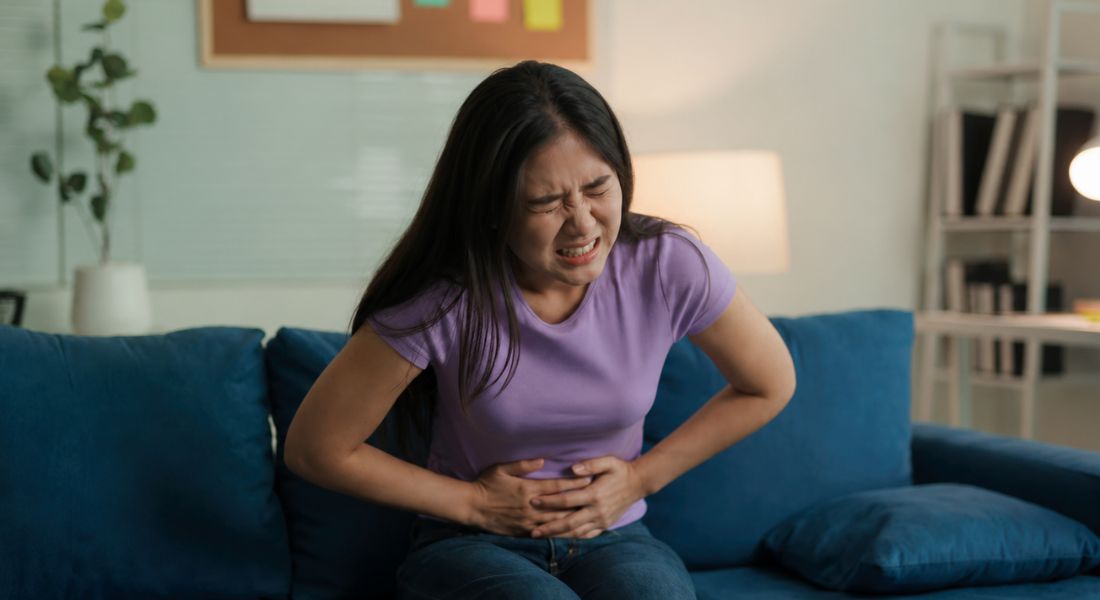
Period pain can be difficult to judge because menstrual cramps vary greatly from one person to another. What feels manageable for someone else may be severe enough to stop you from sleeping, working, studying or taking part in your usual activities.
Period cramps occur when the womb contracts to help shed its lining. Primary dysmenorrhoea is period pain that occurs without an identifiable pelvic condition and is linked mainly to prostaglandin-driven uterine contractions.
Endometriosis can also cause painful periods, but the symptoms often go beyond typical cramps during the first day or two of bleeding. You may experience pain before your period starts, between periods, during sex or when opening your bowels or passing urine.
No single symptom or pattern of pain can diagnose endometriosis on its own. A medical assessment can help determine whether endometriosis or another cause should be suspected and whether investigation or referral is appropriate.
What Is Primary Dysmenorrhoea?
Primary dysmenorrhoea is recurring period pain that occurs without an identifiable disease or structural problem affecting the womb or other pelvic organs. It is caused mainly by prostaglandin-driven womb contractions, which help the womb shed its lining and can produce painful cramps.
The term “normal” does not mean that you should simply accept severe pain without support. Primary dysmenorrhoea can still affect your daily activities, and you should seek medical advice if your symptoms are interfering with your life or are not improving with usual self-care measures.
When Primary Period Pain Usually Begins
Primary dysmenorrhoea often begins during adolescence, usually within the first few years after periods start and once ovulatory cycles have become established.
The pain typically starts shortly before your bleeding or on the first day of your period, with the strongest discomfort often occurring during the first day of bleeding before gradually improving over the following two or three days. If your period pain appears suddenly later in life or becomes noticeably different after years of manageable periods, it is worth seeking medical advice to explore possible causes.
How Ordinary Menstrual Cramps May Feel
Primary period pain is usually felt as cramping or aching in the centre of your lower abdomen, and the discomfort may spread to your lower back, hips or upper thighs. You may also experience symptoms such as nausea, loose stools, headaches, dizziness, sweating or tiredness because the substances involved in womb contractions can affect other parts of your body.
These symptoms usually follow a predictable pattern linked to the start of your period and improve as your cycle progresses. However, ongoing pelvic pain throughout the month, deep pain during sex or repeated bowel and bladder symptoms are less typical of uncomplicated primary dysmenorrhoea and may require further assessment.
When Period Pain Should Not Be Dismissed
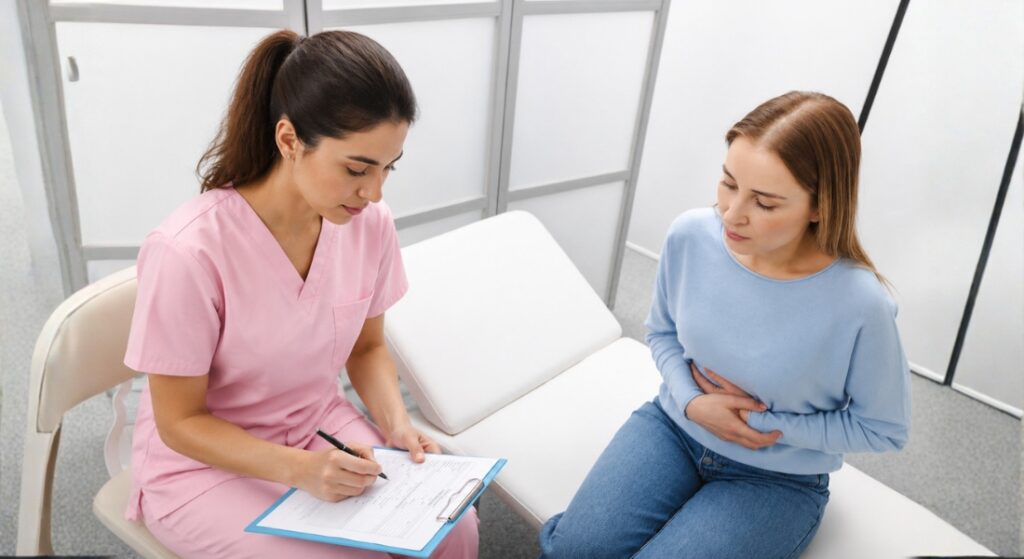
Seek medical advice if pain becomes worse, lasts longer, stops responding to treatment or repeatedly disrupts work, study, exercise, sleep, relationships or daily activities. Explain what the pain prevents you from doing, not only whether it feels mild, moderate or severe. This helps your clinician assess treatment needs but does not distinguish endometriosis from severe primary dysmenorrhoea on its own.
Primary Period Pain and Possible Endometriosis: Common Patterns
| Feature | Primary dysmenorrhoea | Possible endometriosis |
| Typical onset | Often begins during adolescence after cycles become established | Can also begin during adolescence or later |
| Timing | Usually shortly before or at the start of bleeding | May occur before, during or after periods and sometimes between them |
| Pattern | Often broadly similar from one cycle to another | May worsen, last longer or become less predictable |
| Pain during sex | Less typical | May occur, particularly deep pain |
| Bowel or bladder symptoms | Nausea or diarrhoea may occur with cramps | Cyclical pain when opening the bowels or passing urine may occur |
| Daily-life impact | Can be significant | Can also be significant |
| Ultrasound | Imaging is not usually required when symptoms follow a typical primary dysmenorrhoea pattern and there are no concerning features. | May identify ovarian endometriomas, deep endometriosis or another pelvic condition, but a normal scan does not exclude endometriosis |
| Underlying pelvic disease | Not identified | Endometriosis may be present |
What Is Endometriosis?
Endometriosis is a long-term condition in which tissue similar to the lining of the womb grows elsewhere in the body. It is most often found around the womb, ovaries, fallopian tubes and pelvic lining, but it can also affect organs such as the bowel or bladder and, less commonly, areas outside the pelvis.
Endometriosis can cause inflammation, adhesions and scarring, which may contribute to pain during periods, pelvic pain at other times in the cycle or difficulty becoming pregnant. Symptoms vary widely, and some people have endometriosis without noticeable pain.
Pain When Passing Urine
Some people with endometriosis experience pain when passing urine, pelvic discomfort as the bladder fills, urinary urgency or a need to pass urine more frequently. A cyclical pattern, particularly symptoms that worsen before or during a period, may suggest a possible connection with endometriosis, although these symptoms have several other causes.
Endometriosis affecting the urinary system is less common but should be considered when symptoms follow a clear menstrual pattern. A urinary tract infection can cause similar symptoms, so your clinician may arrange a urine test while also assessing whether the timing and nature of your pain suggest a gynaecological cause.
How Endometriosis Period Pain May Differ
Endometriosis-related pain may begin several days before your period starts, continue throughout your bleeding and sometimes remain after your period has finished. Pain may become more frequent, last longer or respond less well to treatments that previously helped, although symptoms do not progress in the same way for everyone.
However, the timing of your pain alone cannot confirm endometriosis. Some people with primary dysmenorrhoea experience severe cramps at the start of their period, while some people with endometriosis mainly notice pain during menstruation. A healthcare professional can assess your symptoms alongside other signs to help identify the likely cause.
Pain Before or After Your Period
Primary dysmenorrhoea usually starts shortly before your period or on the first day of bleeding and tends to improve as your period continues. Endometriosis-related pain may begin earlier and continue for longer, sometimes lasting beyond the days when you are bleeding.
You may notice pelvic aching, pressure or cramping before your period arrives and discomfort that remains even after your bleeding becomes lighter or has stopped. However, pain outside your period does not always mean you have endometriosis, as conditions such as adenomyosis, fibroids, pelvic inflammatory disease, ovarian cysts, bowel problems and bladder conditions can also cause pelvic pain.
Pelvic Pain Between Periods
Endometriosis can cause pelvic pain before, during or after a period, or at other times in the month. The pain may be constant or intermittent and may feel like aching, pressure or sharper episodes in the lower abdomen, pelvis or back. Because pelvic pain has several possible causes, record its timing and any links with sex, urination or bowel movements for your clinician.
Pain During or After Sex
Deep pelvic pain during or after penetrative sex can occur with endometriosis, particularly when deeper pelvic tissues are affected.
Pain during sex can affect your relationships, emotional wellbeing and confidence with intimacy. However, it can also have other causes, including infections, vaginal dryness, pelvic floor muscle tension or other gynaecological conditions. Sharing this symptom with your clinician can help them consider the most appropriate causes and investigations.
Pain When Opening Your Bowels
Endometriosis may cause pain when opening your bowels, especially when symptoms become worse before or during your period. You may experience deep pelvic pressure, cramping or discomfort around the rectum. Period-related bloating, constipation or diarrhoea may also occur. These symptoms are common in several digestive and gynaecological conditions and do not confirm bowel endometriosis.
Bowel symptoms can also occur with conditions such as irritable bowel syndrome or other digestive problems, and these conditions can exist alongside endometriosis. A clear pattern of symptoms that repeatedly follows your menstrual cycle can provide an important clue, but further medical assessment is needed to confirm the cause.
Keeping a Period and Pain Diary

A symptom diary can help you recognise whether your pain follows a pattern that may be linked with endometriosis. You can record when the pain starts, where you feel it, how long it lasts and whether it continues after your period has ended.
You can also track your bleeding, bowel and bladder symptoms, pain during sex, tiredness and bloating. Include any treatments you try, whether they improve your symptoms and which daily activities you are unable to do. A simple calendar or notes app can provide useful information for your GP or gynaecologist. Even a brief record can help, and you should not delay seeking medical advice while completing a symptom diary.
Heavy or Irregular Periods
Some people with endometriosis experience heavy periods or bleeding between periods, while others have a typical bleeding pattern. Irregular bleeding has many possible causes and is not specific to endometriosis.
You may need to change period products frequently, experience flooding, bleed through clothing or bedding, or pass large clots. However, heavy periods can also be caused by conditions such as adenomyosis, fibroids, hormonal changes or bleeding disorders. Tell your clinician if your bleeding pattern changes or if you experience symptoms such as unusual tiredness, breathlessness, palpitations, dizziness or weakness, as these may indicate anaemia when bleeding is heavy.
A full blood count should be arranged when heavy menstrual bleeding is being assessed to check for anaemia.
Fatigue, Bloating and Digestive Symptoms
Endometriosis can be associated with ongoing tiredness or fatigue, which may affect your ability to concentrate, work, exercise or recover after painful episodes. You may also experience digestive symptoms such as abdominal bloating, nausea, constipation or diarrhoea, which can become more noticeable around your period.
However, fatigue and digestive discomfort are common symptoms with many possible causes. Keeping a record of when these symptoms occur and whether they consistently appear alongside pelvic pain or your menstrual cycle can help your clinician understand whether there may be a connection.
Endometriosis and Fertility
Some people discover they have endometriosis while being assessed for difficulties becoming pregnant. Endometriosis can be associated with difficulty becoming pregnant, particularly when the ovaries, fallopian tubes or surrounding pelvic tissues are affected.
Having endometriosis does not mean you will be unable to become pregnant. Many people with the condition conceive naturally, while others may need additional assessment or fertility treatment. You can also have severe pain without fertility problems, or few noticeable symptoms and discover the condition during fertility investigations.
Can Teenagers Have Endometriosis?
Endometriosis can begin during adolescence and should not be dismissed simply because you are young. Symptoms may start from puberty and can affect your education, sleep, exercise, friendships and everyday activities.
Seek medical advice if period pain regularly causes absence from school, prevents normal activities or does not improve with suitable initial treatment. Sudden severe pelvic or abdominal pain, particularly with repeated vomiting, marked dizziness or fainting, requires urgent assessment because another acute condition may need to be excluded.
UK Guidance Note
NICE recommends referring young women and people aged 17 and under with suspected or confirmed endometriosis to a paediatric and adolescent gynaecology service or a specialist endometriosis service.
How Your Symptoms May Be Assessed
A GP or gynaecologist will ask when your pain started, how it relates to your menstrual cycle and whether your symptoms have changed over time. You may also be asked about your bleeding pattern, pain during or after sex, bowel and bladder symptoms, contraception, possible pregnancy, previous infections, operations and any family history of endometriosis.
Depending on your symptoms and individual circumstances, assessment may include an abdominal or pelvic examination, a pregnancy test when pregnancy is possible, urine testing, infection testing or blood tests. A full blood count should be arranged when heavy menstrual bleeding is being assessed. Not everyone needs every examination or test. Your clinician should explain why each examination or investigation is recommended, obtain your consent, allow you to ask questions and offer a trained chaperone for any intimate examination.
When Pelvic Pain Needs Urgent Help

Seek urgent medical help if pelvic or abdominal pain is sudden, severe, rapidly worsening or very different from your usual cramps, particularly when it occurs with vomiting, fever, heavy bleeding, dizziness or fainting.
If pregnancy is possible, one-sided lower abdominal pain with vaginal bleeding or brown discharge, shoulder-tip pain, dizziness or fainting needs urgent assessment. Call 999 or go to A&E for sudden intense pain with collapse, severe dizziness, fainting or looking very pale.
Can a Normal Scan Exclude Endometriosis?
An ultrasound can identify some signs of endometriosis, such as ovarian endometriomas and certain types of deeper endometriosis. It can also help identify other possible causes of pelvic pain, including fibroids, adenomyosis or ovarian cysts.
NICE recommends offering a transvaginal ultrasound to people with suspected endometriosis, even when an abdominal or pelvic examination is normal. A transabdominal ultrasound should be considered if a transvaginal scan is declined or unsuitable.
However, a normal ultrasound does not rule out endometriosis. Smaller or superficial areas of the condition may not appear on routine imaging, so your symptoms should still be considered even when your scan results are normal. NICE advises that endometriosis should not be excluded based only on a normal examination or ultrasound, and referral or further assessment may still be appropriate when symptoms persist or recur, initial treatment is ineffective, contraindicated or not tolerated, or symptoms significantly affect daily activities.
Myth vs Fact
| Myth | Fact |
| Severe period pain always means endometriosis. | Primary dysmenorrhoea can also cause severe pain, so the full symptom pattern must be assessed. |
| Pain is normal as long as it only happens during a period. | Pain that repeatedly disrupts work, education, sleep or daily activities deserves medical advice, whatever the cause. |
| Endometriosis pain always begins before a period. | Timing varies. Some people mainly experience pain during menstruation. |
| A normal ultrasound rules out endometriosis. | Superficial or smaller areas may not appear on routine imaging, so normal results do not exclude the condition. |
| The amount of pain shows how much endometriosis is present. | Pain severity does not reliably reflect the location or extent of disease. |
| Bowel symptoms mean endometriosis is growing on the bowel. | Bowel symptoms have several possible causes and do not establish disease location. |
| Teenagers are too young to have endometriosis. | Symptoms can begin during adolescence and should not be dismissed. |
| Surgery is always required before treatment can begin. | Pain-relieving medicines or hormonal treatment may be offered while investigation or referral is arranged. |
Key Takeaways
- Primary dysmenorrhoea can cause severe pain without an underlying pelvic condition.
- Endometriosis cannot be diagnosed from pain severity or timing alone.
- Pain before, after or between periods may support further assessment.
- Pain during sex or cyclical bowel and bladder symptoms can occur with endometriosis but have other causes.
- Daily-life disruption is an important reason to seek help but does not confirm endometriosis.
- Teenagers and young people can develop endometriosis.
- A normal examination or ultrasound does not rule out the condition.
- A symptom diary can support assessment but should not delay medical care.
- Initial treatment may begin while imaging or referral is arranged.
- Sudden severe pain, possible pregnancy, collapse or heavy bleeding requires urgent or emergency assessment.
Frequently Asked Questions
1. How can you tell the difference between endometriosis pain and normal period cramps?
Primary period pain usually begins shortly before or at the start of bleeding and commonly improves within two or three days. Endometriosis pain may start earlier, continue after your period ends or occur at other times in your cycle. Symptoms such as pain during sex, bowel or bladder discomfort and ongoing pelvic pain may suggest that further assessment is needed.
2. Can severe period pain be a sign of endometriosis?
Yes. Severe period pain can be a symptom of endometriosis, especially when it affects your daily activities, sleep, work or education. However, other conditions such as adenomyosis, fibroids and pelvic inflammatory disease can cause similar symptoms, so a medical assessment is needed to consider the possible causes and decide whether treatment, imaging or referral is appropriate.
3. Can you have endometriosis even if your ultrasound is normal?
Yes. A normal ultrasound does not rule out endometriosis because smaller or superficial areas may not appear on routine imaging. Your symptoms and their impact on daily life remain important when deciding whether referral or further assessment is needed.
4. What symptoms besides period pain may suggest endometriosis?
Alongside painful periods, you may notice pelvic pain between periods, pain during or after sex, pain when opening your bowels or passing urine, bloating, fatigue or difficulty becoming pregnant. These symptoms do not confirm endometriosis but can help your clinician decide which investigations may be appropriate.
5. When should you see a doctor about painful periods?
You should arrange a medical assessment if your period pain is getting worse, lasts longer than before, affects your normal activities or does not improve with usual treatments. You should also seek advice if you have heavy bleeding, pain outside your period or symptoms involving your bowel, bladder or sexual health.
Final Thoughts: Taking Persistent Pelvic Pain Seriously
Understanding the difference between endometriosis pain and ordinary period cramps can help you recognise when your symptoms need further attention. While some menstrual discomfort can be a normal part of your cycle, pain that becomes progressively worse, affects your daily activities or appears with symptoms such as pelvic pain between periods, pain during sex, bowel or bladder discomfort or fertility concerns should not be ignored. Keeping track of your symptoms and discussing changes with a healthcare professional can help you receive the right assessment and support. If you are looking for specialist assessment and painful periods treatment in London, you can contact Gynaecology Clinic London.
References:
- Becker, C.M. et al. (2022) ‘ESHRE guideline: Endometriosis’, Human Reproduction Open, 2022(2), hoac009. Available at: https://academic.oup.com/hropen/article/2022/2/hoac009/6537540
- General Medical Council (2024) Intimate examinations and chaperones. Updated 13 December 2024. Available at: https://www.gmc-uk.org/professional-standards/the-professional-standards/intimate-examinations-and-chaperones
- Itani, R., Soubra, L., Karout, S., Rahme, D., Karout, L. and Khojah, H.M.J. (2022) ‘Primary dysmenorrhea: Pathophysiology, diagnosis, and treatment updates’, Korean Journal of Family Medicine, 43(2), pp. 101–108. Available at: https://pmc.ncbi.nlm.nih.gov/articles/PMC8943241/
- National Institute for Health and Care Excellence (2023) Dysmenorrhoea. NICE Clinical Knowledge Summary. Last revised October 2023. Available at: https://cks.nice.org.uk/topics/dysmenorrhoea/
- National Institute for Health and Care Excellence (2019, updated 2026) Ectopic pregnancy and miscarriage: Diagnosis and initial management. NICE guideline NG126. Available at: https://www.nice.org.uk/guidance/ng126
- National Institute for Health and Care Excellence (2017, updated 2024) Endometriosis: Diagnosis and management. NICE guideline NG73. Available at: https://www.nice.org.uk/guidance/ng73
- NHS (2024) Endometriosis. Page last reviewed 27 August 2024. Available at: https://www.nhs.uk/conditions/endometriosis/
- NHS (2024) Heavy periods. Page last reviewed 19 September 2024. Available at: https://www.nhs.uk/conditions/heavy-periods/
- NHS (2024) Iron deficiency anaemia. Page last reviewed 26 January 2024. Available at: https://www.nhs.uk/conditions/iron-deficiency-anaemia/
- NHS (2026) Period pain. Page last reviewed 18 March 2026. Available at: https://www.nhs.uk/symptoms/period-pain/
- Sachedina, A. and Todd, N. (2020) ‘Dysmenorrhea, endometriosis and chronic pelvic pain in adolescents’, Journal of Clinical Research in Pediatric Endocrinology, 12(Suppl 1), pp. 7–17. Available at: https://pmc.ncbi.nlm.nih.gov/articles/PMC7053437/