




Polyendocrine metabolic ovarian syndrome (PMOS) is the name now used by the NHS for the condition previously called polycystic ovary syndrome (PCOS). PCOS remains widely used internationally, so you may see both terms. It is a reproductive, hormonal and metabolic condition that can affect periods, ovulation, fertility, skin, hair growth, emotional wellbeing and long-term health.
Some people have several symptoms, while others only discover the condition during fertility testing or investigations for irregular periods. PMOS cannot currently be cured, but treatment, lifestyle support and appropriate health checks can help manage symptoms and reduce some associated health risks. Your treatment plan should reflect your main concerns, whether you need contraception and whether you are planning a pregnancy.
What Do PMOS and PCOS Mean?
PMOS, still widely known as PCOS, involves several connected hormonal and metabolic processes rather than a single problem with your ovaries. It can affect how regularly you release an egg, how your body responds to insulin, and the production or activity of androgen hormones.
The term “polycystic” can be misleading because the small structures seen on a scan are usually follicles rather than large cysts requiring treatment. You can have PCOS without polycystic-looking ovaries, or have this ovarian appearance without the syndrome, so your symptoms, menstrual pattern and hormone results are more important than the name alone.
What Happens to Your Ovaries?
During a typical menstrual cycle, a follicle develops and releases an egg during ovulation. With PCOS, hormonal changes may interrupt this process, so a follicle can begin developing without consistently releasing an egg.
An ultrasound may show an increased number of small follicles or an increased ovarian volume. These follicles are not the same as pathological ovarian cysts and do not usually require removal. Irregular ovulation may make your periods unpredictable and conception more difficult, but you can still ovulate unexpectedly, so irregular periods should not be used as contraception.
Irregular or Absent Periods
Irregular periods are one of the most common symptoms of PCOS. You may have long gaps between periods, fewer periods each year or no bleeding for several months, while some people experience unpredictable, prolonged or heavy bleeding.
However, not every irregular cycle is caused by PCOS. Pregnancy, thyroid problems, changes in your weight, stress, intense exercise, raised prolactin levels and the early years after your first period can also affect menstruation, so you may need a medical assessment.
Higher Androgen Levels
Androgens are hormones found in everyone, although they are often described as male hormones. With PMOS, androgen levels or androgen activity may be increased, which can affect the skin, facial or body hair and scalp hair.
You may notice coarse hair growth on your face or body, persistent acne, oily skin or thinning hair around the top of your scalp. You do not need every androgen-related symptom or an abnormal androgen blood result to receive a diagnosis. Coarse facial or body hair growth can provide clinical evidence of hyperandrogenism, while acne and scalp hair thinning are less specific and should be considered alongside your menstrual pattern, examination and test results.
Seek prompt medical assessment if hair growth or other androgen-related changes develop rapidly, particularly with voice deepening or other signs of virilisation, because other causes need to be excluded.
Insulin Resistance
Insulin is a hormone that helps move glucose from your bloodstream into your cells, where it is used for energy. With insulin resistance, your cells do not respond as effectively to insulin, so your body may produce more insulin to keep your blood sugar stable.
Higher insulin levels can encourage your ovaries to produce more androgens, which may contribute to irregular ovulation, acne, unwanted hair growth and difficulty managing your weight. PCOS can affect you at any body size. Routine insulin-level tests are not recommended because available insulin assays have limited clinical value; clinicians instead assess blood glucose regulation and diabetes risk.
Other Common Symptoms of PCOS
PCOS can affect more than your menstrual cycle. You may experience tiredness, difficulty managing your weight, or darkened and thickened patches of skin around your neck or armpits.
Your symptoms may become more noticeable after puberty, when stopping hormonal contraception or while trying to conceive. Acne, unwanted hair growth, tiredness, skin changes and difficulty managing weight can have several possible causes. Assessment should therefore consider your menstrual history, medicines, thyroid function, prolactin and other possible hormonal or medical conditions rather than attributing every symptom automatically to PMOS.
What Causes PCOS?
The exact cause of PCOS is not fully understood, but it is thought to involve a combination of genetic, hormonal and metabolic factors. You may be more likely to develop PMOS if a parent or sibling has the condition. A family history of type 2 diabetes is also important when assessing your metabolic risk.
Body weight alone does not explain why PMOS develops, and you should not be blamed for having the condition. Higher weight can worsen insulin resistance and some symptoms in some people, while biological features of PMOS may also make weight management more difficult. PMOS can occur at any body size.
How PCOS Is Diagnosed
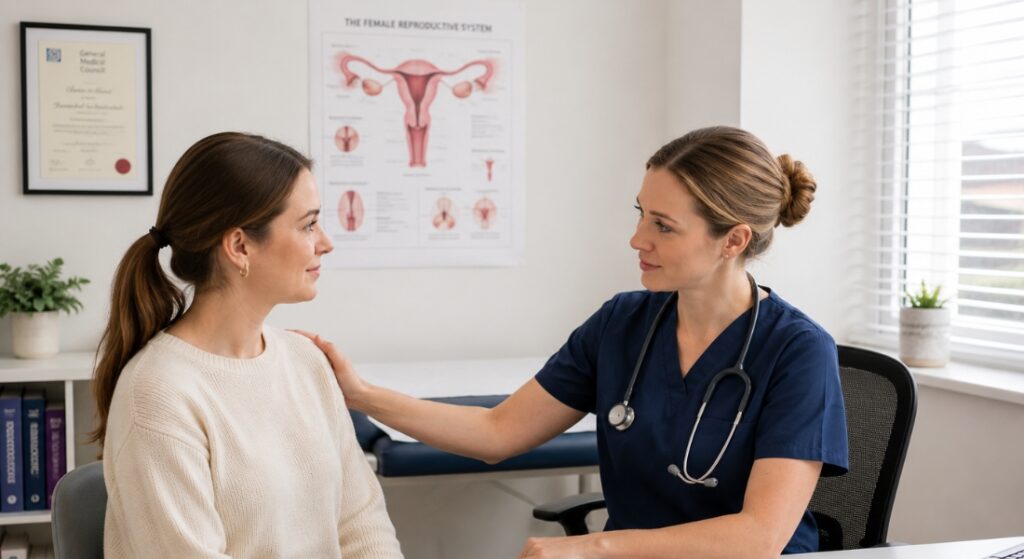
In adults, PMOS is generally diagnosed when at least two of three recognised features are present after other possible causes have been excluded: irregular or absent ovulation, clinical or biochemical hyperandrogenism, and polycystic ovarian morphology identified through ultrasound or an appropriately used AMH result.
If you have both irregular menstrual cycles and clinical or biochemical hyperandrogenism, an ultrasound or AMH test is not required to establish the diagnosis. An ultrasound showing multiple follicles is not enough on its own, as your clinician must also consider your symptoms, menstrual pattern and test results.
How PMOS May Be Diagnosed in Adults
| Diagnostic feature | Examples |
| Irregular or absent ovulation | Long menstrual cycles, infrequent periods or absent periods |
| Clinical or biochemical hyperandrogenism | Unwanted coarse hair growth or appropriately assessed raised androgen levels |
| Polycystic ovarian morphology | May be assessed by ultrasound or an appropriately interpreted AMH result in adults; AMH must not be used as a standalone diagnostic test |
| Exclusion of other causes | Pregnancy, thyroid conditions, raised prolactin and other hormonal disorders |
Blood Tests and Other Investigations
Your clinician may arrange androgen tests and tests to exclude pregnancy, thyroid disease, raised prolactin and non-classic congenital adrenal hyperplasia. Further investigation may be needed when androgen-related symptoms are severe or develop rapidly.
Ultrasound may be used to assess ovarian morphology or investigate abnormal bleeding, but it is not always needed for diagnosis. It may be performed across the abdomen or internally with your consent. Tell your clinician about all medicines, supplements and hormonal contraception you use. The combined pill can alter androgen measurements and may also suppress AMH, so test results must be interpreted in context.
Diagnosing PCOS in Teenagers
Diagnosing PCOS during adolescence can be more difficult because irregular periods, acne and changing hormone levels are common after puberty. You should not be diagnosed with PCOS solely because your cycles are unsettled soon after your periods begin.
Ultrasound is not usually relied on to diagnose PCOS in teenagers because the ovaries commonly contain multiple follicles at this stage. In adolescents, diagnosis requires both persistent menstrual irregularity defined according to the number of years since periods began and clinical or biochemical hyperandrogenism, after other possible causes have been excluded. Ultrasound and AMH should not be used to diagnose PMOS during adolescence. If only one feature is present, the young person may be considered at increased risk and offered symptom management and follow-up rather than being given a definite diagnosis immediately.
UK and International Guidance Note
Irregular periods, acne and multifollicular ovaries can occur during normal puberty. For this reason, adolescent diagnosis should focus on persistent menstrual irregularity and significant clinical or biochemical hyperandrogenism after alternative causes are excluded.
The NHS public information page states that ultrasound testing for PMOS is performed only in people over 18. International guidance also advises against ultrasound and AMH for adolescent diagnosis because these findings are insufficiently specific during this stage of development.
PCOS and Fertility
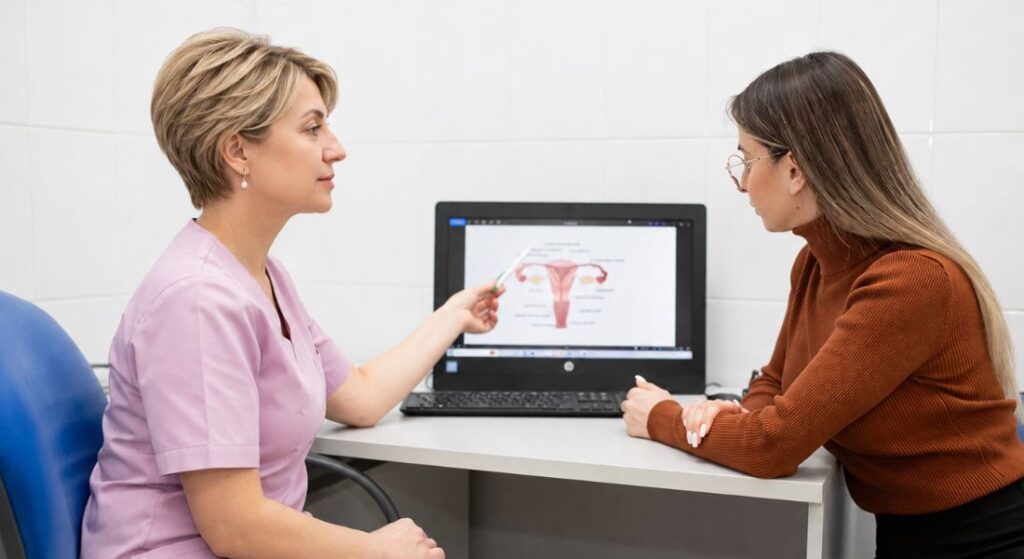
PCOS can make conception more difficult if you do not release an egg regularly. Long or unpredictable cycles may also make it harder for you to identify when ovulation is happening.
Having PCOS does not mean that you cannot become pregnant, as many people conceive naturally or with treatment that supports ovulation. You should continue using contraception if you do not want a pregnancy, because ovulation can still occur unexpectedly even when your periods are infrequent.
PCOS and Pregnancy
If you become pregnant with PCOS, your maternity team should know about the diagnosis so that appropriate monitoring can be considered. PMOS is associated with increased risks of miscarriage, gestational diabetes, high blood pressure disorders and preterm birth, although many people have straightforward pregnancies.
Before trying to conceive, review your medicines, blood pressure and glucose testing with your clinician because some acne, hair-growth and weight-management treatments are unsuitable during pregnancy.
Protecting the Lining of Your Womb
When ovulation happens infrequently, the womb lining may be exposed to oestrogen without regular progesterone exposure and shedding. Repeated long gaps between periods can increase the risk of endometrial hyperplasia and, over time, endometrial cancer.
One missed period is not usually a concern, but if you repeatedly go around three to four months without bleeding, ask your clinician whether you need womb-lining protection. Options may include the combined pill, an intrauterine system or short courses of progestogen, depending on your health, preferences and pregnancy plans.
Routine screening for endometrial cancer is not recommended solely on the basis of having PMOS because the overall risk remains low. However, persistent abnormal bleeding or a thickened womb lining may require investigation.
Treatments for Irregular Periods
Hormonal contraception is often used when you are not trying to become pregnant. The combined contraceptive pill may regulate bleeding and improve acne or unwanted hair growth, but suitability depends on your medical history and risk factors.
A progestogen-only method, hormonal intrauterine system or short course of progestogen may be recommended if oestrogen is unsuitable for you. Your clinician will consider your blood pressure, migraine history, smoking, weight, blood-clot risk and preferences when choosing the safest option.
Lifestyle and Long-Term Management

Healthy eating, regular movement, sufficient sleep and looking after your emotional wellbeing can support your overall health with PCOS. These habits can benefit you even when they do not lead to weight loss.
Where weight loss is personally appropriate and safely achievable, modest, sustainable weight reduction may improve some metabolic and reproductive features. Healthy eating, physical activity and behavioural support can still improve health when weight does not change.
Treatments for Acne and Unwanted Hair
The combined contraceptive pill may help improve acne and reduce unwanted facial or body hair by lowering androgen activity. You may need to use it for several months before noticing a clear improvement, as changes in acne and hair growth usually happen gradually.
- Combined Contraceptive Pill: Your clinician may recommend the combined pill to reduce androgen activity and help manage acne and unwanted hair.
- Other Medicines: Spironolactone may be considered if unwanted hair has not improved after at least six months of the combined pill and/or cosmetic treatment, or if the pill is unsuitable. Effective contraception is required when pregnancy is possible because anti-androgens can affect fetal development.
- Hair-Removal Methods: You can consider shaving, waxing, threading or hair-removal creams depending on your skin and personal preferences.
- Longer-Term Options: Electrolysis or laser hair reduction may provide longer-lasting improvement, although results, risks and the number of sessions required vary with hair colour, skin tone and treatment method.
The most suitable treatment will depend on your symptoms, medical history, skin type, budget and preferences. Your clinician can help you compare the available options and choose a safe treatment plan that meets your needs.
Metformin and Metabolic Treatment
Metformin is mainly used to treat type 2 diabetes, but it may also be recommended to help your body respond more effectively to insulin. Metformin may be considered for metabolic indications and may also improve menstrual regularity in some people. It is not a universal treatment for every person with PMOS and is not a first-line treatment solely for acne or unwanted hair growth.
You may experience nausea, diarrhoea or abdominal discomfort when you begin taking metformin or when your dose is increased. Weight-management medicines require separate discussion of benefits, side effects and pregnancy safety; effective contraception is recommended with GLP-1 medicines when pregnancy is possible.
Fertility Treatment for PCOS
When you are trying to conceive, treatment may focus on helping your ovaries release an egg more regularly. Your clinician will also consider your age, how long you have been trying, your partner’s fertility where relevant and whether another condition may be affecting conception.
Where irregular ovulation is the main fertility factor, international guidance recommends letrozole as the first-line medicine for ovulation induction when there are no other identified infertility factors. Local availability and prescribing practice may vary. Clomifene, metformin, gonadotrophins or assisted conception may be considered in selected circumstances.
Long-Term Health and Specialist Support

At diagnosis, glycaemic status and a lipid profile should be assessed. Blood pressure should be checked annually, and glucose status reviewed every one to three years according to individual risk. An oral glucose tolerance test is the most accurate glucose test for PCOS, although fasting glucose or HbA1c may be used when it cannot be performed.
PMOS is also associated with depression, anxiety, body-image distress, disordered eating and obstructive sleep apnoea. Seek support for emotional or eating concerns, and mention snoring with unrefreshing sleep, daytime sleepiness or persistent fatigue, regardless of body size.
Myth vs Fact
| Myth | Fact |
| PMOS only affects the ovaries. | It can affect reproductive, hormonal, metabolic and psychological health. |
| The ovaries contain lots of dangerous cysts. | The ultrasound appearance usually reflects multiple small follicles rather than pathological cysts. |
| You need polycystic ovaries to receive a diagnosis. | PMOS can be diagnosed without this ultrasound appearance when other criteria are met. |
| An ultrasound alone can diagnose PMOS. | Ovarian appearance must be considered with menstrual and androgen features. |
| Everyone with irregular periods has PMOS. | Pregnancy, thyroid disease, raised prolactin, exercise, stress and other conditions can affect cycles. |
| PMOS only affects people in larger bodies. | It can occur across the weight spectrum, and metabolic risk should not be dismissed because of body size. |
| Irregular periods mean pregnancy cannot occur. | Ovulation may occur unexpectedly, so contraception is still needed when pregnancy is not wanted. |
| One specific diet can cure PMOS. | No single diet cures the condition; sustainable healthy habits may support general and metabolic health. |
| Hormonal contraception cures PMOS. | It can manage selected symptoms but does not permanently remove the condition. |
| PMOS always causes infertility. | Many people conceive naturally, while others may need help with ovulation or fertility treatment. |
Key Takeaways
- PMOS is the name now used by the NHS for the condition previously called PCOS.
- It is a reproductive, hormonal and metabolic condition rather than simply an ovarian disorder.
- The follicles seen on ultrasound are not dangerous ovarian cysts.
- Diagnosis does not always require ultrasound.
- AMH should not be used as a standalone diagnostic test.
- Ultrasound and AMH are not recommended for adolescent diagnosis under international guidance.
- PMOS can affect people at any body size.
- Routine insulin assays are not recommended in PMOS care because they have limited clinical usefulness.
- Glycaemic health should be assessed at diagnosis and reviewed periodically.
- Long gaps between periods may require womb-lining protection.
- Anti-androgen and weight-management medicines require pregnancy-safety planning.
- Mental health, eating patterns and sleep symptoms are important parts of PMOS care.
- Fertility treatment should be individualised rather than following one pathway for everyone.
Frequently Asked Questions
1. What is PMOS, previously called PCOS?
PMOS, formerly called PCOS, is a hormonal and metabolic condition that can affect periods, ovulation, fertility, skin, hair growth and emotional wellbeing. Symptoms vary, and not everyone has every feature.
2. What are the most common symptoms of polycystic ovary syndrome?
Common symptoms include irregular or absent periods, acne, unwanted facial or body hair and thinning hair on the scalp. Some people may also experience difficulty becoming pregnant, weight changes or darkened patches of skin.
3. Can you have polycystic ovary syndrome without ovarian cysts?
Yes, you can have polycystic ovary syndrome without having polycystic-looking ovaries on an ultrasound scan. In adults, diagnosis is generally based on at least two of three features: irregular ovulation, clinical or biochemical hyperandrogenism, and polycystic ovarian morphology assessed by ultrasound or appropriately interpreted AMH. Other possible causes must first be excluded.
4. Can polycystic ovary syndrome affect fertility?
Polycystic ovary syndrome may make conception more difficult if you do not release an egg regularly. However, many people become pregnant naturally, while others benefit from medicines that encourage ovulation or additional fertility treatment.
5. Can polycystic ovary syndrome be cured?
Polycystic ovary syndrome cannot currently be cured, but its symptoms and associated health risks can usually be managed. Treatment may include hormonal contraception, lifestyle support, metformin, fertility medicines or treatments for acne and unwanted hair.
Final Thoughts: Managing PCOS with the Right Support
PMOS, still widely known as PCOS, can affect your periods, fertility, skin and long-term health, but symptoms vary from person to person. Although it cannot currently be cured, personalised treatment can help you manage its effects and protect your overall wellbeing.
If you are considering PCOS treatment in London, you can contact Gynaecology Clinic London for specialist advice.
References:
- NHS (2026) ‘Polyendocrine metabolic ovarian syndrome (PMOS)’. Page last reviewed 30 June 2026. Available at: https://www.nhs.uk/conditions/polyendocrine-metabolic-ovarian-syndrome-pmos/
- National Institute for Health and Care Excellence (no date) ‘Polycystic ovary syndrome’, NICE Clinical Knowledge Summaries. Available at: https://cks.nice.org.uk/topics/polycystic-ovary-syndrome/
- Teede, H.J. et al. (2023) ‘Recommendations from the 2023 international evidence-based guideline for the assessment and management of polycystic ovary syndrome’, The Journal of Clinical Endocrinology & Metabolism, 108(10), pp. 2447–2469. Available at: https://academic.oup.com/jcem/article/108/10/2447/7242360
- Peña, A.S. et al. (2025) ‘International evidence-based recommendations for polycystic ovary syndrome in adolescents’, BMC Medicine, 23(1), article 151. Available at: https://pmc.ncbi.nlm.nih.gov/articles/PMC11899933/
- World Health Organization (2026) ‘Polycystic ovary syndrome’, 22 January 2026. Available at: https://www.who.int/news-room/fact-sheets/detail/polycystic-ovary-syndrome
- National Institute for Health and Care Excellence (2026) ‘Fertility problems: assessment and treatment’. NICE guideline NG257. Published 31 March 2026. Available at: https://www.nice.org.uk/guidance/ng257
- National Institute for Health and Care Excellence (2013) ‘Polycystic ovary syndrome: metformin in women not planning pregnancy’. NICE evidence summary ESUOM6. Published 21 February 2013. Available at: https://www.nice.org.uk/advice/esuom6
- Royal College of Obstetricians and Gynaecologists (2015, updated 2022) ‘Polycystic ovary syndrome (PCOS): what it means for your long-term health’. Available at: https://www.rcog.org.uk/for-the-public/browse-our-patient-information/polycystic-ovary-syndrome-pcos-what-it-means-for-your-long-term-health/
- NHS (2026) ‘Spironolactone’. Page last reviewed 6 May 2026. Available at: https://www.nhs.uk/medicines/spironolactone/