



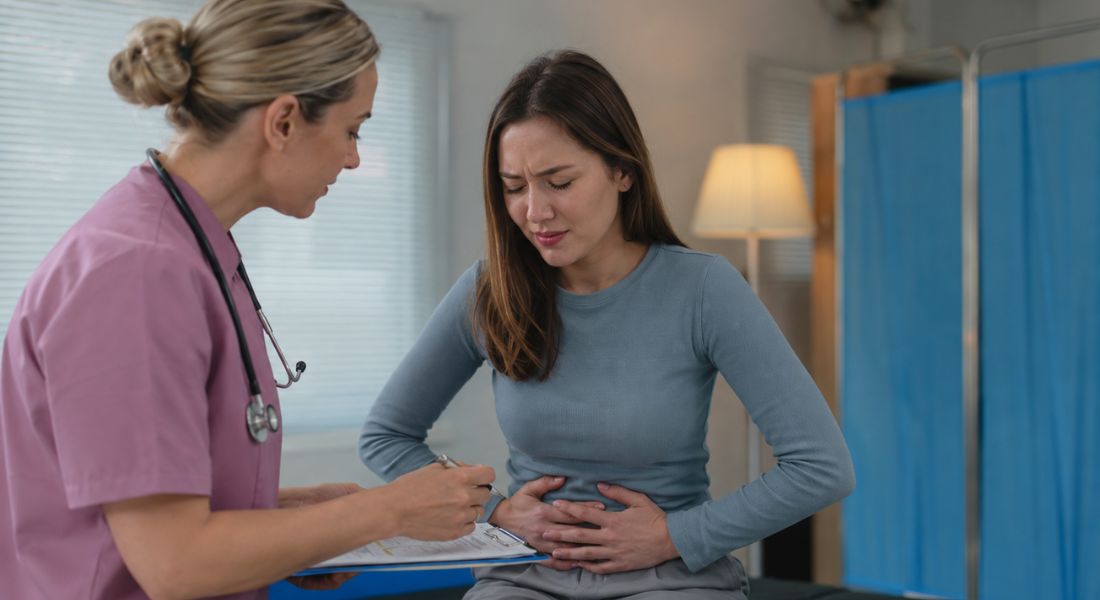
Pelvic pain can range from a mild ache to sudden, severe discomfort that makes it difficult for you to stand, walk or carry out your usual activities. Many causes are not medical emergencies, but some patterns of pain and accompanying symptoms require immediate assessment because they may indicate internal bleeding, infection, reduced blood flow to an organ or another urgent condition.
You may feel pain below your belly button, between your hips, in your lower back or around your bladder, bowel or reproductive organs. Call 999 or attend A&E if your pelvic pain is severe or rapidly worsening, hurts when you move or touch the area, or occurs with fainting, shoulder-tip pain, breathing difficulty, heavy vaginal bleeding or sudden confusion. Contact NHS 111 for urgent but stable symptoms such as fever or shivering, vomiting, unusual discharge, urinary or bowel difficulties, or pain when pregnancy is possible.
What Is Pelvic Pain?
Pelvic pain is discomfort felt in the lower part of your abdomen and pelvis. It may affect a small area, your lower back or the wider region between your lower abdomen and upper thighs. You may describe it as cramping, pressure, heaviness, burning, pulling or a sharp pain, and it can spread to your groin, hips, lower back or legs.
Pelvic pain is a symptom rather than a diagnosis, and you may notice that it becomes worse during movement, sex, urination or bowel movements. You should have persistent or severe pain assessed because it can be caused by conditions such as period pain, endometriosis, ovarian cysts, urinary infections, constipation or other pelvic problems.
When Is A&E the Right Place to Go?
A&E is the right place to go when your pelvic pain could be a sign of a medical emergency that needs immediate assessment or treatment. You should seek emergency care when the severity, speed of onset or accompanying symptoms suggest a potentially serious condition, such as internal bleeding, a severe infection, an acute pregnancy complication or ovarian torsion.
A familiar flare-up of a diagnosed long-term condition may be suitable for your GP, NHS 111 or specialist team when the symptoms are unchanged and no emergency warning signs are present. However, a previous diagnosis should not be used to explain away new, severe or rapidly changing pain.
Where Should You Seek Help for Pelvic Pain?
| Level of care | When it may be appropriate |
| Call 999 | Collapse, loss of consciousness, severe breathing difficulty, sudden confusion, very heavy bleeding with faintness, or symptoms that make it unsafe to travel without an ambulance |
| Attend A&E | Severe or rapidly worsening pain, pain that worsens with movement or touch, sudden severe one-sided pain with nausea or vomiting, faintness, shoulder-tip pain, breathing difficulty, heavy vaginal bleeding or suspected internal bleeding |
| NHS 111 or urgent GP care | Fever or shivering, nausea or vomiting, unusual discharge or bleeding, suspected PID, urinary or bowel difficulties, blood in urine or stool, or possible pregnancy when you are otherwise stable |
| Early pregnancy service | Pain or bleeding in early pregnancy when you are stable; contact your GP, NHS 111 or local early pregnancy service according to the referral arrangements in your area |
| Routine GP or gynaecology appointment | Persistent or recurring pain without new warning signs, including painful periods, pain during sex or ongoing bladder and bowel symptoms |
The appropriate route depends on the severity of your symptoms and local services. Call 999 when the situation appears life-threatening or you cannot travel safely. If you are unsure whether you need A&E, NHS 111 can assess your symptoms and direct you to the appropriate service.
Sudden or Extremely Severe Pelvic Pain

You should go to A&E if your pelvic pain starts suddenly, is extremely severe or feels completely different from anything you have experienced before. Sudden intense pelvic pain may be associated with ovarian torsion, an ovarian cyst complication, ectopic pregnancy, appendicitis or another abdominal or pelvic emergency. It is not possible to identify the cause safely from the pain location alone.
You should also seek emergency care if your pain becomes worse quickly, increases when you move, cough or touch your abdomen, or prevents you from standing or walking normally. You should not judge the seriousness of your symptoms by a pain score alone, as a sudden change in your pain can be an important warning sign.
Fainting, Dizziness or Collapse
Call 999 if pelvic pain occurs with fainting, collapse, marked paleness, severe dizziness or symptoms that make it unsafe for you to travel. These features may indicate significant blood loss, shock or another serious condition. You may also feel weak, cold or clammy, notice that your heart is beating very quickly or appear unusually pale, and these symptoms need urgent medical assessment.
You should not drive yourself if you feel faint or think you may collapse. You should lie somewhere safe, ask someone to stay with you if possible and call an ambulance if you cannot travel safely.
Heavy Vaginal Bleeding
Attend A&E if pelvic pain occurs with heavy vaginal bleeding, continuous flooding or bleeding that is substantially heavier than usual. Call 999 if the bleeding is accompanied by fainting, severe dizziness, breathing difficulty, confusion or collapse. You should also seek emergency care if the bleeding is much heavier than your normal period.
You should pay close attention to how you feel as well as how much you are bleeding. You may experience weakness, dizziness, breathlessness, confusion or a racing heartbeat, and you should not assume that severe bleeding is simply a heavy period because urgent treatment may be needed.
Pelvic Pain When Pregnancy Is Possible
You should take pelvic pain seriously whenever pregnancy is possible, even if you have not had a positive pregnancy test. You should not rule out pregnancy simply because you use contraception, and you should not delay seeking emergency care while waiting to take or repeat a pregnancy test.
You should go to A&E immediately if pregnancy is possible and you have severe pelvic pain, one-sided pain, heavy bleeding, shoulder-tip pain, dizziness or fainting. These symptoms may indicate an ectopic pregnancy or another serious early pregnancy complication that needs urgent assessment.
Ectopic Pregnancy
An ectopic pregnancy happens when a fertilised egg implants outside your womb, most commonly in a fallopian tube. You may experience one-sided lower abdominal pain, vaginal bleeding, brown watery discharge or discomfort when passing urine or opening your bowels. The pain may begin gradually or suddenly, and the combination of symptoms varies considerably between patients.
Call 999 or attend A&E immediately if you experience a combination of sudden intense abdominal pain, severe dizziness or fainting, nausea and marked paleness. These symptoms may indicate a ruptured ectopic pregnancy and internal bleeding.
Evidence Note
NICE advises that ectopic pregnancy can cause pelvic or abdominal pain, bleeding, gastrointestinal or urinary symptoms, dizziness, fainting, shoulder-tip pain or rectal pressure. Pregnancy testing should be considered even when symptoms are non-specific, and ectopic pregnancy should not be excluded simply because the patient has no recognised risk factors.
Sudden One-Sided Pain and Ovarian Torsion

Ovarian torsion occurs when an ovary twists around its supporting tissues, potentially reducing its blood supply. You may experience sudden, severe pain on one side of your lower abdomen or pelvis, and nausea or vomiting often occurs at the same time.
You should go to A&E immediately if you develop sudden one-sided pelvic pain, especially if you feel sick, are vomiting or know that you have an ovarian cyst. You should not ignore the pain even if it improves for a short time, as prompt treatment can help protect your ovary.
Shoulder-Tip Pain
You should take shoulder-tip pain seriously when it occurs alongside pelvic or abdominal pain. You may experience pain where the top of your shoulder meets your arm, and this can sometimes be caused by internal bleeding that irritates the diaphragm, particularly during an ectopic pregnancy.
You should go to A&E if shoulder-tip pain occurs with pelvic or abdominal pain, particularly when pregnancy is possible. Call 999 if you also have severe pain, marked dizziness, fainting, paleness or collapse. Do not drive yourself if you feel faint or seriously unwell.
A Ruptured or Bleeding Ovarian Cyst
Ovarian cysts are fluid-filled sacs that usually cause no symptoms and often disappear without treatment. However, you may develop sudden sharp pain, usually on one side, if a cyst ruptures or starts to bleed.
You should seek urgent medical advice if you have sudden severe pain with nausea or vomiting. You should go to A&E if the pain is extreme, your abdomen becomes increasingly tender or you develop dizziness, fainting, weakness or other signs that could suggest internal bleeding.
Pelvic Inflammatory Disease
Pelvic inflammatory disease (PID) is an infection that affects your womb, fallopian tubes, ovaries or nearby pelvic tissues. You may experience lower abdominal pain, pain during sex, unusual vaginal discharge, bleeding between periods or pain when passing urine, and milder cases can often be treated with antibiotics after an urgent GP or sexual health assessment.
You should go to A&E if you have severe pelvic pain, a high fever, repeated vomiting, heavy bleeding or feel seriously unwell. You should also seek emergency care if you cannot keep medicines or fluids down, as prompt treatment can reduce the risk of serious complications.
Repeated Vomiting and Dehydration
You may feel nauseous with painful periods or some pelvic conditions, but repeated vomiting is more serious because it can quickly lead to dehydration. You may notice a dry mouth, dark urine, passing very little urine, weakness or dizziness when standing if you become dehydrated.
You should contact NHS 111 urgently if your vomiting continues and you have significant pelvic pain. You should go to A&E if you become faint, confused, extremely weak or cannot keep any fluids down, as you may need urgent treatment.
Fever, Shivering or Feeling Seriously Unwell

Contact NHS 111 urgently if pelvic pain occurs with a very high temperature or you feel hot, cold or shivery. Call 999 or go to A&E if you also have severe or rapidly worsening pain, confusion, difficulty breathing, pale or blotchy skin, extreme weakness, collapse or a strong sense that something is seriously wrong.
These features may indicate a serious infection or sepsis. Do not drive yourself if you feel confused, faint or seriously unwell.
A Hard, Swollen or Very Tender Abdomen
You should seek emergency medical assessment if your abdomen becomes hard, noticeably swollen or extremely painful to touch. You may find that the pain becomes worse with movement, coughing or even gentle pressure, and you may struggle to stand upright because of the discomfort.
You should not keep pressing on the painful area to see if it improves. You should go to A&E if you have severe tenderness together with vomiting, fever, fainting or an inability to pass stool or wind, as these symptoms may need urgent treatment.
Bowel Symptoms That May Be an Emergency
You may think your pelvic pain is related to your reproductive organs, but it can sometimes come from your bowel. You should seek urgent medical help if your abdomen becomes increasingly swollen, you cannot pass stool or wind, or you have severe pain with persistent vomiting, blood in your stool, vomiting blood or fever.
You may be able to manage long-term constipation or irritable bowel syndrome through planned care when there are no warning signs. However, you should not assume that a sudden or severe change in your usual bowel symptoms is caused by an existing condition without medical assessment.
Urinary Symptoms That Need Urgent Care
A urinary tract infection can cause pelvic pain, burning when you pass urine and a frequent or urgent need to urinate. You should seek prompt medical advice if your symptoms are getting worse, especially if you are pregnant or your pain is becoming more severe.
You should seek urgent care if you develop fever, shivering, vomiting or pain in your back or side, as these symptoms may mean the infection has spread to your kidneys. You should also contact NHS 111 or go to A&E if you cannot pass urine despite having a painful, full bladder or if you feel seriously unwell.
Pain After Surgery, a Procedure or Coil Fitting
Some discomfort can be expected after a gynaecological procedure or coil fitting, but it should generally improve rather than become more severe. You should contact the treating clinic if your pain is worsening, persistent or no longer controlled by the recommended pain relief.
- Worsening Pain: Seek medical advice if your discomfort becomes more intense or does not improve as expected.
- Signs of Infection: Fever, offensive discharge, increasing tenderness or feeling unwell may require urgent assessment.
- Heavy Bleeding or Swelling: You should seek prompt help if you develop heavy bleeding, repeated vomiting or increasing abdominal swelling.
- Emergency Symptoms: Attend A&E if you have extreme pain, fainting, severe illness or possible pregnancy alongside your symptoms.
Pain after a procedure should not be ignored when it becomes severe or is accompanied by new warning signs. Prompt assessment can help identify infection, internal bleeding or another complication that may need treatment.
When to Call 999 Instead of Travelling to A&E
You should call 999 if you collapse, lose consciousness, have difficulty breathing or experience severe pelvic pain with very heavy bleeding. You should also request an ambulance if your symptoms are getting worse quickly or you cannot travel to A&E safely.
You should not drive yourself if you feel faint, confused, extremely weak or think you may collapse. If possible, ask someone to stay with you and provide the emergency team with details of your medicines, allergies, medical history, possible pregnancy, last period and any recent procedures.
UK Guidance Note
Call 999 or attend A&E for severe or rapidly worsening pelvic pain, pain that worsens with movement or touch, fainting, shoulder-tip pain, breathing difficulty, heavy vaginal bleeding or sudden confusion. Do not drive yourself if you feel faint or seriously unwell.
Contact NHS 111 for urgent but stable pelvic pain with fever or shivering, vomiting, unusual vaginal discharge or bleeding, urinary or bowel difficulties, blood in your urine or stool, or possible pregnancy. If you are 20 weeks pregnant or more, contact your midwife or maternity unit.
When Routine Gynaecology Care Is More Appropriate

A planned GP or gynaecology appointment may be more appropriate when your pelvic pain has continued for weeks or months without any new emergency warning signs. You may need assessment for conditions such as endometriosis, adenomyosis, fibroids, pelvic floor tension or other long-term causes of pain.
You should arrange an appointment if your symptoms are affecting your work, sleep, movement, sex life or daily activities. You should also discuss painful periods, deep pain during sex or recurring bowel and bladder symptoms, even when your symptoms do not require A&E care.
Myth vs Fact
| Myth | Fact |
| Every episode of pelvic pain requires A&E. | Many cases can be assessed through NHS 111, a GP or planned gynaecology care. |
| A familiar long-term condition cannot become an emergency. | New, severe or rapidly changing symptoms still require urgent assessment. |
| Contraception completely rules out ectopic pregnancy. | Pregnancy and ectopic pregnancy remain possible when contraception fails. |
| Visible bleeding shows how much internal bleeding is present. | Serious internal bleeding may occur with little or no vaginal bleeding. |
| Pain must reach a particular score before it is serious. | The speed of onset, change from normal and associated symptoms are also important. |
| Sudden one-sided pain always means an ovarian cyst. | Torsion, ectopic pregnancy and other abdominal conditions may cause similar symptoms. |
Key Takeaways
- Not every episode of pelvic pain requires A&E.
- Call 999 when symptoms appear life-threatening or you cannot travel safely.
- Severe or rapidly worsening pain requires emergency assessment.
- Fainting, shoulder-tip pain, breathing difficulty and heavy bleeding are major warning signs.
- Pregnancy should be considered even without a positive test or despite contraception.
- Sudden one-sided pain may require assessment for torsion, ectopic pregnancy or a cyst complication.
- Fever, vomiting, unusual discharge or urinary problems may be suitable for NHS 111 or urgent GP care when you are otherwise stable.
- A familiar chronic condition does not exclude a new emergency.
- Persistent pain without emergency symptoms should still be assessed through planned care.
- A&E assessment may include pregnancy testing, blood tests, urine testing, examination and imaging.
Frequently Asked Questions
1. When should you go to Accident and Emergency (A&E) for pelvic pain?
You should attend Accident and Emergency (A&E) if your pelvic pain is severe or rapidly worsening, or occurs with fainting, shoulder-tip pain, breathing difficulty, heavy vaginal bleeding or sudden confusion. Contact NHS 111 urgently if you are otherwise stable but have fever, vomiting, unusual discharge, urinary or bowel difficulties, or pregnancy is possible.
2. Can pelvic pain be an emergency even if you have experienced it before?
Yes. A long-term condition such as endometriosis or ovarian cysts does not prevent another emergency from developing. If your pain suddenly becomes much worse, changes in pattern or is accompanied by new warning signs, you should seek urgent medical care.
3. Should you go to Accident and Emergency (A&E) for severe period pain?
Most period pain can be managed without attending Accident and Emergency (A&E). However, if the pain is unusually severe, does not improve with pain relief or occurs with heavy bleeding, fever or fainting, you should be assessed urgently.
4. When should you contact National Health Service (NHS) 111 instead of Accident and Emergency (A&E)?
You should contact National Health Service (NHS) 111 if your pelvic pain is urgent but not life-threatening. They can advise whether you should see a General Practitioner (GP), attend an urgent treatment centre or go directly to Accident and Emergency (A&E).
5. What tests might be carried out in Accident and Emergency (A&E) for pelvic pain?
Depending on your symptoms, doctors may arrange a pregnancy test, urine test, blood tests, pelvic examination or ultrasound scan. Further imaging or specialist assessment may also be recommended if an emergency condition is suspected.
Final Thoughts: Knowing When Pelvic Pain Needs Emergency Care
Pelvic pain can have many causes, and the right place to seek help depends on how severe the pain is, how quickly it began and whether other warning signs are present. Severe or rapidly worsening pain, fainting, shoulder-tip pain, breathing difficulty or heavy bleeding requires emergency assessment. Urgent but stable symptoms may be assessed through NHS 111, while persistent or recurring pain without emergency signs is more suitable for a planned GP or gynaecology appointment.
For emergency symptoms, call 999 or attend A&E as advised above. For non-urgent concerns, you can contact Gynaecology Clinic London to arrange a consultation if you’re seeking pelvic pain treatment in London.
References:
- NHS (2025) ‘Pelvic pain’. Page last reviewed 24 November 2025. Available at: https://www.nhs.uk/symptoms/pelvic-pain/
- National Institute for Health and Care Excellence (2019, updated 2026) ‘Ectopic pregnancy and miscarriage: diagnosis and initial management’. NICE guideline NG126. Published 17 April 2019; last updated 17 June 2026. Available at: https://www.nice.org.uk/guidance/ng126
- NHS (2025) ‘Pelvic inflammatory disease’. Page last reviewed 17 December 2025. Available at: https://www.nhs.uk/conditions/pelvic-inflammatory-disease-pid/
- NHS (2023) ‘Ovarian cyst’. Page last reviewed 21 June 2023. Available at: https://www.nhs.uk/conditions/ovarian-cyst/
- NHS (2025) ‘Urinary tract infections (UTIs)’. Page last reviewed 11 July 2025. Available at: https://www.nhs.uk/conditions/urinary-tract-infections-utis/
- NHS (2022) ‘Ectopic pregnancy: symptoms’. Page last reviewed 23 August 2022. Available at: https://www.nhs.uk/conditions/ectopic-pregnancy/symptoms/
- NHS (2026) ‘Sepsis’. Page last reviewed 14 May 2026. Available at: https://www.nhs.uk/conditions/sepsis/